We Buy Gold . Top Prices Paid .
7 Day Price Promise .
30 Day Returns
Free World Wide Shipping
Life Time Warranty
We Buy Gold . Top Prices Paid .
7 Day Price Promise .
30 Day Returns
Free World Wide Shipping
Life Time Warranty

- Shop Luxury Diamond Jewellery in the UK
- 22K GOLD JEWELLERY
- Buy Traditional 22K Gold Pendants
- 22K Gold Rings for Men & Women Leicester | Hispek Diamonds
- Shop 22K Gold Necklaces Leicester | Hispek Diamonds
- Buy Stunning 22K Gold Chains Online in the UK
- Buy 22K Gold Bracelets for Women in UK
- Buy 22K Gold Earrings for Women Leicester | Hispek Diamonds
- 22K Gold Bangles Collection Leicester | Hispek Diamonds
- Buy 22K Gold Necklace & Earring Sets
- Buy Traditional Kolkata style 22K Gold Karas
- 18K GOLD JEWELLERY
- SILVER JEWELLERY
- 24K GOLD BULLION
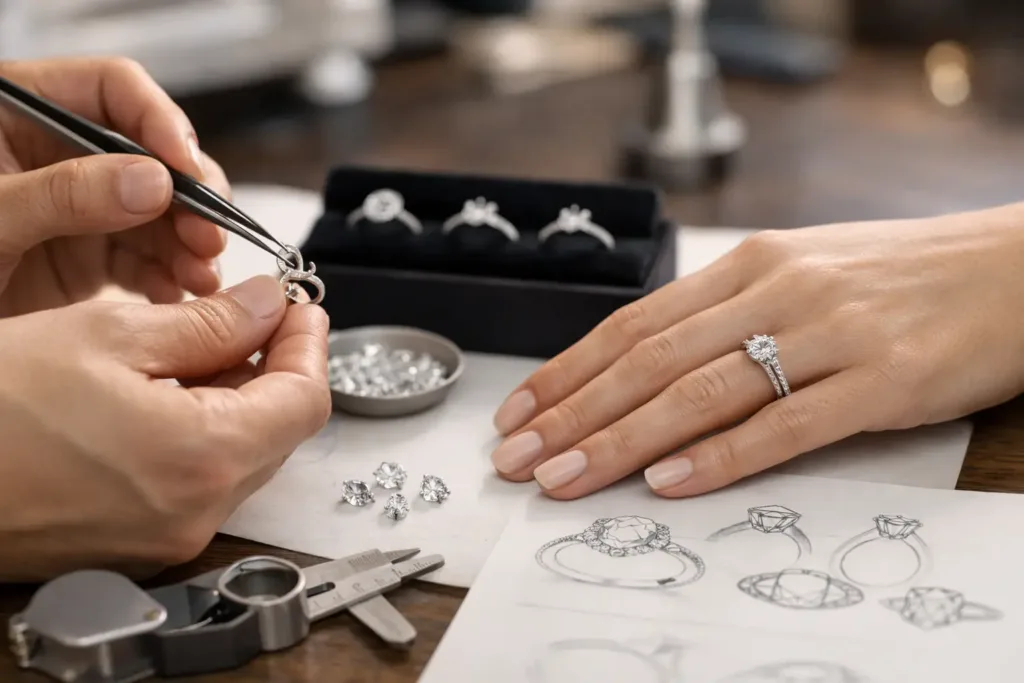
Most engagement rings look simple at first glance – a centre stone, a band, a setting. The reality is far more personal. If you are wondering how to customise an engagement ring, the best starting point is not the diamond itself but the person who will wear it every day. A ring can be tailored in ways that affect style, comfort, durability and price, so the strongest designs come from balancing emotion with practical choices.
A bespoke ring should feel distinctive, but it also needs to work in real life. That means thinking beyond the showroom image. Daily wear, hand shape, lifestyle, metal preference and budget all matter just as much as carat weight. When those details are handled well, the finished piece feels considered rather than simply expensive.
How to customise an engagement ring without overcomplicating it
The easiest mistake is to assume customisation means starting from scratch. It does not have to. Some people want a fully bespoke design with every detail drawn and refined. Others simply want to adjust an existing style by changing the diamond shape, the band width or the metal colour. Both approaches count as custom, and the right option depends on how specific your vision is.
If you already know the wearer prefers clean, modern jewellery, a minimalist solitaire with a few tailored details may be ideal. If they love vintage styling, a more intricate setting with a hidden halo, milgrain edge or shoulder stones may suit them better. The point is not to add more features for the sake of it. The point is to choose the right ones.
Start with the wearer, not the ring
A well-customised engagement ring begins with observation. Look at the jewellery your partner already wears. Is it mostly yellow gold, white gold, rose gold or platinum? Do they choose understated pieces, or do they prefer jewellery with presence? Are the shapes soft and rounded, or sharp and architectural?
This stage matters because a ring should sit naturally within someone’s style. A large oval diamond in a fine claw setting can look elegant on one person and too delicate on another. A bold halo can feel glamorous, but on someone who prefers simple jewellery it may never feel quite right. Good customisation is as much about restraint as creativity.
Lifestyle should guide the design too. Someone who works with their hands, goes to the gym regularly or prefers low-maintenance jewellery may benefit from a lower-profile setting and a sturdier band. A very high setting can be beautiful, but it is more likely to catch on clothing and take more care in daily wear.
Choose the centre stone carefully
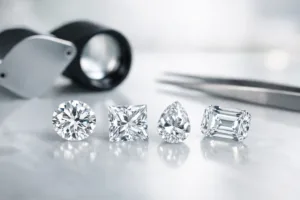
For most buyers, the centre stone is where the ring starts to take shape. Shape has a huge impact on the overall look. Round brilliant diamonds are timeless and versatile. Oval, pear and marquise cuts can create a more elongated look on the finger. Cushion and emerald cuts bring a different personality altogether – one softer and romantic, the other clean and structured.
This is also where budget and priorities come into play. If sparkle is the goal, round brilliant often leads the conversation. If finger coverage matters more, an oval or pear may give a larger visual presence for the weight. If the wearer appreciates a refined, understated look, an emerald cut can be a strong choice, though it tends to show inclusions more clearly and benefits from higher clarity.
There is also the question of natural or lab-grown diamonds. Both can be excellent options when properly certified. Natural diamonds may appeal to buyers focused on rarity and long-term tradition, while lab-grown diamonds can offer more size or quality within the same budget. The right answer depends on personal values, price range and what matters most in the final piece.
Certification is not an optional extra here. For a high-value purchase, an independently certified diamond provides clarity on quality and confidence in what you are buying. That reassurance becomes even more important when you are investing in a custom-made design.
The setting is where character appears
Once the stone is selected, the setting defines how the ring feels. A solitaire keeps the focus firmly on the centre diamond and remains one of the most enduring choices. A halo can add brilliance and presence. Three-stone rings bring symbolism and a more substantial look, while shoulder-set designs add detail without overwhelming the centre stone.
Claw choice can subtly change the appearance too. Fine claws often feel elegant and refined, while heavier claws can look more traditional or provide a stronger frame around the diamond. A bezel setting offers a sleek, modern finish and good protection, though it gives a different visual effect to an open claw setting.
This is one of the clearest examples of trade-offs in custom design. A delicate setting may look beautifully light, but it needs to be engineered properly for durability. A more substantial mount may feel more secure for everyday wear, but it can alter the ring’s overall softness. The best designs do not force one quality at the expense of another.
Metal choice changes the entire ring
When people think about customisation, they often focus on the diamond and overlook the metal. In practice, metal colour can completely change the mood of a design. Platinum offers a naturally white finish, premium weight and excellent durability, which is why it remains a popular choice for engagement rings. White gold gives a similar visual effect at a different price point, while yellow gold brings warmth and classic character. Rose gold offers a softer, more contemporary tone.
Skin tone and existing jewellery preferences should influence this decision, but so should maintenance. White gold usually requires rhodium plating over time to maintain its bright white finish. Platinum develops a patina with wear, which some buyers appreciate and others prefer to polish away. Yellow gold is often chosen for its timeless look, but it can make a white diamond appear slightly warmer by contrast depending on the design.
Band width also matters more than many expect. A very fine band can make the centre stone appear larger, but it may not suit every hand or every lifestyle. A slightly wider band can feel more balanced, more durable and more luxurious in the hand.
Add personal details with purpose
The best custom details are the ones that feel meaningful without making the ring harder to wear. Hidden halos, engraved messages, a secret gemstone inside the setting or a distinctive basket design can personalise the piece without changing the main silhouette. These details are especially useful when you want something unique but still timeless.
Engraving is a good example. A date, initials or a short private phrase adds sentiment, but there are limits to what works practically depending on band width and design. Likewise, coloured gemstones can add personality, yet they need to suit the style of the ring rather than feel inserted as an afterthought.
If you are blending ideas from different rings, consistency matters. A vintage-style setting, a modern knife-edge band and a highly contemporary hidden detail can work together, but only if the proportions and finish are carefully controlled. Otherwise, the design can start to feel undecided.
How to customise an engagement ring around your budget
A custom ring does not mean an unlimited budget. In fact, clear budgeting usually leads to better decisions. Before finalising a design, decide what matters most. For some buyers, that is diamond size. For others, it is stone quality, platinum over gold, or a more intricate handmade setting.
There will nearly always be trade-offs. Increasing carat weight may mean adjusting colour or clarity. Choosing platinum may affect how much is available for the centre stone. A very detailed setting can use more of the budget than expected. None of these choices are wrong, but they should be deliberate.
Transparent pricing is especially valuable during the custom process because every design element has a cost implication. Certified stones, precious metal weight, setting complexity and finishing all affect the final price. A good bespoke experience should make those costs clear rather than vague.
Work with experts who can guide the details
Custom jewellery should feel exciting, not uncertain. That is why expert guidance matters. Practical advice on stone selection, proportion, setting security and finish can prevent expensive mistakes and help you create a ring that looks right both on paper and on the hand.
It is also worth asking about hallmarking, certification, resizing, aftercare and warranty before you commit. Those details may not be the romantic part of the purchase, but they are part of buying with confidence. A premium ring should come with the reassurance to match.
At Hispek Diamonds, bespoke engagement ring design is approached with exactly that balance – premium presentation, expert support and transparent guidance at each stage. For a purchase with lifelong significance, confidence in the process matters as much as the final sparkle.
A customised engagement ring is not about making something complicated. It is about making something true to the person who will wear it, and choosing each detail with enough care that the ring still feels right years from now.
Comments are closed