

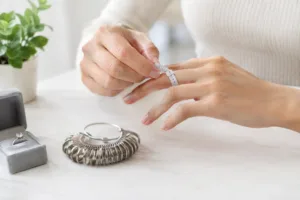
Ring Size Measurement for a Comfortable Fit
Ring size measurement made simple: learn how to measure at home, avoid common fit mistakes and choose a comfortable ring with confidence before buying.


Selecting an engagement ring represents one of the most important purchases in your relationship journey. At Hispek Diamonds, we help UK couples navigate this decision with expert guidance on diamond quality, legal requirements, and value. With locations in London and Leicester, our team ensures you make a choice that symbolizes your commitment whilst representing genuine value.
UK couples should understand the 4Cs—Cut, Colour, Clarity, and Carat weight—when choosing an engagement ring. Prioritize cut quality for visual brilliance, and consider colour and clarity for value. Legal protections, like hallmarking, ensure authenticity, while certified diamonds provide assurance. Lab-grown diamonds offer an affordable, eco-friendly alternative, allowing for larger, high-quality stones within budget.
Diamond quality assessment relies on four critical factors: Cut, Colour, Clarity, and Carat weight. Mastering these internationally recognized standards empowers UK couples to make informed decisions, ensuring your investment delivers both visual beauty and genuine value. Understanding how each C affects price and appearance transforms overwhelming choices into confident purchases.
Cut grade fundamentally determines how your diamond performs visually. Unlike the other Cs, which are natural characteristics, cut reflects human craftsmanship. An Excellent cut diamond reflects light internally and disperses it through the crown, creating the fire and scintillation that defines diamond beauty.
The grading scale ranges from Excellent to Poor. The difference is substantial: an Excellent cut 0.90ct diamond will visibly outshine a Poor cut 1.0ct stone whilst potentially costing less. This represents the single most important factor in diamond selection, yet many UK buyers prioritize carat weight instead, a common, costly mistake.
When evaluating a cut, consider how the diamond’s proportions affect light performance. Table percentage, crown angle, and pavilion depth all contribute to brilliance. Stones cut too shallow or too deep allow light to escape through the sides or bottom rather than reflecting through the top, reducing visual impact significantly.
Diamond colour grades range from D (completely colourless) to Z (light yellow/brown). Understanding the practical implications of each grade range helps maximize your investment:
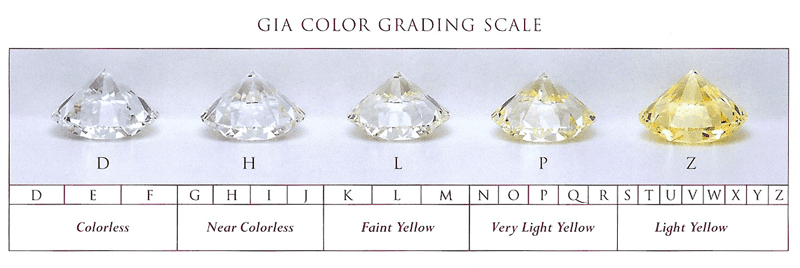
D-F grades represent colourless diamonds commanding premium prices. However, G-H grades classified as “near colourless” appear virtually identical when mounted in white gold or platinum settings. The subtle warmth present in G-H stones becomes imperceptible to the untrained eye once set, yet these grades cost 15-25% less than D-F equivalents.
For UK buyers working within budget constraints, G-H colour diamonds in Excellent cut represent optimal value. The metal choice significantly impacts colour perception. Platinum and white gold enhance brightness, whilst yellow gold complements warmer J-K grades beautifully, making the slight colour virtually undetectable.
I-J grades work particularly well in vintage designs or yellow gold settings where the slight warmth adds character rather than detracting from beauty. Beyond K grade, colour becomes increasingly noticeable and typically requires specific design considerations.
Clarity measures internal inclusions and external blemishes on an 11-grade scale from Flawless to I3 (Included). The critical insight for UK buyers: VS2 and SI1 grades often appear identical to VVS grades when viewed without magnification.
The term ‘eye clean’ describes diamonds whose inclusions remain invisible to the naked eye. Many VS2 and carefully selected SI1 diamonds achieve this standard whilst costing substantially less than higher grades. A VS2 diamond might cost 30-40% less than a VVS2 of equivalent specifications, with no visible difference when worn.
This represents a strategic opportunity. Rather than purchasing clarity, you can only see under 10x magnification, invest those savings in superior cut quality or larger carat weight, where the visual impact is immediate and lasting. The expertise lies in identifying which SI1 diamonds face up clean. This is where consultation with knowledgeable specialists proves invaluable.
Carat measures weight (0.2 grams per carat) rather than physical dimensions. Two diamonds of identical carat weight can appear different sizes depending on cut quality and proportions. Well-cut stones maximize face-up appearance, whilst poor cuts hide weight in the depth, making the diamond look smaller than its carat weight suggests.
Diamond pricing includes significant jumps at popular weights 0.50ct, 0.75ct, 1.0ct, and 1.5ct. A 0.95ct diamond costs notably less than a 1.0ct stone despite being virtually indistinguishable when worn. This pricing psychology creates strategic buying opportunities for informed UK couples willing to purchase just below these thresholds.
Additionally, consider that a 2.0ct diamond doesn’t cost twice as much as a 1.0ct typically costs 3-4 times more due to rarity. Understanding these economics helps couples allocate budgets more effectively across the 4Cs.
UK legislation protects engagement ring buyers through specific requirements. The Hallmarking Act 1973 mandates precious metal authentication, whilst the Consumer Rights Act 2015 ensures quality standards. Understanding these legal protections helps you verify authenticity and safeguards your investment.
The Hallmarking Act 1973 protects UK consumers by requiring precious metal items exceeding specific weights to bear official hallmarks. For gold items over 1 gram, platinum over 0.5 grams, and silver over 7.78 grams, hallmarking becomes mandatory before legal sale.
A proper UK hallmark contains three essential elements: the sponsor’s mark identifying the jeweler, the fineness mark indicating precious metal content (750 for 18K gold, 950 for platinum), and the assay office mark (Birmingham, London, Edinburgh, or Sheffield) confirming independent testing.
This legal protection ensures you receive the precious metal quality you’re paying for. Unmarked items suggest either illegal sale or questionable quality.
Reputable jewelers registered with UK Assay Offices guarantee proper hallmarking. Hispek Diamonds (Nascoglobal Limited) is a member of the National Association of Jewellers (NAJ71724) and registered with the Birmingham Assay Office, ensuring all our precious metal products meet UK legal standards. Verify this before purchase.
UK couples enjoy robust legal protections. The Consumer Rights Act 2015 requires goods to be as described, fit for purpose, and of satisfactory quality. For engagement rings, this means specifications must match descriptions, stones must be securely set, and overall craftsmanship must meet reasonable expectations.
Distance Selling Regulations provide a 14-day cooling-off period for online purchases, though bespoke items may have different terms. Understanding these rights before purchasing provides confidence and recourse should issues arise.
The UK employs letter-based sizing (A-Z) rather than the numerical systems used elsewhere. Women’s sizes typically range from J-N, with M representing the most common. Accurate sizing proves essential; professional measurement prevents costly resizing and ensures comfort.
Most rings accommodate ±2 size adjustments, though eternity bands and certain contemporary designs have limitations. Discuss resizing capabilities before purchasing, particularly for elaborate designs where alteration might compromise structural integrity.
The lab-grown diamond market has transformed UK engagement ring options. These diamonds are chemically, physically, and optically identical to natural diamonds; only their origin differs. Advanced technology replicates natural formation conditions, creating diamonds in weeks rather than billions of years.
Lab-grown diamonds typically cost 30-40% less than natural equivalents, allowing couples to access larger stones or higher grades within budget. For UK buyers prioritizing size or wanting to maximize quality across all 4Cs, lab-grown options deliver exceptional value. They’re also guaranteed conflict-free with minimal environmental impact compared to mining.
Natural diamonds carry geological heritage; billions of years of formation create their romantic origin story. They generally hold value better long-term and represent the traditional choice. The Kimberley Process certification ensures conflict-free sourcing, though responsible buyers should verify that jewelers maintain ethical supply chains beyond minimum requirements.
Neither choice is inherently superior; your decision should reflect personal values, budget considerations, and what resonates with your relationship story. Both options deliver beautiful, durable engagement rings when quality standards are maintained.
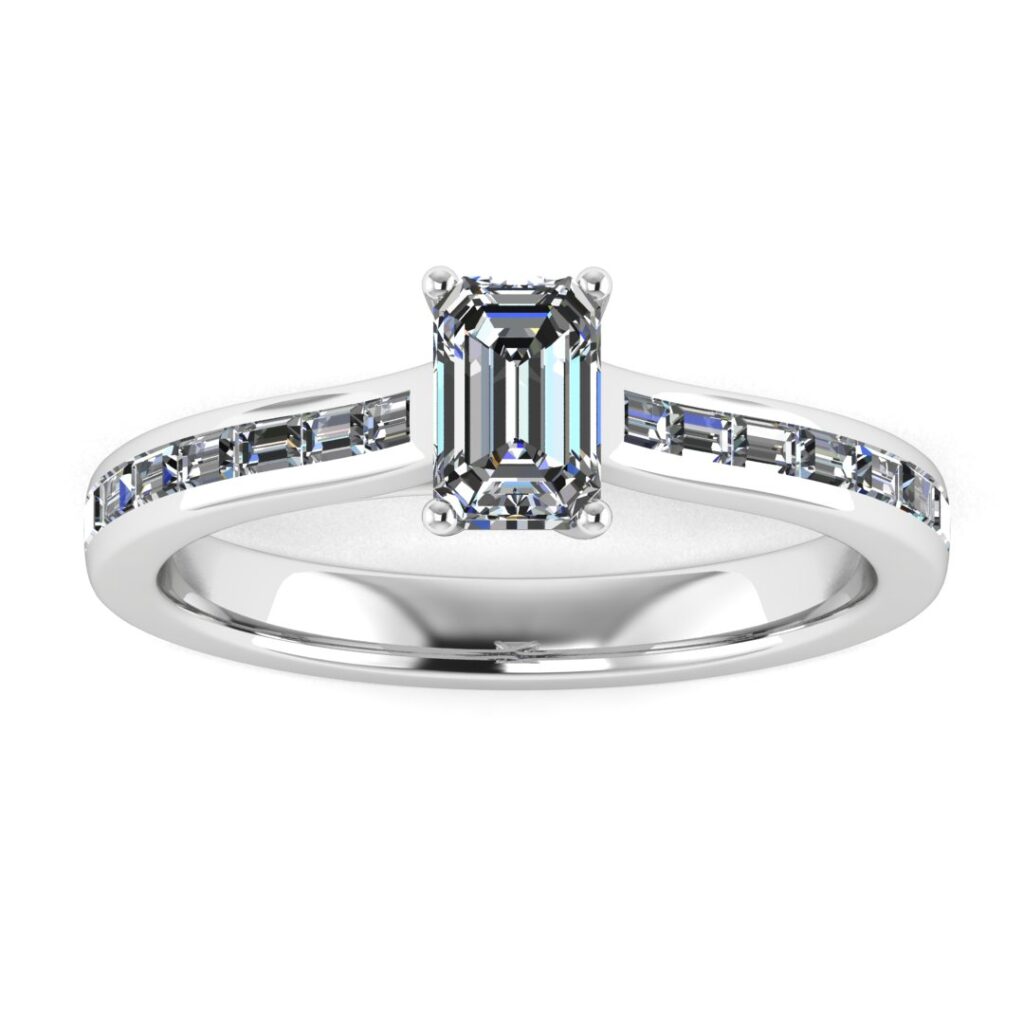
The classic solitaire emphasizes diamond quality through simplicity. This timeless design features a single center stone in 4-6 claw settings, allowing maximum light entry for optimal brilliance. Solitaires suit round, princess, and cushion cuts beautifully, offering versatility that transcends trends.
This style particularly suits those who value understated elegance and want their diamond’s quality to speak for itself. The minimalist design also facilitates future enhancements, many couples later add wedding bands or anniversary rings that complement the solitaire beautifully.
Halo settings surround the center stone with smaller diamonds, creating a visual impact that makes the center diamonds appear up to half a carat larger. This design delivers exceptional sparkle through the combined brilliance of multiple stones, suiting couples who love glamorous, statement jewelry.
Halos work particularly well with round, oval, and cushion cuts. Modern variations include double halos, hidden halos beneath the center stone, and split shanks, adding additional diamonds along the band. For budget conscious buyers, halos allow smaller center stones to create an impressive visual presence.
Three-stone designs symbolize the relationship timeline: past, present, and future. Typically featuring a larger center diamond flanked by two smaller stones, trilogy rings carry romantic symbolism whilst offering design flexibility through various size ratios and shape combinations.
UK engagement ring spending averages £1,500-£3,000, though individual budgets vary considerably. Rather than adhering to outdated “months of salary” rules, focus on what represents comfortable spending within your financial situation.
Maximize value by prioritizing cut quality. This delivers the greatest visual impact. Excellent cut G VS2 diamonds typically outshine Poor cut D VVS2 stones whilst costing less. Allocate your budget strategically: invest in Excellent cut, choose G-H colour for white settings, select VS2-SI1 clarity when eye-clean, and consider weights just below popular thresholds.
Lab-grown diamonds extend budgets by 30-40% without compromising appearance. A £2,000 budget accesses significantly larger or higher quality lab-grown stones compared to natural diamonds. This option particularly suits couples prioritizing size or wanting to maximize quality across all 4Cs.
Independent certification from recognized gemological laboratories provides an objective diamond assessment. GIA (Gemological Institute of America) represents the industry gold standard, whilst IGI (International Gemological Institute) also maintains a respected reputation. At Hispek Diamonds, we prioritize diamonds certified by these recognized laboratories.
Certification documents include comprehensive 4Cs grading, polish and symmetry assessments, fluorescence levels, proportions analysis, and plotted inclusion diagrams showing clarity characteristics. Each certified diamond receives a unique identification number laser-inscribed on the girdle.
This documentation proves essential for insurance purposes and provides confidence that you’re receiving the quality you’re paying for. Never purchase diamonds over 0.30ct without certification from recognized laboratories. Verbal assurances and in-house certificates lack the credibility and detail that independent certification provides.
Choosing an engagement ring is a significant milestone that balances emotion with practicality. By understanding the 4Cs, UK legal protections, and strategic purchasing approaches, you’re equipped to make a confident, informed decision. Whether you choose a timeless solitaire, a dazzling halo, or a custom design, prioritize cut quality, verify hallmarking, and insist on independent certification. Take time to consult with reputable jewelers who hold National Association of Jewellers membership and Birmingham Assay Office registration. Remember, the perfect engagement ring isn’t necessarily the most expensive; it reflects your partner’s style, fits comfortably within your budget, and symbolizes your unique love story. With the right knowledge and guidance, UK couples can select rings they’ll treasure for a lifetime whilst ensuring genuine value for their investment.
Contact us and find the perfect Engagement ring at Hispek Diamond.
Most UK couples spend £1,500-£3,000 on engagement rings. Focus on what fits your budget comfortably rather than outdated salary rules. Prioritize Excellent cut quality and consider G-H colour diamonds for the best value without compromising appearance.
London offers options from Hatton Garden to established jewelers across the city. Choose jewelers with National Association of Jewellers membership and Birmingham Assay Office registration. Verify proper UK hallmarking and GIA/IGI certification before purchasing.
Yes. UK law requires hallmarking on gold over 1 gram and platinum over 0.5 grams. Proper hallmarks include the sponsor’s mark, fineness mark (750/950), and assay office mark, guaranteeing precious metal authenticity per the Hallmarking Act 1973.
Classic solitaire rings remain most popular among UK couples for their timeless elegance. Halo designs are increasingly favoured for added sparkle, whilst trilogy rings appeal for their symbolic meaning, representing past, present, and future together.
Yes. Lab-grown diamonds cost 30-40% less whilst being chemically identical to natural diamonds. They’re GIA/IGI certified, guaranteed conflict-free, and ideal for maximizing size or quality within budget. They offer identical beauty and durability for engagement rings.
Ring size measurement made simple: learn how to measure at home, avoid common fit mistakes and choose a comfortable ring with confidence before buying.
When comparing high-polish vs textured 22K gold rings, a high-polish surface will usually make fine scratches and scuffs easier to notice because those marks interrupt…

Use this gold portfolio allocation example to compare 5%, 10% and 15% holdings, choose suitable bullion and weigh risks before you buy with confidence.
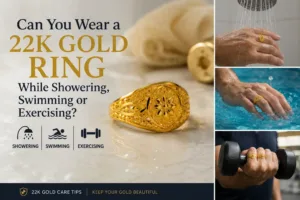
You can physically wear a 22K gold ring while showering, swimming or exercising, but removing it first is generally the safer care routine. Higher karat…

Gold investment explained for UK buyers: compare 24K bars, coins and jewellery, understand VAT, premiums, storage and the checks that protect your purchase.
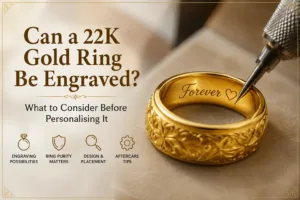
A 22K gold ring can be considered for personalisation through engraving, but the decision should be made for the specific ring rather than assuming every…