A diamond bracelet should feel effortless on the wrist and reassuring in every other way. That is why a proper diamond bracelet buying guide matters. When you are spending on fine jewellery, the right choice is not only about sparkle – it is about quality, comfort, certification, craftsmanship and whether the piece suits how it will actually be worn.
Some buyers want a timeless bracelet for daily wear. Others are choosing a milestone gift, wedding jewellery or a piece that sits firmly in the affordable luxury category while still feeling premium. The best purchase depends on wrist size, diamond type, setting style, metal choice and budget, and each of those decisions affects both appearance and long-term value.
Diamond bracelet buying guide:
What are the different styles of Diamond Bracelets
Before comparing diamond specifications, decide what kind of bracelet you are buying. Style shapes everything from price to practicality.
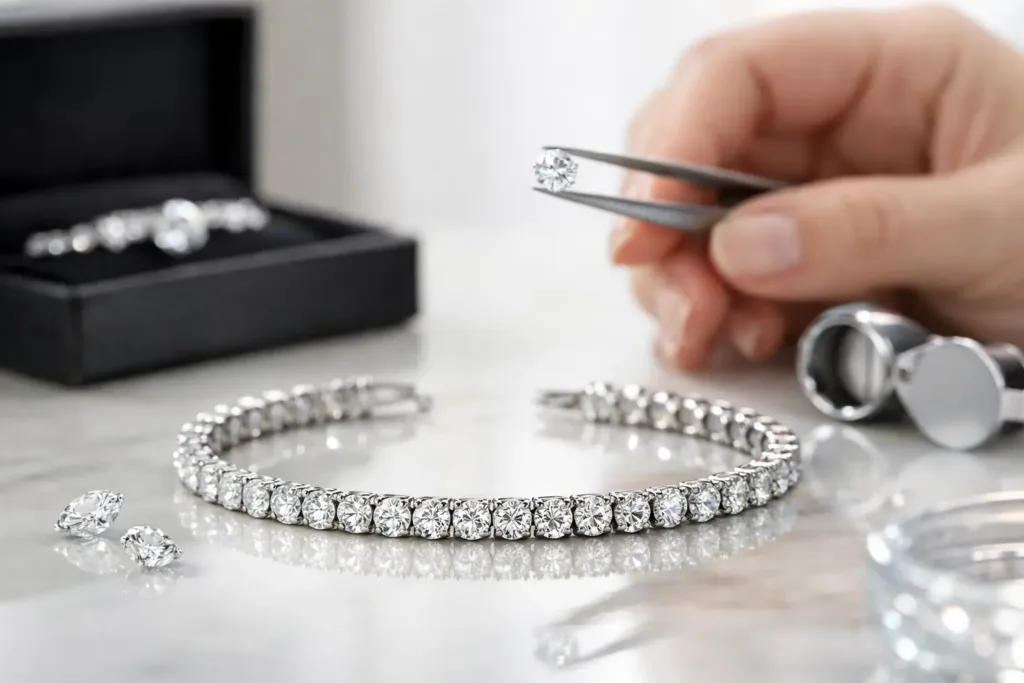
A tennis bracelet remains the classic choice. It offers a continuous line of diamonds and a clean, balanced look that works equally well with occasion wear and tailored everyday dressing. If you want something timeless and versatile, this is usually the first place to look.
A bangle-style diamond bracelet feels more structured. It can look sleek and substantial, particularly in yellow gold or platinum, but fit becomes more critical because there is less flexibility than with a linked bracelet. This style often appeals to buyers who want a stronger jewellery statement.
Chain bracelets with diamond accents sit at a lower price point than full diamond line bracelets and can be an excellent option for gifting. They offer a lighter look and more casual wearability, although they will not deliver the same uninterrupted brilliance as a tennis design.
If you are buying for regular wear, think beyond the display image. A bracelet that catches on knitwear, feels too rigid or sits awkwardly beside a watch may spend more time in the box than on the wrist.
Natural or lab-grown diamonds?
For many buyers, this is the biggest decision because it directly affects price and preference. Natural diamonds carry traditional rarity and remain the classic choice for those who value geological origin. Lab-grown diamonds offer the same visual beauty and real diamond composition, usually at a more accessible price per carat.
There is no one correct answer here. It depends on what matters most to you. If your priority is maximising size and sparkle within a set budget, lab-grown can be extremely attractive. If you place greater importance on rarity, heritage and conventional resale perceptions, natural diamonds may feel more aligned with your purchase.
Whichever route you choose, quality standards still matter. A lower-grade diamond bracelet does not become a better buy simply because the total carat weight sounds impressive.
How diamond quality works in a bracelet
Bracelets are viewed differently from engagement rings. People see them at arm’s length, in motion and under changing light, so the balance of the 4Cs needs a slightly different approach.
Cut and sparkle come first
In a bracelet, lively brilliance usually matters more than chasing extreme specifications in every category. Well-cut diamonds reflect light cleanly and give the piece its overall presence. A bracelet with modestly sized but well-cut stones often looks better than one with larger diamonds that appear dull.
Clarity should be eye-clean, not excessive
Because bracelet diamonds are smaller and not examined as closely as centre stones in rings, you may not need very high clarity grades to achieve a beautiful result. Eye-clean diamonds often represent better value than paying a steep premium for technical grades that will be difficult to appreciate during normal wear.
Colour depends on metal choice
In white gold or platinum settings, buyers often prefer brighter colour grades for a crisp, icy appearance. In yellow gold, slightly warmer diamonds can still look excellent because the metal itself adds warmth. This is where expert guidance helps, as a smart pairing can protect your budget without compromising appearance.
Carat weight should be read carefully
Total carat weight can be misleading if looked at in isolation. Two bracelets with the same total carat weight can look very different depending on stone count, individual diamond size and setting style. A finer line bracelet may look more delicate and elegant, while fewer larger stones create a bolder visual effect.
Metal choice affects both look and wear
The metal frame does more than hold the diamonds in place. It influences tone, durability and how the bracelet fits into the rest of your jewellery collection.
White gold gives a bright, contemporary finish and remains a popular choice for diamond bracelets because it complements the stones without adding warmth. Platinum offers a premium feel and excellent durability, though it usually comes at a higher price point. Yellow gold brings a richer, classic character and pairs especially well with traditional styling or warmer wardrobes.
If the bracelet is intended for frequent wear, consider how it will sit alongside rings, watches and other jewellery. A piece that harmonises with what you already wear tends to deliver better value because it becomes part of your routine rather than an occasional purchase.
For UK buyers, hallmarking is also essential. Fine jewellery should be properly hallmarked so that metal purity is independently verified.
Fit is where many buyers get it wrong
A diamond bracelet can be beautifully made and still feel disappointing if the fit is off. Too tight, and it becomes restrictive and uncomfortable. Too loose, and it twists, catches and risks damage.
A good bracelet should move lightly on the wrist without rolling excessively. Tennis bracelets in particular need enough room to drape naturally while remaining secure. If you are buying as a gift and cannot measure precisely, it is wise to choose a retailer that offers support with sizing, adjustments or aftercare.
Clasp design also matters more than many expect. A secure fastening with a safety catch gives better peace of mind, especially in higher-value bracelets. When you are investing in diamonds, security is part of quality.
Diamond bracelet buying guide: how to set a realistic budget
The best budget is one that reflects both your expectations and the purpose of the piece. A bracelet for daily wear may justify spending more on durability and balanced quality. A one-off occasion gift may be led more by design and visual impact.
Instead of asking how cheaply you can buy a diamond bracelet, ask where the money is going. Are you paying for certified diamonds, precious metal content, superior setting work and trusted aftercare? Or are you paying mainly for an inflated headline price reduced by constant promotions?
A transparent retailer should make quality, certification and pricing clear. That matters because fine jewellery is not a throwaway purchase. Confidence comes from knowing exactly what you are buying.
If budget is firm, there are sensible ways to create value. Choosing slightly smaller diamonds with stronger cut quality, selecting lab-grown stones, or opting for 9K or 18K gold instead of platinum can all improve affordability without making the bracelet look underwhelming.
What should I look out for when buying a diamond Bracelet.
Certification, sourcing and trust signals matter
When buying diamond jewellery online or at a distance, trust markers become even more important. Certification helps confirm what you are paying for, particularly in higher-value pieces. Ethical sourcing claims should be backed by clear business standards rather than vague language. Return policies, warranty cover and aftercare support are not extras – they are part of the buying decision.
This is especially relevant when the bracelet is being purchased for a major gift or life event. A premium piece should arrive with the reassurance to match. At Hispek Diamonds, that confidence is built through certified jewellery, transparent pricing, UK hallmarking and service-led support that helps buyers make informed decisions rather than rushed ones.
At Hi-Spek diamonds all our gold and diamond product is
UK hallmarked and independently graded for diamond quality by
GIA or IGI.
Should you choose bespoke?
If you have a very specific design in mind, bespoke can be worth considering. This is particularly true if you want to match an engagement ring, recreate a sentimental style, choose an exact diamond layout or adjust proportions for a smaller or larger wrist.
The trade-off is time. Bespoke jewellery usually requires consultation, design approval and production lead time, so it may not suit urgent gifting. It can, however, provide a much stronger result when standard options do not quite match your requirements.
What to check before you buy
A bracelet may look excellent in product photography and still fall short in practice. Check the diamond type, total carat weight, metal purity, bracelet length, setting style and clasp security. Confirm whether the stones are certified, whether the piece is hallmarked, and what happens if the fit needs adjusting after delivery.
Also think honestly about lifestyle. If the bracelet will be worn every day, durability and comfort should carry more weight than maximum visual impact. If it is for events and occasions, you may prioritise a bolder look or higher total carat weight.
The right diamond bracelet should feel like a considered purchase from the moment it arrives. Choose one that suits your wrist, your routine and your standards, and it will do more than complete an outfit – it will become a piece you trust wearing for years.