Why Are Lab-Grown Diamonds Gaining Interest in the UK
The UK diamond market is evolving rapidly. At Hispek Diamonds, with locations in London and Leicester, we’ve observed firsthand how lab-grown diamonds now represent one of the fastest-growing segments in British jewellery retail. Understanding why these scientifically created gems capture attention reveals important changes in consumer values, economic priorities, and purchasing behaviour across Britain.
Lab-grown diamonds are gaining interest in the UK due to their affordability, ethical sourcing, and environmental benefits. They offer the same quality, brilliance, and durability as natural diamonds but at a lower cost—typically 30-40% less. These diamonds are becoming increasingly popular among buyers who prioritize sustainability, ethics, and practicality over traditional rarity and long-term investment value.
Understanding Lab-Grown Diamonds
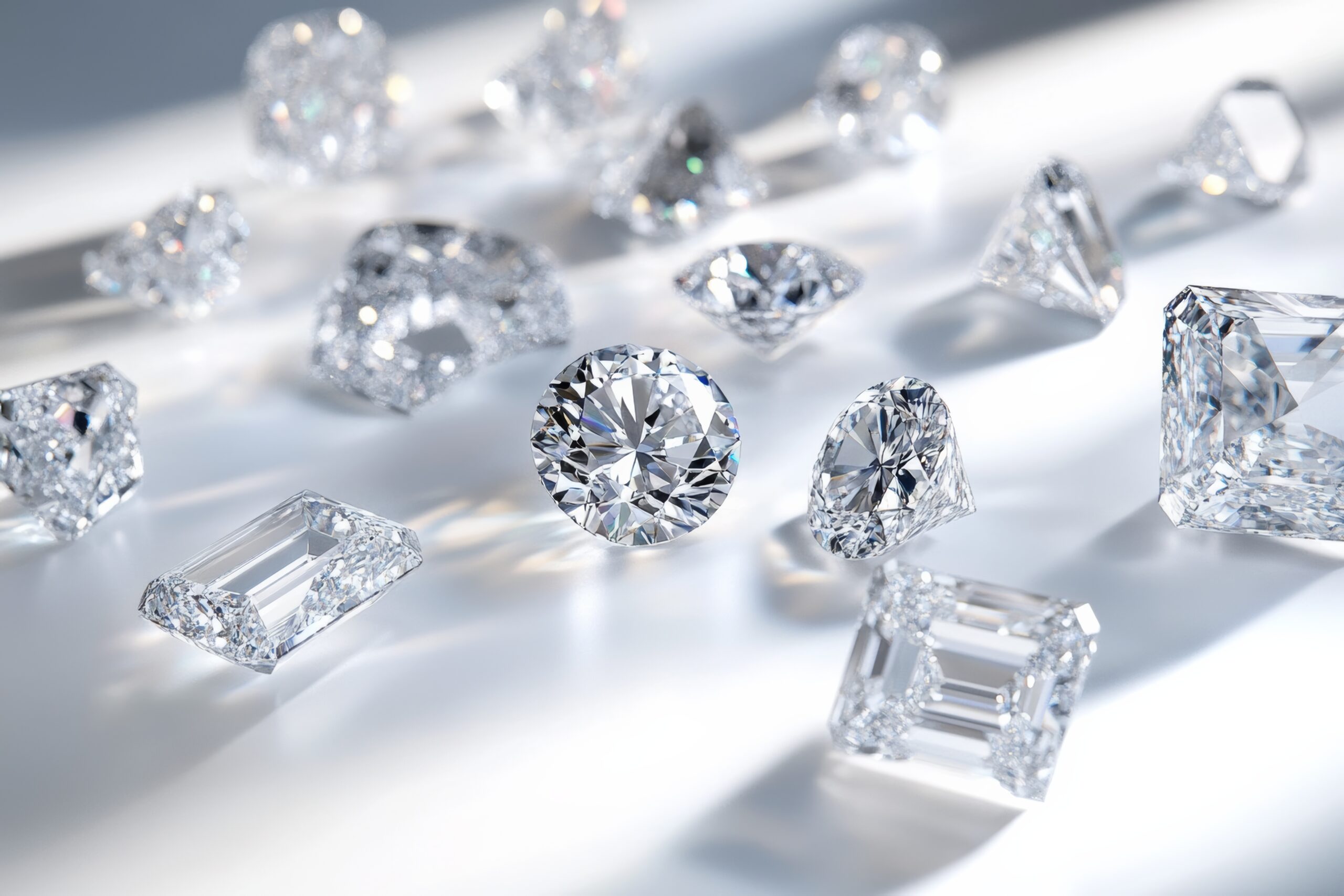
Lab-grown diamonds are real diamonds created in controlled laboratory environments using advanced technology. Two primary methods, High Pressure High Temperature (HPHT) and Chemical Vapour Deposition (CVD), replicate natural diamond formation conditions, compressing billions of years of geological processes into weeks.
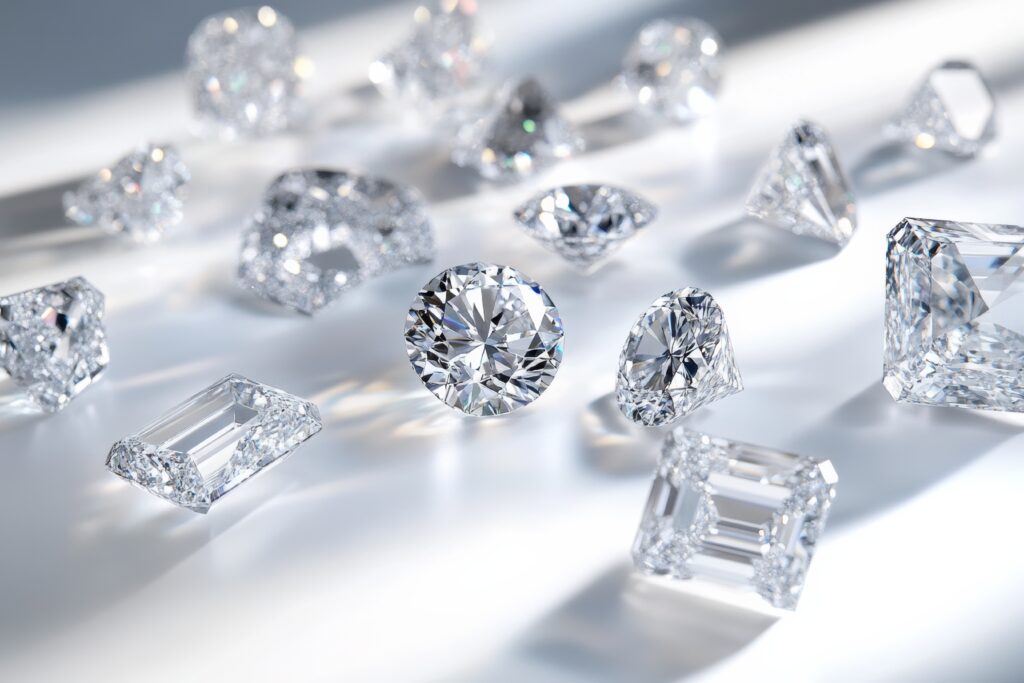
These stones are chemically, physically, and optically identical to mined diamonds. They possess the same hardness, brilliance, and fire. Independent laboratories, including GIA and IGI, grade lab-grown diamonds using the same 4Cs standards applied to natural stones. Even expert gemologists require specialized equipment to distinguish between them, as visual inspection alone proves insufficient.
This isn’t about diamond alternatives like cubic zirconia or moissanite. Lab-grown diamonds are genuine diamonds, distinguished only by their origin.
The Economic Appeal
Price represents a significant factor driving UK interest. Lab-grown diamonds generally cost 30 to 40 percent less than natural diamonds with equivalent specifications, though exact savings vary by quality grade and carat weight. For British buyers navigating expensive housing markets and economic uncertainty, this difference matters considerably.
A given budget typically accesses larger stones or higher quality grades in lab-grown diamonds compared to natural equivalents with superior quality. Buyers can maximize size, upgrade clarity from SI1 to VVS1, or improve colour from H to D, accessing quality levels previously beyond reach.
This pricing advantage reflects production efficiency rather than inferior quality. Laboratory environments eliminate many costs inherent to mining operations whilst producing consistent results. For younger UK buyers establishing their financial futures, this value proposition proves increasingly attractive.
Environmental Responsibility
Sustainability increasingly influences British purchasing decisions. Recent research suggests that many UK millennials, particularly younger buyers, increasingly consider environmental factors when making significant purchases, and diamonds are no exception.
Traditional mining involves substantial environmental disruption. Traditional mining operations require moving massive amounts of ore to produce a single carat diamond, disturbing landscapes and affecting ecosystems, consuming water resources, and generating considerable carbon emissions.
Lab-grown production operates within controlled facilities with measurable environmental footprints. Progressive producers increasingly utilize renewable energy, and land disruption is minimal compared to mining. For environmentally conscious UK buyers who prioritize sustainability in other life areas, lab-grown diamonds offer alignment between values and purchases.
This environmental consideration particularly resonates where climate awareness runs high, and consumers seek products with reduced ecological impact.
Ethical Certainty
Beyond environmental concerns, ethical considerations significantly influence UK buyers. Despite the Kimberley Process, concerns persist about human rights issues in some mining regions, including exploitative labour practices and unsafe working conditions.
Lab-grown diamonds eliminate these ethical ambiguities. Their origin is transparent and traceable, created in regulated facilities with known labour standards. For UK consumers prioritizing ethical consumption, this certainty provides peace of mind that natural diamond supply chains cannot always guarantee.
British buyers increasingly demand transparency about product origins. Lab-grown stones satisfy this demand completely, appealing particularly to younger consumers who prioritize corporate social responsibility. For engagement rings especially, the guarantee that no mining occurred adds meaningful value to socially conscious couples.
Expanding Quality and Choice
Lab-grown technology now produces stones across the complete quality spectrum. UK buyers can access everything from accessible pieces to exceptional investment-quality diamonds. This variety ensures options for every budget and preference.
Additionally, lab environments enable fancy colour diamond production, blues, pinks, yellows, at more accessible prices than their extremely rare natural counterparts. For consumers wanting unique, distinctive pieces, lab-grown fancy colours provide opportunities previously reserved for wealthy buyers only.
Controlled production conditions also mean higher average quality, giving buyers better selection within any price point.
Changing Cultural Attitudes
Cultural perceptions toward lab-grown diamonds have shifted dramatically in the UK. Initial skepticism has given way to recognition of their genuine diamond status and practical advantages.
Celebrity adoption has normalized lab-grown diamonds, with high-profile figures wearing them publicly. Educational efforts by jewellers and gemological organizations have clarified what these stones actually are: real diamonds, not imitations.
Generational attitudes particularly drive this shift. Younger UK buyers prioritize sustainability, ethical sourcing, and practical value over traditional notions of rarity. For these consumers, a diamond’s beauty, durability, and symbolism matter more than its geological versus laboratory origin.
Market Accessibility
Technological improvements continue to enhance quality whilst reducing costs, making lab-grown diamonds increasingly accessible. Production capacity has expanded significantly, meaning UK jewellers can offer extensive selections from small accent stones to large centre diamonds exceeding three carats.
Online retailers have also expanded UK access, offering comprehensive selections with detailed specifications, certifications, and competitive pricing. This digital accessibility suits modern British shopping habits, particularly among younger demographics comfortable with significant online purchases.
The Investment Question
Natural diamonds generally maintain value better long-term compared to lab-grown stones. However, UK buyers increasingly question whether engagement rings should be evaluated as financial investments.
For most people, these pieces carry sentimental value far exceeding financial considerations. The practical benefits of lab-grown diamonds lower initial cost, higher quality specifications, ethical certainty often outweigh abstract future resale scenarios most owners never encounter.
British consumers pragmatically assess this trade-off: paying less initially for equivalent beauty, or paying premium prices for natural origin. For many, prioritizing immediate quality and ethical sourcing, lab-grown diamonds represent the logical choice.
What This Means for UK Buyers
Lab-grown diamonds address multiple contemporary concerns: economic accessibility during challenging times, environmental responsibility amid climate awareness, ethical certainty in a transparency demanding culture, and practical value for pragmatic consumers.
At Hispek Diamonds, we offer both natural and lab-grown certified diamonds, all set in UK-hallmarked gold and platinum with proper GIA or IGI certification. We provide transparent education about both options, empowering customers to make informed decisions aligned with their values and budgets.
Making Your Choice
Whether lab-grown diamonds suit your needs depends on personal priorities:
Consider lab-grown if you want to:
Lab-grown diamonds suit buyers who want to maximize carat size or quality within budget. They work well for those prioritizing environmental sustainability and ethical certainty, or anyone seeking fancy colour diamonds at accessible prices. These stones particularly appeal to buyers who value practical benefits over traditional rarity concepts.
Natural diamonds appeal to buyers who prefer geological rarity and natural formation history. They suit those seeking long-term value retention, traditional diamond sourcing, or the romantic narrative of billions of years of formation.
Consider natural if you prefer:
- Geological rarity and natural formation history
- Long-term value retention
- Traditional diamond sourcing
- The romantic narrative of billions-of-years formation
Both deliver genuine diamonds suitable for engagement rings and meaningful jewellery. The right choice reflects your individual values rather than objective superiority.
Conclusion
Lab-grown diamonds are gaining UK interest because they represent technological achievement, democratizing diamond access. They deliver genuine diamond beauty, durability, and symbolism at prices more buyers can afford, whilst eliminating ethical and environmental concerns.
This trend shows no signs of reversing. As technology improves, costs decrease, cultural acceptance grows, and younger generations become primary buyers, lab-grown diamonds will likely capture an increasing market share.
Visit Hispek Diamonds in London (Matrix Business Centre, 167-169 Station Road, Edgware, HA8 7JU) or Leicester (The Old School House, 65A London Road, Leicester, LE2 5DN) to explore both natural and lab-grown certified diamonds. Our experts guide you through the decision process with transparency and expertise. Contact us at +44 203 965 6669 or contact@hispekdiamonds.com.
FAQs
Are lab-grown diamonds real diamonds?
Yes. Lab-grown diamonds are chemically, physically, and optically identical to mined diamonds. They’re pure carbon with the same crystal structure, hardness, and brilliance. GIA and IGI certify them using identical 4Cs standards applied to natural diamonds.
How much cheaper are lab-grown diamonds in the UK?
Lab-grown diamonds typically cost 30-40% less than natural diamonds with equivalent specifications. This means UK buyers can either purchase larger stones, upgrade to higher quality grades, or stay within smaller budgets whilst maintaining the desired size and quality.
Can jewellers tell the difference between lab-grown and natural diamonds?
Not visually. Even expert gemologists require specialized equipment to distinguish lab-grown from natural diamonds. The stones look identical when worn. Only laboratory testing using advanced instruments can detect minor trace elements, indicating their origin.
Do lab-grown diamonds hold their value like natural diamonds?
Lab-grown diamonds generally don’t retain value as well as natural diamonds due to decreasing production costs. However, most UK buyers prioritize sentimental value over resale potential, making the lower initial cost and ethical benefits more relevant considerations.
Are lab-grown diamonds better for the environment?
Yes. Lab-grown diamonds have significantly smaller environmental footprints than mining operations, which move approximately 250 tonnes of ore per carat. Lab production occurs in controlled facilities with measurable impact, increasingly using renewable energy sources.