
What Is the Kimberley Process and What Should UK Diamond Buyers Know?
Buying a diamond is a big moment, and you want to feel good about it. Many buyers in the UK today care about more than…
We Buy Gold . Top Prices Paid .
7 Day Price Promise .
30 Day Returns
Free World Wide Shipping
Life Time Warranty
We Buy Gold . Top Prices Paid .
7 Day Price Promise .
30 Day Returns
Free World Wide Shipping
Life Time Warranty

+44 203 965 6669
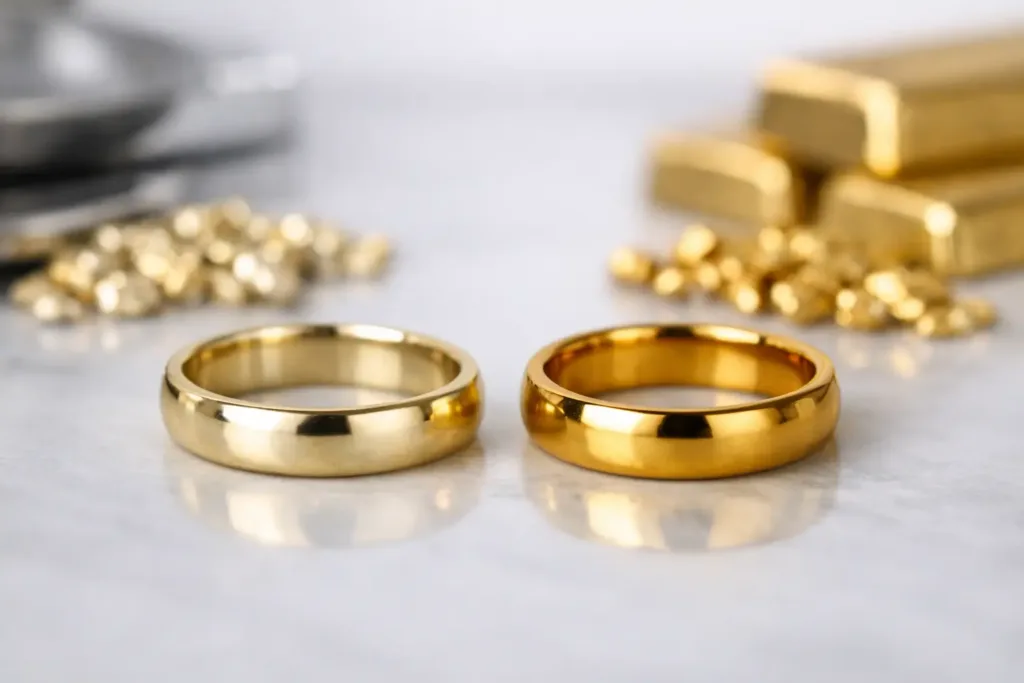
A ring can look perfect in the box and feel completely wrong after a month of wear. That is usually where the real 9k vs 18k gold question begins – not in theory, but in daily life. If you are choosing an engagement ring, wedding band, chain or gift, the right option depends on how you want the piece to wear, look and hold its value over time.
Gold purity affects more than price. It changes colour, weight, durability, maintenance and even how luxurious a piece feels on the hand or around the neck. For some buyers, 9k gold is the smarter everyday choice. For others, 18k gold offers the richer finish and higher precious metal content they want from fine jewellery.
The number refers to how much pure gold is in the alloy. Pure gold is 24 carat, so 9k gold contains 9 parts gold out of 24, while 18k gold contains 18 parts gold out of 24.
That means 9k gold is 37.5% pure gold, with the remaining 62.5% made up of other metals such as silver, copper, zinc or palladium, depending on the final colour and alloy formula. 18k gold is 75% pure gold, with 25% other metals added for strength and wearability.
Both can be genuine, hallmarked gold in the UK. The difference is not whether one is real and the other is not. The difference is purity, appearance, feel and value.
This is often the deciding factor, especially for bridal jewellery and pieces meant to feel premium from the first wear.
18k gold usually has a richer, warmer and more saturated gold tone because it contains far more pure gold. In yellow gold, that often means a deeper, more luxurious colour that many buyers associate with classic fine jewellery. In rose gold, it can appear slightly softer and more refined. In white gold, the effect is subtler, but the underlying composition still influences tone and finish.
9k gold tends to have a paler appearance because it contains less pure gold and more alloy metals. That does not make it unattractive. In fact, some buyers prefer the lighter tone, particularly in contemporary styles or jewellery they want to wear every day without drawing too much attention.
If your priority is visual richness, 18k usually wins. If you want a more affordable look that still feels elegant and versatile, 9k can be an excellent choice.
A common assumption is that more gold means better durability. In practice, it is more nuanced.
Pure gold is naturally softer, which is why it is mixed with other metals for jewellery. Because 9k gold contains a higher proportion of those harder alloy metals, it is generally more resistant to scratching and everyday knocks than 18k gold. That makes it particularly practical for people with hands-on jobs, active lifestyles or a tendency to be less careful with jewellery.
18k gold is still absolutely suitable for fine jewellery, including engagement rings and wedding bands, but it is softer than 9k and may show surface wear more readily over time. This is not necessarily a drawback. Many buyers of premium jewellery accept that a higher-purity metal may need occasional polishing, checking and care.
The better choice depends on how the piece will be worn. A chain worn occasionally for evenings out faces different demands from a ring worn every day for years. For heavy daily wear, 9k can offer reassurance. For milestone jewellery where beauty and precious metal content matter more, 18k often feels more special.
When comparing 9k vs 18k gold, price is one of the clearest differences.
Because 18k contains twice as much pure gold as 9k, it is significantly more expensive. That affects not only simple bands and chains, but also diamond rings, earrings, bracelets and bespoke designs. If you are working to a set budget, choosing 9k gold can free up more room for diamond size, design details or a heavier piece overall.
That is why 9k gold is popular with buyers looking for affordable luxury. It gives you genuine gold jewellery at a lower entry point, making it especially appealing for first fine jewellery purchases, gifts and everyday staples.
18k gold, on the other hand, offers stronger intrinsic material value because of its higher gold content. It is not the same as investment-grade bullion, but if you want jewellery with a greater proportion of precious metal, 18k clearly delivers more in that respect.
For many customers, the real question is not which is cheaper or which is worth more in abstract terms. It is whether your budget is better spent on higher purity or on the overall piece. A well-made 9k ring with an excellent design can be a better purchase than stretching for 18k and compromising elsewhere.
This is an area where composition matters.
Since 9k gold contains a higher percentage of alloy metals, there is a greater chance that someone with metal sensitivities may react to it, depending on the exact alloy used. 18k gold contains more pure gold and fewer mixed metals, so it is often better tolerated by those with sensitive skin.
This does not mean 9k gold will cause irritation. Many people wear it comfortably for years. But if you already know your skin reacts to certain metals, or you are shopping for a ring that will be worn constantly, 18k may be the safer and more comfortable option.
For bridal jewellery, there is no one-size-fits-all answer.
9k gold is a practical choice for buyers who want durability, value and a lower purchase price. It suits straightforward solitaire rings, wedding bands and modern designs where budget matters just as much as appearance. It can also be a sensible option if you would rather invest more of your budget into the diamond.
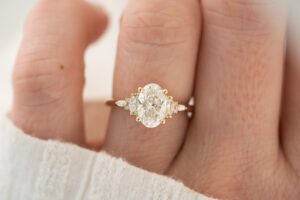
18k gold is often chosen for premium engagement rings and wedding bands because it feels more luxurious and carries stronger precious metal appeal. The richer colour can enhance the overall look of the ring, and many buyers simply prefer the idea of a higher-purity gold for a once-in-a-lifetime purchase.
If you are buying a ring for lifelong daily wear, think honestly about lifestyle, budget and expectations. Someone who wants the richest finish and is happy to maintain it may prefer 18k. Someone who wants a hard-wearing ring at a more accessible price may be better served by 9k.
In the UK, both 9k and 18k gold can be hallmarked, which is one of the clearest trust signals when buying fine jewellery. A hallmark confirms that the metal meets the legal standard of purity stated.
For 9k gold, you will typically see a 375 mark. For 18k gold, you will typically see 750. Those numbers reflect the purity levels of each alloy.
This matters because buyers should never rely on appearance alone. Gold can look similar across different purities, especially online. Proper hallmarking gives confidence that you are paying for genuine gold of the stated standard, not simply a gold-coloured finish.
If you want everyday wear, stronger resistance to knocks and a more budget-conscious price, 9k gold makes sense. It is particularly well suited to practical jewellery buyers, gifting, lighter-use diamond pieces and customers who want genuine gold without stepping into a much higher spend.
If you want a richer colour, higher gold content and a more premium feel, 18k gold is usually the better fit. It suits engagement rings, wedding jewellery, statement pieces and buyers who place greater emphasis on luxury, purity and long-term precious metal value.
Neither choice is automatically better. The best option is the one that matches how the jewellery will actually be worn.
A trusted jeweller should be able to explain these differences clearly, alongside certification, hallmarking and the practical implications for your chosen design. At Hispek Diamonds, that conversation matters because buyers are not just choosing a metal. They are choosing how their jewellery should look, feel and perform for years to come.
If you are torn between the two, choose the gold that fits your life as well as your taste. The right piece should not only look exceptional on day one – it should continue to feel like the right decision every time you wear it.
Buying a diamond is a big moment, and you want to feel good about it. Many buyers in the UK today care about more than…

Rose gold engagement rings have become a truly loved choice for couples across the UK. The warm, pinkish tone of rose gold makes every ring…
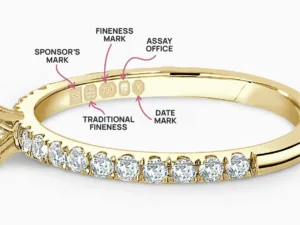
Gold jewellery holds a very special place in our hearts and homes. You wear it to weddings, family events, and every single day. Over time,…
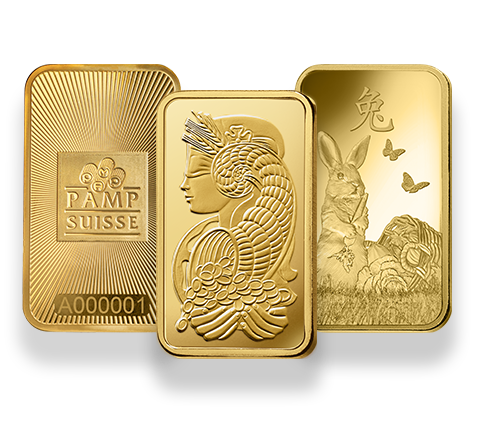
Gold has always been a smart and trusted way to grow your wealth over time. More and more people in the UK are now looking…
Picking an engagement ring is one of the biggest decisions you will ever make in life. You want something beautiful that also keeps its worth…
The engagement ring is not just a piece of jewellery to choose from. It is a sign of love, devotion, and the beginning of a…