


Best Mens Gold Chains for Everyday Style
Find the best mens gold chains for your style, from curb and rope designs to the right gold carat, length and weight for lasting value and wear daily.
We Buy Gold . Top Prices Paid .
7 Day Price Promise .
30 Day Returns
Free World Wide Shipping
Life Time Warranty
We Buy Gold . Top Prices Paid .
7 Day Price Promise .
30 Day Returns
Free World Wide Shipping
Life Time Warranty

+44 203 965 6669
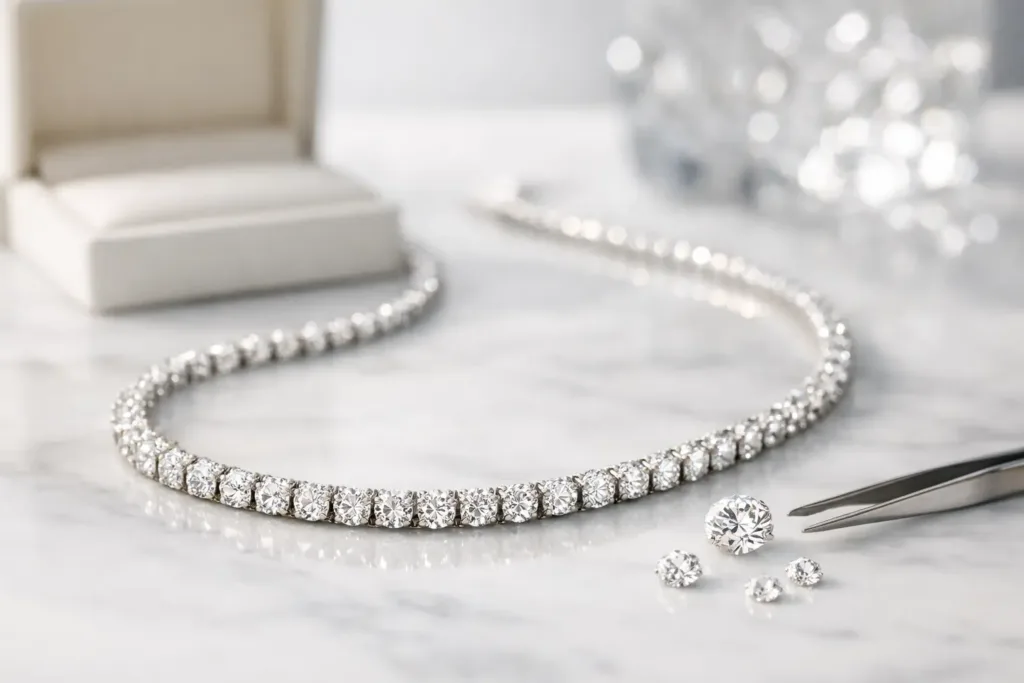
A diamond tennis necklace is designed to be noticed: a continuous line of diamonds that catches the light from every angle, yet remains refined enough for regular wear. This diamond tennis necklace guide explains the details that affect its brilliance, comfort and long-term value, so you can choose with genuine confidence rather than simply comparing carat weights.
Unlike a pendant necklace, where one central stone does most of the visual work, a tennis necklace relies on consistency. The diamonds should sit neatly, the setting should move naturally with the body, and the clasp should feel secure without interrupting the line of light. It is a premium piece that can mark a milestone, elevate an evening look or become a signature part of a jewellery collection.
A tennis necklace is formed from individually set diamonds linked in a flexible row. The name is now widely used for this elegant, full-diamond style, whether the stones are round brilliant, emerald cut, oval or another shape. Round brilliant diamonds remain the classic choice because their faceting gives exceptional sparkle, while fancy-shaped diamonds can create a more contemporary or distinctive look.
Its appeal lies in versatility. A fine, close-fitting necklace can bring polish to a tailored shirt or bridal look, while a larger-carat design makes a confident statement against an open neckline. It also layers beautifully with a simple gold chain, although the tennis necklace should usually remain the focal point.
The right choice depends on how you intend to wear it. A necklace for special occasions may suit larger stones and a more substantial total carat weight. For frequent wear, many buyers prefer a balanced design with secure settings, a practical length and diamonds that offer lively brilliance without placing all of the budget into size.
Length changes the entire character of a tennis necklace. A 16-inch necklace sits close to the collarbone and creates a classic, dressed finish. At 17 or 18 inches, it usually falls more comfortably below the collarbone and works well with a wider range of necklines. Longer lengths offer a more relaxed look and can be particularly effective for layering.
Try to think beyond the photograph. Neck circumference, collarbone shape and preferred clothing all influence the best fit. If the necklace is intended as a gift, a versatile 17 or 18-inch length is often a sensible starting point, but confirming the recipient’s usual necklace length is always worthwhile.
Diamond size is generally expressed through total carat weight, but this figure does not tell the whole story. A 5-carat total weight could consist of many smaller diamonds or fewer larger ones. Larger individual stones produce more defined flashes of light and a bolder profile. Smaller stones can create a delicate, closely set ribbon of sparkle and may offer stronger value for a given budget.
Ask about the approximate carat weight of each diamond as well as the total. This helps you understand how the necklace will look when worn, not just how it reads on a specification sheet.
With a tennis necklace, consistency matters as much as the grade of any individual diamond. The stones are viewed together, so the goal is an even display of colour, brightness and size along the full length.
Cut has the greatest influence on sparkle. Well-cut diamonds return light effectively, creating the crisp brilliance people expect from a premium tennis necklace. A necklace with diamonds that are carefully matched for cut and proportions will often look more impressive than one with a higher total carat weight but less lively stones.
For round brilliant diamonds, seek a bright, even appearance rather than focusing solely on a single specification. For emerald-cut or other step-cut diamonds, clarity and colour become more visible because their broad facets show the stone differently. These styles have an elegant, glass-like flash rather than the intense scintillation of round brilliants.
Near-colourless diamonds are a popular choice for white gold and platinum tennis necklaces, offering a bright, icy appearance. Slightly warmer grades can look beautiful in yellow gold and may provide excellent value, particularly when the necklace is viewed as a whole.
Clarity should be selected with real-world wear in mind. In a multi-stone necklace, diamonds are typically smaller than a centre stone in an engagement ring, meaning inclusions may not be visible without magnification. Eye-clean diamonds can be an intelligent choice where they deliver the desired sparkle and uniformity at a more considered price.
Whether choosing natural or lab-grown diamonds, ask for clear information on the diamond quality range used. Certified diamond jewellery and transparent specifications provide valuable reassurance for a purchase of this significance.
Both natural and lab-grown diamonds are real diamonds, with the same fundamental optical and physical properties. The decision is usually guided by personal preference, budget and the meaning you attach to the piece.
Natural diamonds have formed over billions of years and remain the traditional choice for many buyers. Their rarity and provenance hold particular appeal for heirloom jewellery and milestone gifts. Lab-grown diamonds are created in controlled conditions and can make larger individual stones or a higher total carat weight more accessible within the same budget.
There is no universal right answer. If visible size is your priority, lab-grown diamonds may allow you to achieve a more substantial look. If natural origin is central to your purchase, a natural diamond tennis necklace offers enduring classic appeal. In either case, ethical sourcing, accurate disclosure and appropriate certification should remain non-negotiable.
The metal frames every diamond and affects both the look and maintenance of the necklace. Platinum is naturally white, dense and highly durable, making it an excellent choice for a piece intended for regular wear. It develops a soft patina over time, which some owners appreciate, while others choose occasional polishing to restore a brighter finish.
White gold gives a similarly crisp, contemporary look and is often lighter on the neck. Its rhodium finish may need renewing over the years to maintain its bright white appearance. Yellow gold creates a warmer contrast and gives a diamond tennis necklace a more traditional, richly luxurious character. Rose gold is less conventional but can be striking for those who favour softer tones.
Settings deserve equal attention. Prong settings allow more light around each diamond and create a classic, airy line. Bezel settings surround the edge of each stone with metal, offering a sleek profile and extra protection, although they present a different visual effect. Four-prong designs are popular for their balance of security and brilliance; more protective settings can be preferable where the necklace will be worn often.
Look closely at the links. A well-made tennis necklace should be flexible enough to lie smoothly rather than feel stiff or twist as you move. The workmanship underneath matters too: neatly finished settings and a consistent structure support comfort, security and longevity.
A secure fastening is essential. Many quality tennis necklaces use a box clasp with a secondary safety catch or catches. This gives reassurance that the necklace has more than one point of protection during wear.
Test the clasp where possible. It should close decisively, sit discreetly and be manageable to fasten. For a valuable piece, a clasp that feels reliable is not a small finishing detail – it is part of the investment in everyday confidence. Regular inspections are sensible, especially if the necklace is worn frequently.
The price of a diamond tennis necklace reflects several connected factors: total carat weight, individual diamond size, cut, colour, clarity, diamond origin, metal, setting style and craftsmanship. Two necklaces with the same total carat weight can therefore have very different prices and appearances.
Set a budget around the qualities that will matter most to you. Some buyers prioritise a larger visual presence; others want higher colour and clarity, platinum construction or natural diamonds. A specialist can help you balance these choices without compromising on secure manufacture or an attractive, matched finish.
For UK buyers, also look for appropriate hallmarking on precious metal jewellery and clear documentation. A trusted retailer should be straightforward about specifications, returns, warranty and aftercare. These are practical signals of quality, particularly when buying online or arranging delivery overseas.
A tennis necklace should be the last piece you put on after perfume, hairspray and cosmetics, and the first piece you remove at the end of the day. Take it off for swimming, exercise, gardening and household cleaning. Chemicals and knocks can affect the metal, settings and overall finish.
Clean it gently with warm water, mild washing-up liquid and a soft brush, then dry it with a lint-free cloth. Store it flat in a lined jewellery box or pouch so the links are not tangled or rubbed against other pieces. Professional cleaning and setting checks are worthwhile at regular intervals, especially before an important occasion.
A diamond tennis necklace is not simply a line of stones. It is a piece of fine engineering, carefully balanced around light, movement and security. Choose the version that suits your life as well as your style, and it can become the kind of jewellery you reach for whenever the moment deserves something exceptional.
Find the best mens gold chains for your style, from curb and rope designs to the right gold carat, length and weight for lasting value and wear daily.

Our guide to 24k gold purity explains fineness, hallmarks, pricing, VAT and why investment gold differs from everyday jewellery for UK buyers clearly!
Learn how to choose wedding bands for lasting comfort, style and value, from metal and fit to diamonds, matching designs and trusted hallmarks in Britain.
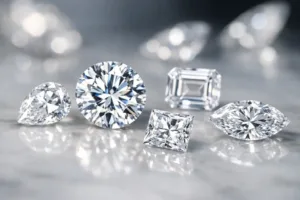
Learn which diamond shapes give the brightest fire and brilliance, and how cut quality, proportions and setting affect visible sparkle in every light.
Compare solitaire vs halo engagement rings by sparkle, budget, protection and everyday wear, so you can choose a certified diamond ring with confidence.

Our guide to gold purity levels explains carats, hallmarks and value, helping you choose jewellery or investment gold with complete confidence in the UK.