

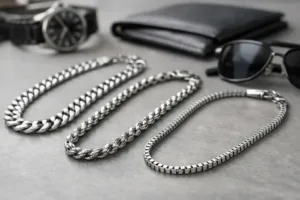
Silver Chains for Men That Fit Your Style
Choose silver chains for men with confidence: compare sterling silver styles, lengths, widths and care for polished everyday or occasion wear with ease.

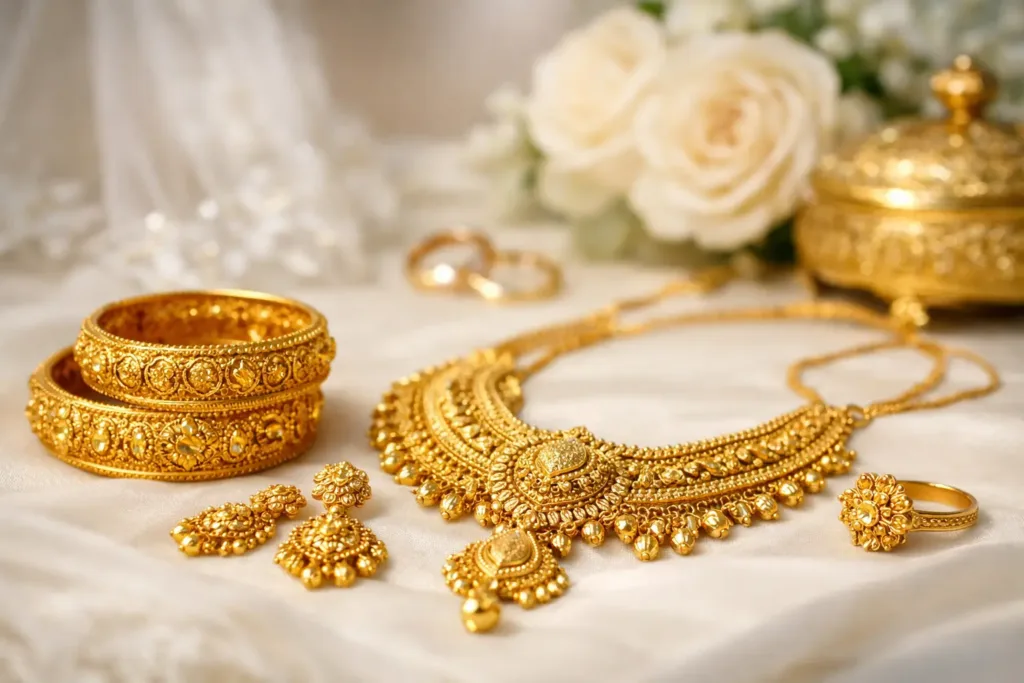
The security of 22K gold jewellery depends on more than the main chain, bracelet or bangle. Clasps close the piece, hinges control opening points, and safety chains or secondary catches can provide another connection if the primary fastening opens. We treat each component as part of one system because a strong-looking clasp cannot compensate for a worn ring, distorted hinge or poorly seated catch.
Across our 22K gold jewellery collection, fastening designs vary according to the form and construction of each piece. We recommend checking the exact mechanism before wear and learning how a secure closure should look and feel.
A clasp brings two ends together and must remain fully engaged during movement. Depending on the design, closure may rely on spring tension, a hook, a tongue entering a box, a screw action or another mechanical arrangement. The important point is not the clasp name alone. The moving parts, receiving component and connecting rings must all work correctly.
Close the clasp deliberately and confirm that it seats in its intended position. A spring mechanism should return as expected. A box-style tongue should enter fully. A hook should retain the receiving ring in normal orientation. If closure feels different from usual, do not assume that pressure or repeated attempts will improve it.
A clasp connects to the jewellery through rings, end caps or short link sections. These small components carry repeated movement and can become high-contact points. Check for a visible gap, distortion, thinning or a ring that no longer sits in line with the end fitting.
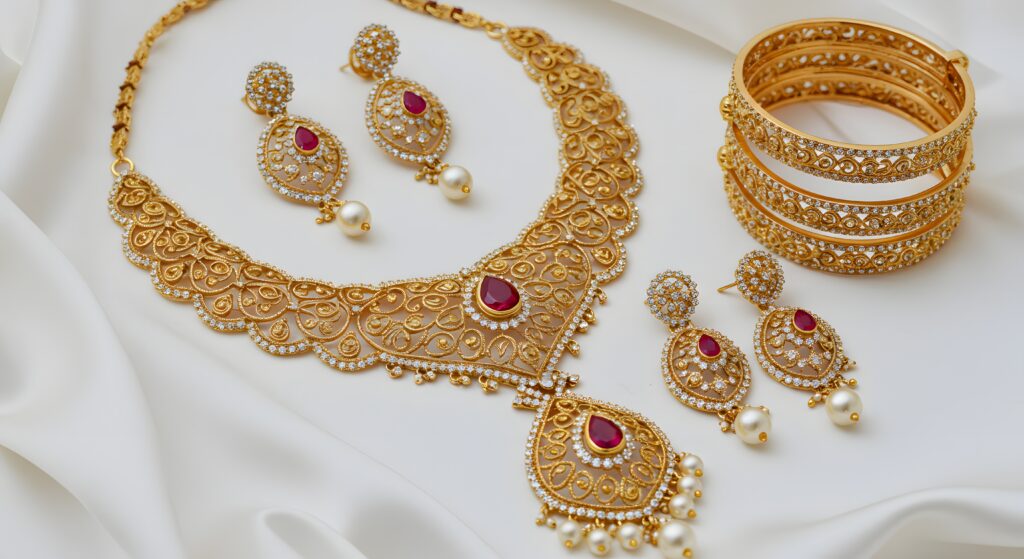
We suggest inspecting both sides of the clasp under good light. Run a fingertip gently around the connection without pulling. A rough edge, new snag or changed angle deserves attention. The fastening is only as dependable as the links that attach it to the piece.
Hinges allow a bangle, bracelet or other structured design to open without bending the main body. A sound hinge should move through its intended range while keeping the two sides aligned. Excessive sideways movement, a widening gap or resistance at one point can indicate that the joint needs inspection.
Never force a hinged piece beyond its designed opening. Open and close it by holding the intended sections rather than twisting the decorative body. When the piece is closed, check that the hinge side and fastening side align naturally. Misalignment can prevent a catch from seating fully even when the clasp appears closed from the front.
A safety chain links two sides of a bracelet or bangle and may limit how far the piece can open if the main catch releases. This can reduce the chance of immediate separation, but it is not a substitute for a working primary clasp. The chain, its attachment points and any secondary clip still require inspection.
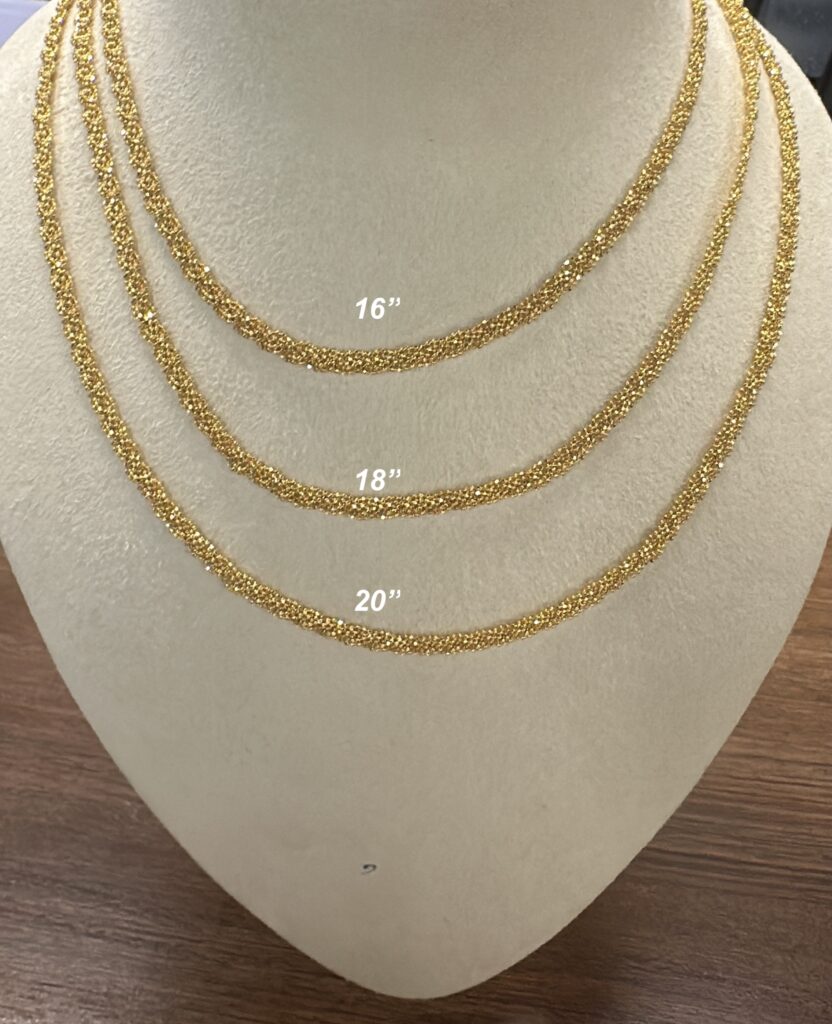
The safety chain needs enough length for the jewellery to open and close as designed without taking constant tension during wear. Too much slack can catch; too little can strain the attachment points or restrict opening. We treat its length and connection method as product-specific rather than applying one universal measurement.
A very tight bracelet can place sustained force on a clasp whenever the wrist bends. A very loose piece can swing, strike hard surfaces or catch on clothing. Necklaces can experience similar stress when a pendant is poorly balanced or a chain repeatedly snags. Appropriate fit reduces avoidable loading on the fastening system.
For bracelets, our 22K gold bracelet collection shows different forms that sit and move differently. For necklaces, link flexibility and pendant weight also affect how force reaches the clasp. Choose the entire piece for your intended use, not the closure in isolation.
Before putting on the piece, look at the clasp in an open and closed position. Check the hinge, end rings, safety connection and nearby links. Close the fastening and give the piece only a gentle handling check. We do not recommend pulling hard, as a force test can itself distort delicate components.
After wear, open the clasp rather than pulling jewellery over the hand or head. Wipe away moisture with a soft, suitable cloth and store the piece so the fastening is not compressed under heavier items. Separate storage also makes the next inspection easier.
Stop if the clasp will not close fully, a hinge feels loose or stiff, a safety chain is stretched, or a joining ring shows a gap. Also pause if the jewellery begins to hang or rotate differently, because a changed position can reveal a developing connection problem.
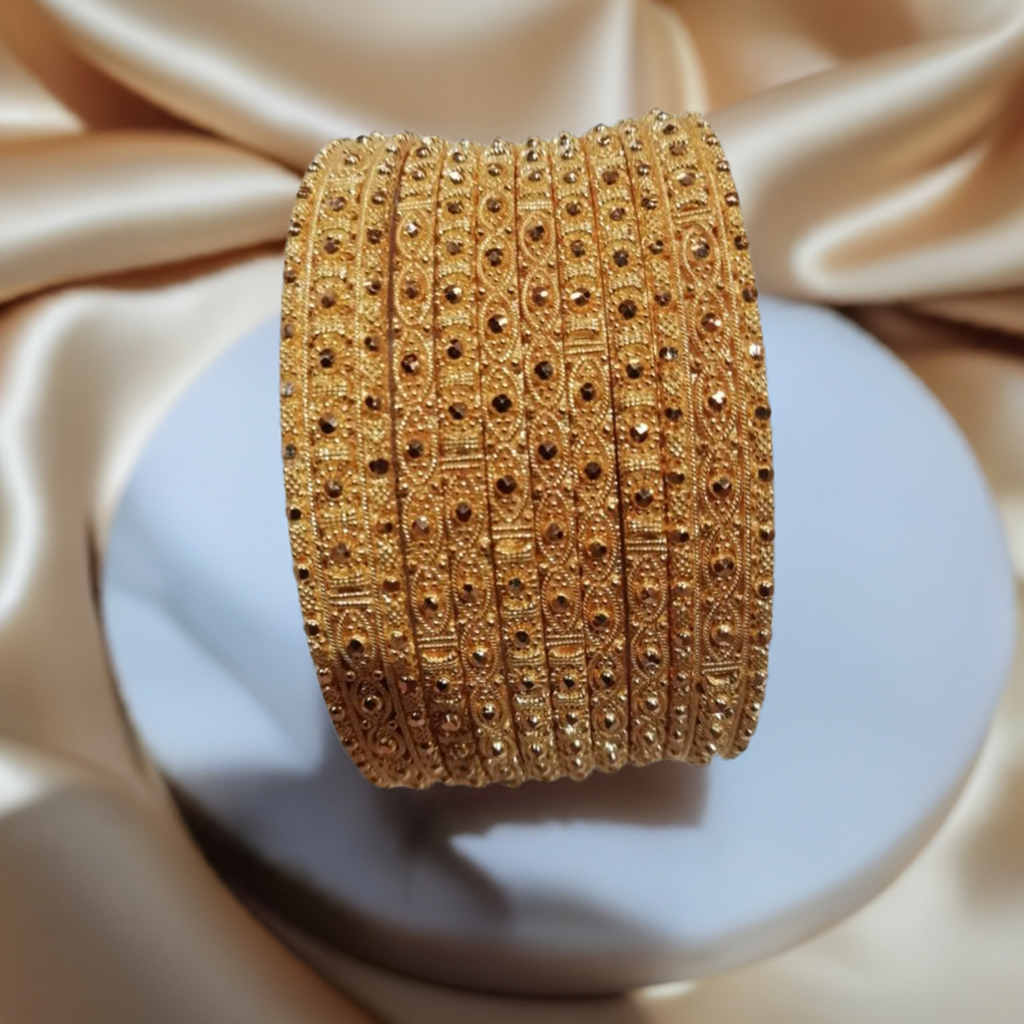
Please contact us for guidance about a specific product or concern. Our hallmarking page explains precious-metal marks, but a hallmark does not assess the current mechanical condition of a clasp or hinge. Physical condition still requires direct inspection.
We view security as a chain of connected parts: the clasp, its receiving component, joining rings, hinges, secondary connections and the nearby jewellery structure. Routine inspection, correct operation and suitable fit support the whole system. If one component changes, we recommend stopping use until the piece can be assessed.
Familiarity is helpful here. Notice the normal sound, resistance and alignment when you first use a fastening. Later, a softer click, uneven gap or new stiffness becomes easier to recognise. Keep the inspection gentle and compare both sides under clear light. We would rather pause over a small change than continue wearing the piece until repeated movement turns that change into a more difficult repair.
Does a safety chain make a bracelet completely secure?
No. A safety chain is a secondary connection. The primary clasp and every attachment point still need to function correctly.
How often should I check a jewellery clasp?
We recommend a quick visual and functional check before each wear, with closer attention whenever closure or movement feels different.
Should I pull on a clasp to test it?
No. Close it correctly and inspect it gently. Hard pulling can place unnecessary force on delicate links and fittings.
Does a hallmark confirm that a clasp is secure?
No. A hallmark identifies precious-metal information. It does not confirm the current mechanical condition of the fastening.
Choose silver chains for men with confidence: compare sterling silver styles, lengths, widths and care for polished everyday or occasion wear with ease.

Modern Asian bridal jewellery trends unite heritage goldwork, diamonds and personal styling. Learn how to choose certified pieces with lasting value today.

Understand natural diamond investment value, from rarity and certification to resale realities, so you can buy a timeless stone with greater confidence.
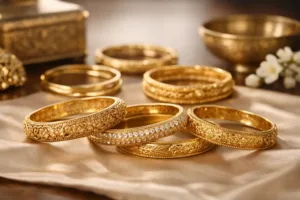
Find the best Asian gold bangles for everyday wear, weddings and gifts. Compare 22K purity, designs, fit, hallmarking and lasting value with confidence.
Our diamond tennis necklace guide explains carat weight, diamond quality, length and setting, helping you choose a certified necklace with confidence.
A custom engagement ring timeline example, from consultation and design approval to diamond sourcing, craftsmanship, hallmarking and delivery in the UK.