We Buy Gold . Top Prices Paid .
7 Day Price Promise .
30 Day Returns
Free World Wide Shipping
Life Time Warranty
We Buy Gold . Top Prices Paid .
7 Day Price Promise .
30 Day Returns
Free World Wide Shipping
Life Time Warranty

- Shop Luxury Diamond Jewellery in the UK
- 22K GOLD JEWELLERY
- Buy Traditional 22K Gold Pendants
- 22K Gold Rings for Men & Women Leicester | Hispek Diamonds
- Shop 22K Gold Necklaces Leicester | Hispek Diamonds
- Buy Stunning 22K Gold Chains Online in the UK
- Buy 22K Gold Bracelets for Women in UK
- Buy 22K Gold Earrings for Women Leicester | Hispek Diamonds
- 22K Gold Bangles Collection Leicester | Hispek Diamonds
- Buy 22K Gold Necklace & Earring Sets
- Buy Traditional Kolkata style 22K Gold Karas
- 18K GOLD JEWELLERY
- SILVER JEWELLERY
- 24K GOLD BULLION
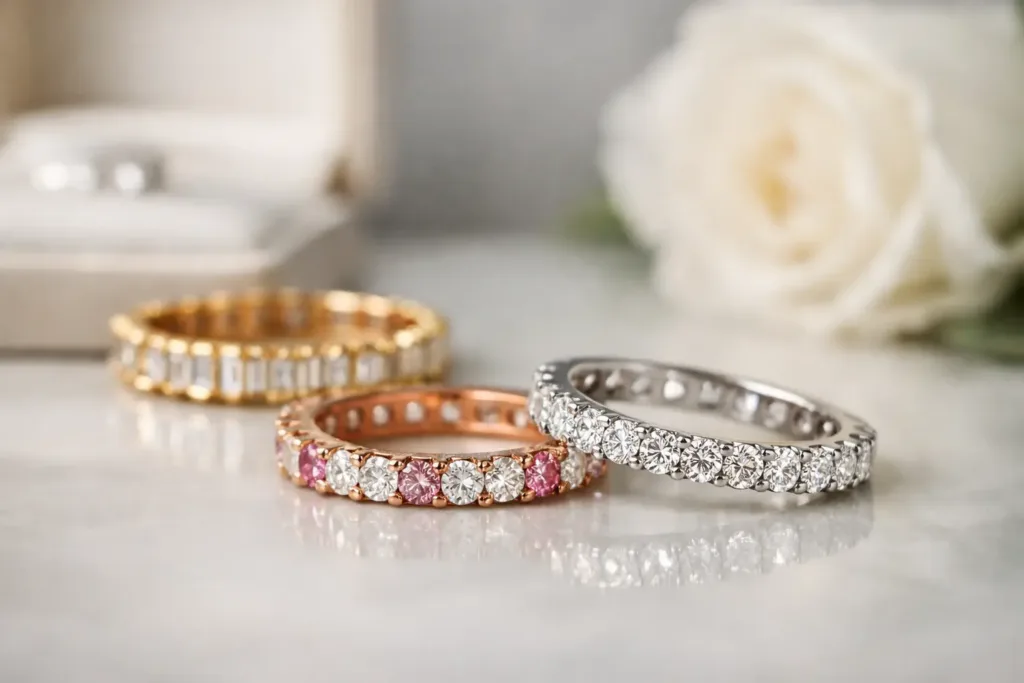
Some rings mark a moment. An eternity ring is designed to mark a lasting bond. If you are researching eternity ring meaning and styles, you are usually not just choosing jewellery – you are choosing how to represent commitment, celebration, and personal taste in a piece that may be worn every day.
That is why the details matter. The setting, the stone size, the metal, and even whether the diamonds go all the way around the band can change both the look and the practicality of the ring. A well-chosen eternity ring should feel timeless, but it should also suit the wearer’s lifestyle and sit comfortably alongside their engagement ring and wedding band.
What is the meaning of an eternity ring?
An eternity ring traditionally symbolises enduring love, loyalty, and an unbroken bond. The continuous line of diamonds or gemstones around the band represents something without end, which is why it has become such a popular gift for anniversaries, milestone birthdays, and major family moments such as the birth of a child.
In many cases, eternity rings are given after marriage rather than during a proposal or wedding ceremony. That said, there is no rule that says one must be tied to a specific date. Some clients buy an eternity ring to celebrate ten years together, while others choose one simply because they want a meaningful piece of fine jewellery with lasting emotional value.
The appeal is not only symbolic. An eternity ring also offers visible brilliance and refined luxury. It can be worn as part of a bridal stack, on the opposite hand as a standalone piece, or layered with other rings for a more contemporary look.
Eternity ring meaning and styles: the main designs
When people talk about eternity ring meaning and styles, they are usually comparing full eternity and half eternity rings first. This is the most important design decision because it affects comfort, appearance, and budget.
Full eternity rings
A full eternity ring features stones set all the way around the band. This is the classic version and often the most symbolic, as the uninterrupted circle fully reflects the idea of endless love. It also delivers sparkle from every angle, which makes it a strong choice for clients who want maximum visual impact.
There are trade-offs, though. Full eternity rings can be harder to resize because the stones run around the entire shank. They may also be less practical for those with very hands-on jobs or for anyone who prefers a simpler, lower-profile ring for daily wear.
Half eternity rings
A half eternity ring has stones across the visible top half of the band, with plain metal at the back. This style remains elegant and meaningful while offering a more practical fit for many wearers. It is usually easier to resize, often more comfortable on the hand, and can offer better value if you want a larger stone size within a set budget.
For everyday wear, a half eternity ring is often the most balanced option. You still get the brilliance where it will be seen most, without some of the maintenance considerations that can come with a full eternity design.
Three-quarter eternity rings
Sitting between the two is the three-quarter eternity ring. This style gives a near-continuous diamond look while leaving a small plain section for comfort and potential future sizing. It is less common than the full or half version, but it can be an excellent compromise.
Choosing the right stone style
The next choice is the cut and setting of the stones. This has a major impact on whether the ring looks delicate, classic, bold, or modern.
Round brilliant diamonds are one of the most popular options because they offer exceptional sparkle and suit almost any bridal set. They work particularly well in claw-set eternity rings, where more light can enter the stone.
Princess cut diamonds create a sharper, more contemporary profile. Emerald cut and baguette designs feel cleaner and more architectural, making them a good fit for someone who prefers understated sophistication over maximum scintillation.
There is also the question of natural diamonds versus lab-grown diamonds. Both can offer excellent beauty when properly selected, and both can suit an eternity ring beautifully. For many buyers, the decision comes down to budget, personal values, and whether they want to maximise size or prioritise traditional rarity. Certification and clear product information matter here, especially when buying a piece intended to last for decades.
Popular eternity ring settings
The setting affects security, style, and comfort. It is not purely aesthetic.
Claw settings are a classic choice and allow more light to reach each diamond, helping the ring appear bright and lively. They can look slightly more traditional and often suit engagement rings with similar detailing.
Channel settings hold the stones within two strips of metal, creating a smoother profile. This can be a sensible option for clients who want a sleek finish with fewer edges to catch. It also gives a neat, structured appearance that works well in modern ring stacks.
Pavé and micro-pavé settings use smaller diamonds set closely together for a refined surface of sparkle. These styles can look particularly elegant, though they tend to suit buyers who appreciate finer detailing rather than larger individual stones.
Rub-over and grain settings also have their place, especially if security and a softer profile are priorities. The best setting is the one that aligns with how the ring will actually be worn, not just how it looks in a display image.
Which metal works best?
An eternity ring should complement the wearer’s existing jewellery, especially if it will sit next to an engagement ring and wedding band.
Platinum remains a leading choice for premium bridal jewellery because it is durable, naturally white, and well suited to diamond settings. It is also a practical option for frequent wear. White gold offers a similar look, often at a lower price point, though it may require occasional rhodium plating to maintain its bright finish.
Yellow gold gives warmth and a more traditional feel, while rose gold offers a softer, more contemporary tone. If the wearer already has a bridal set, matching the metal usually creates the most cohesive finish. That said, mixing metals can work well if done intentionally.
For clients focused on longevity and quality, metal purity and hallmarking should never be an afterthought. With fine jewellery, visible beauty should be backed by proper standards and craftsmanship.
How to match an eternity ring to other rings
This is where many buyers need the most guidance. A beautiful eternity ring on its own may not sit well next to an engagement ring. Width, profile, and setting height all play a part.
If the engagement ring has a prominent centre stone, a slimmer eternity band often creates balance. If the wedding band is plain, a diamond eternity ring can add contrast and lift the full stack. If both existing rings are already detailed, a simpler eternity ring may stop the overall look from feeling crowded.
Shaped, contoured, or bespoke options may be worth considering where the rings need to fit neatly together. This is particularly relevant for certain solitaire, halo, and vintage-inspired engagement ring styles. At Hispek Diamonds, bespoke guidance can be especially useful for clients who want a ring that looks considered rather than forced.
When should you give an eternity ring?
There is tradition, and then there is what feels right for the couple. Eternity rings are often given on a first significant anniversary, such as ten years of marriage, but they are also chosen for wedding anniversaries, the arrival of a baby, a milestone birthday, or a major shared achievement.
Some buyers choose one as an upgrade moment in their jewellery collection. Others want a ring that marks a chapter without replacing the sentimental value of the engagement ring or wedding band. The meaning is strongest when the piece reflects the relationship, not when it follows a formula.
What matters most when buying one?
Certification, diamond quality, craftsmanship, and fit should all be considered together. A larger look is not always the better choice if the ring will sit awkwardly or feel uncomfortable over time. Equally, the most symbolic design is not always the most practical if the wearer uses their hands heavily each day.
Think about finger coverage, stone security, and wearability. Ask whether the ring will be worn daily or occasionally. Consider whether future resizing may be needed. A trusted jeweller should be able to explain these points clearly, without overcomplicating the decision.
Price should also be transparent. The cost of an eternity ring can vary significantly depending on total carat weight, diamond origin, metal choice, and whether the piece is made to order. Premium jewellery should feel like value, not guesswork.
Finding the right eternity ring style
The best eternity ring is the one that balances sentiment with practicality. Some clients are drawn to the romance of a full eternity band with round brilliant diamonds in platinum. Others prefer the flexibility of a half eternity ring in yellow gold with a cleaner channel setting. Neither choice is more meaningful than the other if it suits the wearer and the occasion.
A ring like this is often bought to mark a lasting promise, but it also has to work in real life – on the hand, with other jewellery, and over many years of wear. Choose the style that feels true to the person receiving it, and the meaning will take care of itself.
Comments are closed