We Buy Gold . Top Prices Paid .
7 Day Price Promise .
30 Day Returns
Free World Wide Shipping
Life Time Warranty
We Buy Gold . Top Prices Paid .
7 Day Price Promise .
30 Day Returns
Free World Wide Shipping
Life Time Warranty

- Shop Luxury Diamond Jewellery in the UK
- 22K GOLD JEWELLERY
- Buy Traditional 22K Gold Pendants
- 22K Gold Rings for Men & Women Leicester | Hispek Diamonds
- Shop 22K Gold Necklaces Leicester | Hispek Diamonds
- Buy Stunning 22K Gold Chains Online in the UK
- Buy 22K Gold Bracelets for Women in UK
- Buy 22K Gold Earrings for Women Leicester | Hispek Diamonds
- 22K Gold Bangles Collection Leicester | Hispek Diamonds
- Buy 22K Gold Necklace & Earring Sets
- Buy Traditional Kolkata style 22K Gold Karas
- 18K GOLD JEWELLERY
- SILVER JEWELLERY
- 24K GOLD BULLION
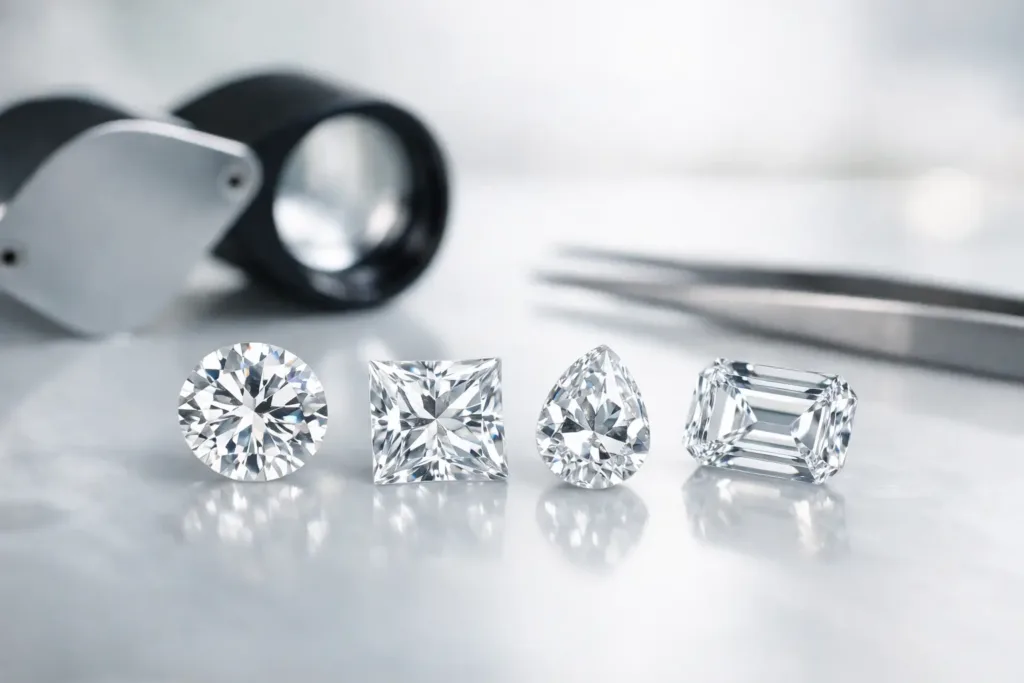
A diamond can look exceptional on paper and still feel underwhelming in person. Equally, a stone with slightly lower grades can appear brighter, larger or more beautiful once it is set. That is why understanding what are the 4Cs of diamonds matters before you compare certificates, budgets and ring styles. The 4Cs give you a reliable framework, but the best choice always comes down to how those grades work together.
What are the 4Cs of diamonds?
The 4Cs of diamonds are cut, colour, clarity and carat. These four grading factors are used to assess a diamond’s overall quality and help buyers compare one stone with another in a consistent way.
If you are shopping for an engagement ring, a gift or a bespoke piece, the 4Cs are not four separate boxes to tick. They affect one another. A larger carat weight may show inclusions more easily. A higher colour grade may matter less in certain settings. An excellent cut can make a diamond appear more lively than a heavier stone with weaker proportions. Knowing where to prioritise helps you buy with confidence rather than simply chasing the highest grades.
Cut – the quality you notice first
Of all the 4Cs, cut is often the most important to visual beauty. It refers not to the shape of the diamond, but to how well it has been proportioned, faceted and polished to handle light. A round brilliant, for example, may have a perfect-looking outline, but if it is cut too deep or too shallow, light can escape through the sides or base instead of reflecting back to the eye.
This is why a well-cut diamond tends to look brighter, sharper and more scintillating. It has better balance between brilliance, fire and sparkle. In practical terms, that means it catches attention more easily under both showroom lighting and everyday wear.
For many buyers, cut is where value is won or lost. You can compromise slightly on colour or clarity and still have a striking diamond if the cut quality is strong. On the other hand, paying for a high colour and clarity grade in a poorly cut stone rarely feels worthwhile once you see it in person.
Why cut often deserves priority
A superior cut can make a diamond look larger than its carat weight suggests because it returns light more effectively. It can also help mask minor clarity characteristics that would be easier to spot in a duller stone. If your goal is visible beauty rather than certificate prestige alone, cut is often the first area to protect in your budget.
Colour – how white the diamond appears
Diamond colour measures the presence or absence of yellow or brown tint in a white diamond. In standard grading, the scale begins at D, which is colourless, and moves down through the alphabet as more warmth becomes visible.
Many buyers assume they need the highest colour grades available, but that is not always the best use of budget. The difference between neighbouring grades can be difficult to see without side-by-side comparison, particularly once a diamond is mounted. In everyday wear, a well-cut diamond in a near-colourless range can still appear beautifully white.
The setting also matters. Platinum and white gold tend to emphasise a diamond’s whiteness, so some buyers prefer a higher colour grade there. Yellow gold and rose gold can be more forgiving, which may allow you to choose a slightly lower colour grade without sacrificing visual appeal.
When colour matters more
Colour becomes more noticeable in larger diamonds, step-cut shapes such as emerald and Asscher, and settings designed to showcase a lot of the stone. If you are considering one of these, colour may deserve a little more attention. If you are choosing a round brilliant with excellent cut, you may have more flexibility.
Clarity – the natural characteristics inside the stone
Clarity refers to the internal and external characteristics of a diamond, known as inclusions and blemishes. Almost every natural diamond has them to some degree. Clarity grading considers their size, number, position and visibility.
At first glance, clarity can sound straightforward – the fewer inclusions, the better. In reality, it is more nuanced than that. The key question for most buyers is not whether a diamond is technically flawless, but whether it is eye-clean. In other words, do you see anything distracting without magnification?
A diamond can have a lower clarity grade yet still look perfectly clean to the naked eye, especially if the inclusions are small, off to the side or hidden beneath a prong once set. That makes clarity one of the areas where informed buyers often find excellent value.
Eye-clean versus paper-clean
There is a difference between a diamond that looks clean in real life and one that simply carries a stronger grade on the certificate. For a high-value purchase, especially an engagement ring worn daily, visible beauty usually matters more than paying extra for microscopic perfection you will never notice.
That said, clarity should not be ignored. Inclusions near the centre of the table can be more visible, and some types may affect durability in rare cases. It is always worth considering both the grade and the actual placement of any characteristics.
Carat – the measure of weight
Carat refers to a diamond’s weight, not its visible size alone. One carat equals 0.2 grams. While carat often gets the most attention, it can be misleading if viewed in isolation.
Two diamonds of the same carat weight can face up differently depending on cut proportions and shape. A well-cut one-carat diamond may appear more impressive than a heavier stone that carries too much depth where it cannot be seen. This is one reason buyers sometimes feel disappointed when they focus only on carat.
Carat also affects price more sharply than many expect. Diamonds often rise in price at popular weight thresholds such as 0.50ct, 1.00ct and 1.50ct. Choosing a stone just below one of these markers can sometimes offer better value while looking almost identical in size once set.
Bigger is not always better
A larger diamond with weaker cut, lower brightness or noticeable inclusions may have less overall presence than a slightly smaller, better-balanced stone. If you want your budget to work harder, think about how the diamond performs rather than weight alone.
How the 4Cs work together
The most effective way to use the 4Cs is to balance them according to your priorities. If sparkle matters most, start with cut. If you want a larger look, consider shape and proportions before pushing carat too far. If you prefer a bright white appearance in platinum, keep an eye on colour. If you want strong value, aim for clarity grades that are eye-clean rather than excessively high on paper.
This is where expert guidance becomes useful. A certificate provides essential information, but it does not tell the full story of how a diamond will look once worn. Two stones with similar grades can present very differently depending on their proportions and overall make.
For many engagement ring buyers, a sensible balance might mean prioritising excellent cut, choosing a near-colourless grade, selecting an eye-clean clarity and then using the remaining budget on carat. For other buyers, particularly those choosing larger centre stones or certain shapes, the balance may shift. It depends on the ring design, metal choice, personal taste and budget.
Certification still matters
The 4Cs are only as useful as the grading behind them. A certified diamond offers reassurance that its quality has been assessed by recognised standards, helping you compare stones more confidently. For a premium purchase, especially online, certification supports transparency and trust.
It also helps when you are comparing natural and lab-grown diamonds. The same 4Cs still apply, but your budget may stretch differently. Some buyers use that price advantage to increase carat size, while others choose finer grades or invest more in the setting.
What are the 4Cs of diamonds really telling you?
They are not telling you which diamond is objectively perfect. They are telling you how a diamond has been graded across the four factors that most influence value and appearance. Your job is to decide which combination suits your priorities.
If you are buying for a proposal, an anniversary or a custom piece, the right diamond is rarely the one with the highest numbers across the board. It is the one that looks beautiful to you, fits your budget comfortably and comes with the confidence of proper certification and expert support.
At Hispek Diamonds, that balance matters because a diamond should feel just as right after purchase as it does in the moment you first see it. When you understand the 4Cs properly, you are in a far stronger position to choose a stone with both lasting beauty and genuine value.
A good diamond purchase is not about chasing a textbook ideal. It is about knowing where quality is visible, where flexibility is sensible and where your money will make the greatest difference.

Comments are closed