
LBMA Gold Bar Review for UK Buyers
Our lbma gold bar review explains what UK buyers should check on purity, premiums, storage and resale before choosing investment gold.
We Buy Gold . Top Prices Paid .
7 Day Price Promise .
30 Day Returns
Free World Wide Shipping
Life Time Warranty
We Buy Gold . Top Prices Paid .
7 Day Price Promise .
30 Day Returns
Free World Wide Shipping
Life Time Warranty

+44 203 965 6669
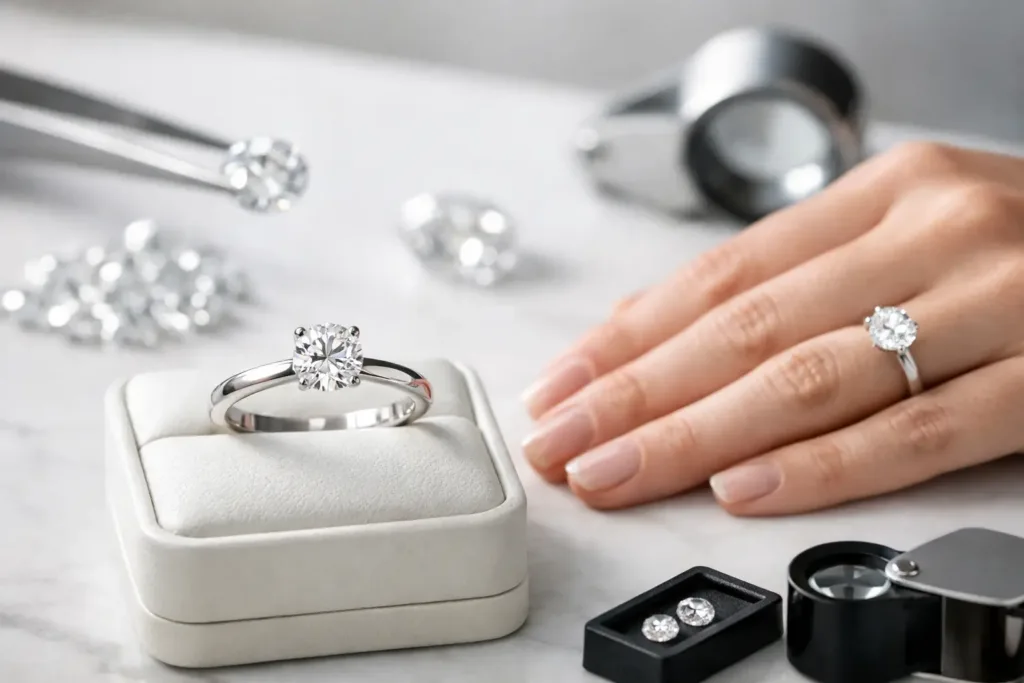
Choosing an engagement diamond is rarely just about size. It is about balancing beauty, budget, certification and personal taste in a piece you will want to wear for years. This guide to buying engagement diamonds is designed to make that decision clearer, so you can compare options confidently and focus on lasting value rather than sales pressure.
The best engagement diamond is not automatically the biggest or the most expensive. It is the stone that looks exceptional in real life, suits the ring style, and comes with reliable certification and transparent pricing.
Most buyers begin with the 4Cs – cut, colour, clarity and carat. These are still the right starting point, but they do not carry equal weight. If you want a diamond that appears bright, lively and elegant on the hand, cut should usually take priority. A well-cut diamond can look more impressive than a heavier stone with poorer proportions.
That matters because many shoppers focus on headline carat weight and miss the details that create sparkle. A one-carat diamond that is cut beautifully often outperforms a larger stone that looks dull or lifeless. If you are buying for a proposal, this is one of the smartest places to put your budget.
Cut affects how light moves through the diamond. When proportions, symmetry and polish are strong, the stone reflects light more effectively and appears brighter. This is why cut is often the first thing professionals assess when judging overall beauty.
For round brilliant diamonds, buyers can usually compare cut grades more directly. For fancy shapes such as oval, pear, emerald or cushion, grading is less standardised, so visual assessment becomes more important. Two diamonds with the same certificate details can still look quite different.
If you are working to a set budget, it often makes sense to protect cut quality first, then adjust carat or clarity where appropriate.
Diamond colour is graded on a scale, with lower colour showing more warmth. In practice, the right choice depends on the setting metal, the shape of the stone and your own preference.
In white gold or platinum, many buyers lean towards higher colour grades for a crisp, bright appearance. In yellow or rose gold, a slightly warmer diamond can still look beautiful and may represent better value. This is where buying with context matters. A diamond should not be judged in isolation but as part of the finished ring.
Clarity refers to internal and external characteristics. Buyers often assume they need a very high clarity grade, but that is not always necessary for an engagement ring. What usually matters more is whether the diamond appears clean to the naked eye.
A technically higher clarity stone can cost significantly more without looking noticeably different once worn. For many customers, choosing an eye-clean diamond rather than paying for microscopic purity is a more balanced decision.
Carat measures weight, not just visual size. Two diamonds of the same carat can face up differently depending on cut and proportions. Finger size, shape choice and setting style also affect how large a diamond appears.
Oval, pear and marquise cuts, for example, often look larger than round diamonds of the same carat weight because of their elongated shape. If your aim is presence on the hand, shape can be as important as weight.
For many buyers, this is now one of the biggest decisions. Natural diamonds are formed over billions of years and remain the traditional choice. Lab-grown diamonds have the same physical and chemical composition as natural diamonds but are created in controlled conditions.
The right option depends on your priorities. Natural diamonds often appeal to buyers who value rarity, heritage and long-term tradition. Lab-grown diamonds can offer larger sizes or higher specifications at a more accessible price point. That can be especially attractive if you want a striking ring without stretching your budget.
There is no single correct answer. What matters is clear disclosure, proper certification and honest guidance. A premium retailer should explain the differences plainly so you can choose based on preference, not confusion.
Certification is one of the strongest trust markers when purchasing a diamond. It gives independent confirmation of key characteristics and helps you compare stones on a like-for-like basis.
When you are spending on an engagement ring, certification supports confidence in what you are buying. It also helps with insurance, future valuation and resale conversations. If a diamond is presented as premium, the paperwork should support that claim.
Certification does not replace visual quality, but it does provide an important foundation. The ideal buying process combines independent grading with expert inspection and transparent explanation.
Shape changes the character of the ring more than many first-time buyers expect. Round brilliant remains the classic choice because it delivers exceptional sparkle and timeless appeal. Oval offers elegance and flattering finger coverage. Cushion cuts feel soft and romantic, while emerald cuts are more architectural and understated.
This is often where personal style becomes more important than grading jargon. If the wearer prefers clean lines and a refined finish, an emerald or radiant cut may suit better than a round stone. If they want maximum brilliance, round and oval remain strong choices.
There is also a practical side. Some shapes reveal colour or inclusions more easily than others. Step-cut diamonds such as emerald cuts typically require more careful selection because their open facets make characteristics easier to see.
A diamond should always be chosen with the setting in mind. Solitaire rings place full attention on the centre stone and suit buyers who want timeless simplicity. Halo settings can create a larger overall look and add extra brilliance. Three-stone rings carry symbolic appeal and offer a more substantial appearance.
Metal choice also changes the presentation. Platinum and white gold emphasise a bright, contemporary finish. Yellow gold gives warmth and can suit both classic and modern designs. Rose gold offers a softer, more distinctive look.
This is where bespoke design can make a real difference. If you know the style direction but cannot find the exact ring, custom design allows you to build around the right stone rather than compromising on either the diamond or the setting.
The old rules about what you should spend on an engagement ring are often unhelpful. A sensible budget is the one that feels comfortable, protects quality where it matters, and reflects your priorities.
A good approach is to decide what matters most before you compare stones. If size is the priority, you may decide on a lab-grown diamond or a slightly lower colour grade. If rarity and tradition matter more, you may choose a smaller natural diamond with stronger cut quality and certification.
Budget planning is also easier when pricing is transparent. You should be able to understand what is driving the price difference between two similar-looking diamonds. That is a sign of an informed, trustworthy retailer rather than a high-pressure sales process.
A premium diamond purchase should come with more than a product listing. Look for clear certification details, honest pricing, visible trust signals and practical aftercare support. Services such as ring sizing, bespoke design, valuations and repairs are not just extras. They reflect the strength of the business behind the purchase.
For UK buyers, hallmarking, secure delivery and straightforward returns matter as well. For overseas customers, worldwide shipping and reliable communication can be just as important as the ring itself. Hispek Diamonds reflects this service-led approach by combining certified jewellery, bespoke options and reassurance around support after purchase.
The most common mistake is overpaying for specifications that do not improve visible beauty. That often means chasing very high clarity or colour grades when a better-cut diamond in a slightly lower grade would look just as impressive.
Another mistake is buying purely from a certificate without considering how the diamond actually looks. Numbers matter, but appearance matters more. Finally, do not leave the setting as an afterthought. The right ring design can elevate a diamond, while the wrong one can make even a premium stone feel less special.
An engagement ring marks a major moment, but it is still a purchase that benefits from careful comparison, clear information and a calm decision. When the diamond is well chosen, properly certified and set in a design that suits the wearer, confidence comes naturally.
Our lbma gold bar review explains what UK buyers should check on purity, premiums, storage and resale before choosing investment gold.
Learn how to customise an engagement ring with confidence, from diamond shape and setting to metal, budget, certification and final finish.

Shop 22k gold bangles for brides with confidence. Compare styles, weights, sizing and finish to find timeless bridal gold with lasting value.

Diamond shape comparison for ring buyers: compare sparkle, size, price and style across round, oval, princess and more with expert guidance.
Shop mens wedding rings with confidence. Compare metals, widths, finishes and fit to find a timeless ring with lasting value and comfort.

Investment gold bars offer a straightforward way to buy physical bullion. Learn how purity, size, pricing and storage affect value and security.