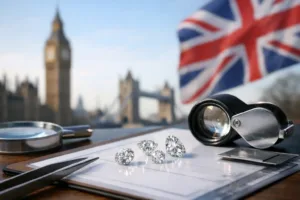
Are Lab Diamonds Certified in the UK?
Are lab diamonds certified? Learn how grading works, which labs matter, what reports include, and how to buy a certified stone with confidence.
We Buy Gold . Top Prices Paid .
7 Day Price Promise .
30 Day Returns
Free World Wide Shipping
Life Time Warranty
We Buy Gold . Top Prices Paid .
7 Day Price Promise .
30 Day Returns
Free World Wide Shipping
Life Time Warranty

+44 203 965 6669
A gold chain that looked brilliant last month can start to appear dull surprisingly quickly. Skin oils, hand cream, perfume and everyday dust all build up on the surface, which is why knowing how to clean gold jewellery properly makes such a visible difference. The right method restores shine without risking scratches, loose stones or damage to delicate finishes.
Gold is durable, but not every gold piece should be cleaned in exactly the same way. A solid 22K bangle, a 9K ring set with diamonds, and a gold-plated necklace each need slightly different care. If you want your jewellery to keep its colour, polish and overall value, gentle cleaning is always the better choice.
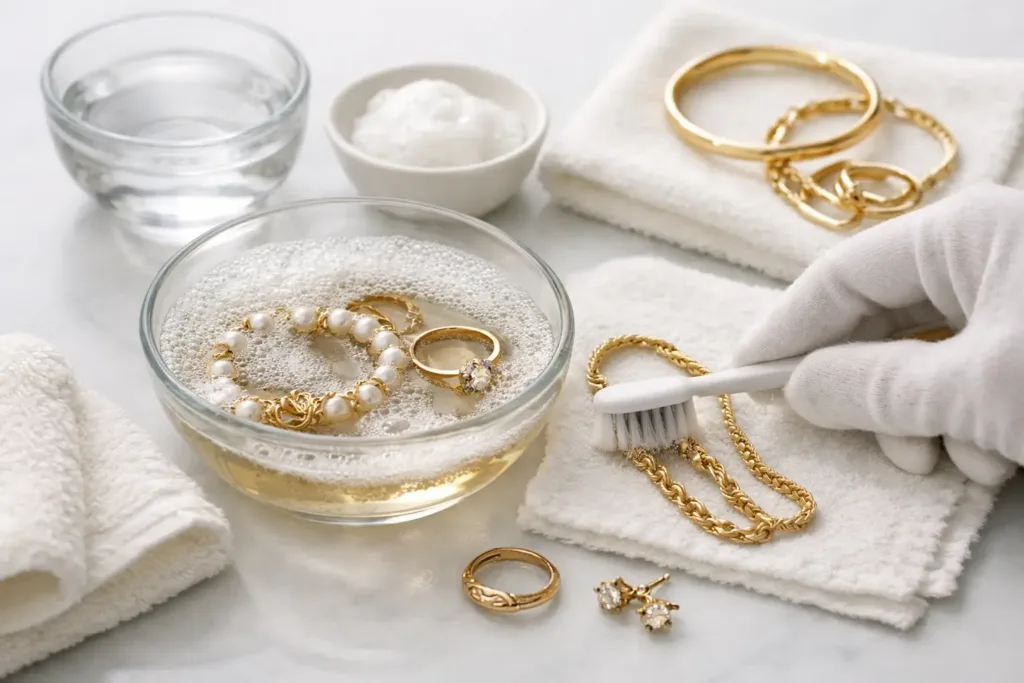
For most solid gold jewellery, warm water, a small amount of mild washing-up liquid and a very soft brush are all you need. This approach is effective because it lifts away the film that causes gold to lose its shine, while avoiding the harshness of abrasive cleaners.
Start by filling a small bowl with warm, not hot, water. Add a few drops of mild washing-up liquid and place the jewellery in the solution for around 10 to 15 minutes. This helps loosen built-up residue. After soaking, use a soft baby toothbrush or a specialist jewellery brush to clean around clasps, settings and patterned areas where dirt tends to collect.
Once the piece looks clean, rinse it thoroughly in clean lukewarm water. Be careful to do this over a bowl rather than directly over the sink, especially with earrings, pendants and fine rings. Pat dry with a soft lint-free cloth and leave it to air dry fully before storing or wearing it.
This method suits many everyday gold items, including chains, plain bands and bracelets. It is also appropriate for some gemstone jewellery, but only if the stones are secure and not especially delicate.
The biggest mistake people make is assuming all gold jewellery can be treated the same way. In reality, the purity of the gold, the presence of gemstones and the type of finish all matter.
Higher-purity gold, such as 22K, is softer than 9K or 14K gold. That softness gives it a rich colour, but it also means it can mark more easily if you scrub too hard. If your jewellery has a high-polish finish, aggressive brushing can leave fine surface scratches that reduce its clean, mirror-like appearance.
Gold-plated jewellery needs even more caution. The outer gold layer is thinner than solid gold, so repeated rubbing, soaking for too long or using rough cloths can wear the plating down. In that case, wipe the item gently with a soft damp cloth and dry it straight away. Keep the process minimal.
Jewellery set with pearls, opals, emeralds or glued-in stones should also be cleaned carefully. These materials can react badly to moisture, detergent or prolonged soaking. If you are unsure, a soft cloth is the safer option until the piece can be checked professionally.
Plenty of home cleaning advice sounds convenient but is too harsh for fine jewellery. Toothpaste is one of the most common examples. It may make metal look brighter for a moment, but it is abrasive and can scratch gold, especially on polished surfaces.
Bicarbonate of soda pastes, bleach, strong household cleaners and rough brushes should also be avoided. These can damage the metal, affect certain gemstones or weaken finishes over time. Ultrasonic cleaners can work for some jewellery, particularly plain gold or diamond pieces, but they are not a universal solution. If a ring has loose claws, fragile stones or previous repairs, ultrasonic cleaning can create more problems than it solves.
A good rule is simple: if a cleaner is designed for bathrooms, kitchens or heavy-duty household use, it does not belong anywhere near premium jewellery.
Gold rings tend to collect more residue than most other jewellery because they are exposed to soap, hand sanitiser, skincare and daily wear. That is why engagement rings and dress rings often lose sparkle first.
If your gold ring is set with diamonds, a mild soak in warm soapy water is usually suitable, followed by a gentle clean around the setting with a soft brush. Pay attention to the underside of the stone, where lotion and soap can build up and block light. Once that residue is removed, the ring often looks noticeably brighter.
With other gemstones, the right approach depends on the stone itself. Sapphires and rubies are generally more durable, while emeralds, opals and pearls need significantly more care. If you are cleaning a sentimental or high-value ring and do not know the stone type or setting condition, it is better to keep the cleaning light than to risk loosening or dulling the piece.
That depends on how often you wear it. Pieces worn every day, such as wedding bands, engagement rings and favourite chains, usually benefit from a gentle clean every few weeks. Jewellery worn occasionally may only need attention when it starts to look dull.
There is a balance to strike. Too little cleaning allows residue to build up, but over-cleaning, especially with brushing, can add unnecessary wear over time. For most people, a soft wipe after wear and a proper gentle clean when needed is the best routine.
Professional cleaning once or twice a year is also worth considering for valuable pieces. It allows the jewellery to be inspected for loose settings, worn claws or clasp issues while restoring the finish more thoroughly than a basic home clean.
Even perfectly cleaned gold jewellery will not stay at its best if it is stored carelessly. Pieces thrown together in one box can rub against each other, causing scratches, tangles and unnecessary wear. Chains can knot, earrings can bend and gemstone settings can catch on neighbouring items.
Store each piece separately where possible, ideally in a soft-lined jewellery box, pouch or compartment. Keep gold jewellery away from damp conditions and direct contact with perfumes, hairspray and cosmetics. It is also sensible to remove jewellery before swimming, showering, exercising or cleaning the house, because chemicals and impact both shorten the life of the finish.
These small habits matter. Premium jewellery is designed to last, but lasting well depends on daily care as much as occasional polishing.
Home cleaning is useful for maintenance, but there are times when a professional service is the safer and smarter choice. If a ring stone moves slightly, if a clasp feels loose, if a chain looks kinked, or if the piece has intricate detailing that traps dirt deep inside, do not keep brushing it in the hope that it improves.
The same applies if the jewellery has antique value, sentimental importance or a combination of metals and stones. A professional jeweller can clean the piece correctly while checking for structural wear. That is especially important for engagement rings, heirloom items and high-carat gold jewellery, where preserving condition is just as important as improving appearance.
For customers buying premium pieces, aftercare should always be part of the conversation. At Hispek Diamonds, that focus on long-term value is as important as the initial purchase. A well-made gold piece should look exceptional on the day it arrives and continue to do so with the right care.
If you want the safest everyday approach, keep it straightforward. Wipe your jewellery with a soft cloth after wear, clean solid gold pieces gently with mild soapy water when they lose their shine, and be more cautious with plated finishes or delicate stones. Do not chase quick fixes that promise extra sparkle if they increase the risk of damage.
Gold jewellery earns its place because it is timeless, wearable and valuable. Treat it with the same level of care, and it will continue to look refined for years rather than just for the next occasion.
Are lab diamonds certified? Learn how grading works, which labs matter, what reports include, and how to buy a certified stone with confidence.

Are lab grown diamonds worth buying? Learn how they compare on price, beauty, ethics and resale so you can choose with complete confidence.

Is 24k gold VAT free in the UK? Learn when investment gold qualifies for VAT exemption and when jewellery and other gold items still incur VAT.

Learn how to buy LBMA gold bars safely with expert tips on purity, pricing, storage and choosing a trusted UK bullion retailer.

Learn how to buy investment gold safely with expert tips on bars, dealers, pricing, storage and paperwork to protect your purchase.
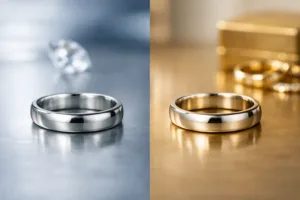
Compare platinum vs white gold rings for durability, price, colour and care. Find the right metal for your engagement or wedding ring.