

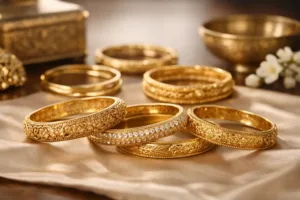
Best Asian Gold Bangles: A Buyer’s Guide
Find the best Asian gold bangles for everyday wear, weddings and gifts. Compare 22K purity, designs, fit, hallmarking and lasting value with confidence.
We Buy Gold . Top Prices Paid .
7 Day Price Promise .
30 Day Returns
Free World Wide Shipping
Life Time Warranty
We Buy Gold . Top Prices Paid .
7 Day Price Promise .
30 Day Returns
Free World Wide Shipping
Life Time Warranty

+44 203 965 6669

A ring can be beautifully designed, expertly set and made from premium materials, yet still disappoint if it does not feel right on the hand. Accurate ring size measurement is the small but essential step that protects the comfort, security and everyday enjoyment of a meaningful purchase – particularly for an engagement ring, wedding band or personalised gift.
A well-fitted ring should pass over the knuckle with slight resistance, sit securely at the base of the finger and never feel painful, restrictive or loose enough to turn constantly. The aim is not the tightest fit possible. It is a confident fit that works through ordinary changes in temperature, activity and time of day.
Fine jewellery is designed to last. Whether you are choosing a diamond engagement ring, a substantial 22K gold band or a platinum eternity ring, the correct size helps protect both the piece and the person wearing it. A ring that is too loose can slip off unnoticed. One that is too tight may be uncomfortable, difficult to remove and more likely to be left unworn.
Sizing also affects the overall experience of a bespoke or made-to-order ring. Some styles can be resized relatively easily, but this is not guaranteed. A plain gold band usually offers more flexibility than a full eternity ring with stones all the way around, a detailed patterned design or a ring with an intricate setting. Getting the measurement right before manufacture is therefore especially valuable.
It also depends on the intended finger. Your left and right hands may not be identical in size, and ring size can vary between the index finger, middle finger, ring finger and little finger. Never assume that a ring which fits one finger will fit another.
The most dependable option is to have your finger measured by a jewellery professional. That said, careful at-home ring size measurement can give a useful starting point when you are planning a surprise, shopping remotely or narrowing down your options.
If you already own a ring that fits the intended finger comfortably, measure the inside diameter rather than the outside edge. Place it flat on a ruler marked in millimetres and measure across the widest point of the inner circle. This diameter can then be matched to a UK ring size chart.
Take the measurement more than once. Even a difference of half a millimetre can affect the result, particularly in smaller sizes. Check that the ring is truly round too, as an older ring can become slightly out of shape through wear.
This method is useful for a surprise proposal, but use a ring worn on the same finger and hand whenever possible. Borrowing a ring from another finger may lead to an inaccurate result.
A printable ring sizer may help when used correctly, but printing scale matters. Ensure the document is printed at 100 per cent scale, without ‘fit to page’ settings, and verify it against the calibration guide supplied. Place an existing ring over the printed circles, matching the inside edge of the band to the circle rather than the outer rim.
It is wise to treat this as a confirmation tool rather than the only source of truth. Home printers, screen sizing and thick ring bands can all introduce small discrepancies.
A narrow strip of paper can provide an approximate measurement. Wrap it around the base of the finger, mark the point where it overlaps, then lay it flat and measure the length in millimetres. Compare that circumference with a UK ring size chart.
Do not pull the paper tightly. A ring must travel over the knuckle as well as sit at the base of the finger, so a restrictive paper measurement can produce a size that is too small. Avoid string where possible, as it can stretch and give a misleading result.
Fingers naturally expand and contract. This is normal, and it explains why a ring may feel different from morning to evening. For the most realistic result, measure at the end of the day when fingers are typically at their largest, and repeat the process on two or three separate occasions.
Avoid taking a final measurement when your hands are very cold, immediately after exercise, during particularly hot weather, or after a salty meal. Cold fingers can measure smaller than usual, while heat and temporary fluid retention can make them larger. If you are between sizes, these everyday changes should influence the decision.
For most people, selecting the slightly larger size is more comfortable than forcing a smaller one. However, this is not a universal rule. Someone with slim fingers and prominent knuckles may need a size that passes over the knuckle but does not spin at the base. This is where an in-person assessment is particularly helpful.
Ring size is not only about the number or letter on a chart. The width and profile of the band make a meaningful difference.
A narrow band often feels more forgiving, while a wide wedding band or bold signet ring covers more skin and can feel tighter in the same stated size. Many customers find they need a slightly larger size for a band around 6mm or wider. A comfort-fit interior, which is gently rounded on the inside, may also feel easier to wear than a flat interior of the same size.
Settings matter too. A solitaire engagement ring and a slim wedding band may sit differently alongside one another, especially when worn as a set. If you are choosing both at the same time, try to consider their combined width. For rings intended to stack, comfort often comes from planning the full look rather than sizing each piece in isolation.
UK ring sizes are usually expressed in letters, from A upwards, with half sizes available. International systems differ: some use numerical measurements based on circumference or diameter, while others use a separate number scale. This can be confusing when buying from overseas or comparing an existing ring bought abroad.
The safest approach is to work from an inside diameter or finger circumference in millimetres, then convert it against a reliable sizing reference. If a ring is a significant purchase, do not rely solely on a guessed conversion. A professional can confirm the correct UK equivalent and advise whether the style requires an adjustment.
The most frequent mistake is measuring just once and treating the result as final. Another is using a ring that fits a different finger, or measuring its outside diameter rather than the inside. Both can lead to a surprisingly large error.
It is also easy to overlook the knuckle. A ring that feels perfect at the base of the finger but cannot be removed comfortably is not the right fit. Conversely, choosing an oversized ring simply to pass over a knuckle can cause spinning and leave the setting facing the palm.
For a surprise gift, avoid guessing based on clothing size, height or photographs of someone’s hands. These clues are not reliable. If borrowing a ring is possible, take it to a jeweller discreetly or use the internal diameter method with care. If uncertainty remains, choose a design with realistic resizing options rather than a style that is difficult to alter later.
Professional sizing is strongly recommended for engagement rings, wedding rings, valuable diamond jewellery and bespoke commissions. It is also worthwhile if the wearer has knuckles affected by arthritis, fluctuating finger size, or a preference for wider bands and stacked rings.
A jewellery specialist can use properly calibrated tools, assess how the ring moves over the knuckle and discuss the practical features of the chosen design. At Hispek Diamonds, this level of guidance is particularly useful when selecting a bespoke ring, where proportion, setting style and long-term wear all deserve consideration alongside the diamond or precious metal.
A measured fit brings quiet confidence to a special purchase. Take your time, account for the ring’s design and ask for expert support when the piece matters most – because the right ring should feel as natural to wear as it is memorable to receive.
Find the best Asian gold bangles for everyday wear, weddings and gifts. Compare 22K purity, designs, fit, hallmarking and lasting value with confidence.
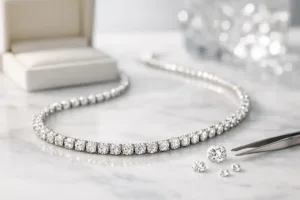
Our diamond tennis necklace guide explains carat weight, diamond quality, length and setting, helping you choose a certified necklace with confidence.
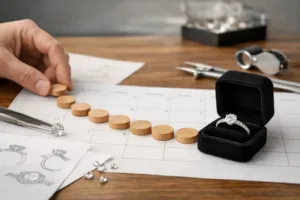
A custom engagement ring timeline example, from consultation and design approval to diamond sourcing, craftsmanship, hallmarking and delivery in the UK.
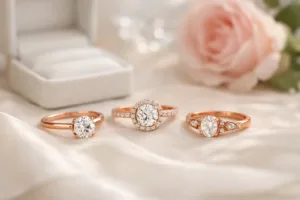
Choose rose gold engagement rings with confidence. Compare alloys, diamond colours, settings and care for a timeless, certified ring made for daily wear.

Find the best gold gifts for her, from timeless earrings to 22K gold and diamond designs, with practical advice on purity, style and lasting value daily.

Learn how to store gold bars securely at home or in a vault, with practical advice on insurance, documentation, privacy and protecting resale value safely.