

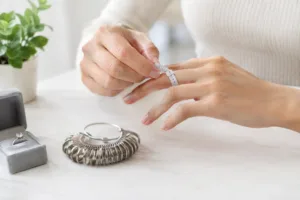
Ring Size Measurement for a Comfortable Fit
Ring size measurement made simple: learn how to measure at home, avoid common fit mistakes and choose a comfortable ring with confidence before buying.
We Buy Gold . Top Prices Paid .
7 Day Price Promise .
30 Day Returns
Free World Wide Shipping
Life Time Warranty
We Buy Gold . Top Prices Paid .
7 Day Price Promise .
30 Day Returns
Free World Wide Shipping
Life Time Warranty

+44 203 965 6669
A ring can look perfect in a photograph and still feel very different once it is on your hand. That is why the lab diamond or moissanite question matters more than many buyers expect. Both offer impressive brilliance and a more accessible price point than many mined diamonds, but they are not the same stone, and they do not suit every purchase in the same way.
If you are choosing an engagement ring, an anniversary gift or a piece of fine jewellery you plan to wear for years, the right decision usually comes down to priorities. Some clients want the closest possible match to a traditional diamond. Others are more focused on size, budget or a particularly bright, fiery look. There is no single correct answer, but there is a clear way to decide with confidence.
A lab-grown diamond is a real diamond. It has the same chemical composition, the same crystal structure and the same hardness as a mined diamond. The difference is origin. Instead of forming underground over millions of years, it is created in a controlled laboratory environment and then graded using the same key measures buyers already know – cut, colour, clarity and carat.
Moissanite is a different gemstone entirely. It is not a diamond, whether mined or lab-grown. It has its own properties, its own visual character and its own appeal. For buyers comparing the two side by side, this distinction is the most important place to start. If your goal is to own a diamond, a lab-grown diamond is the natural choice. If your goal is a bright, attractive stone at a lower cost, moissanite may be worth considering.
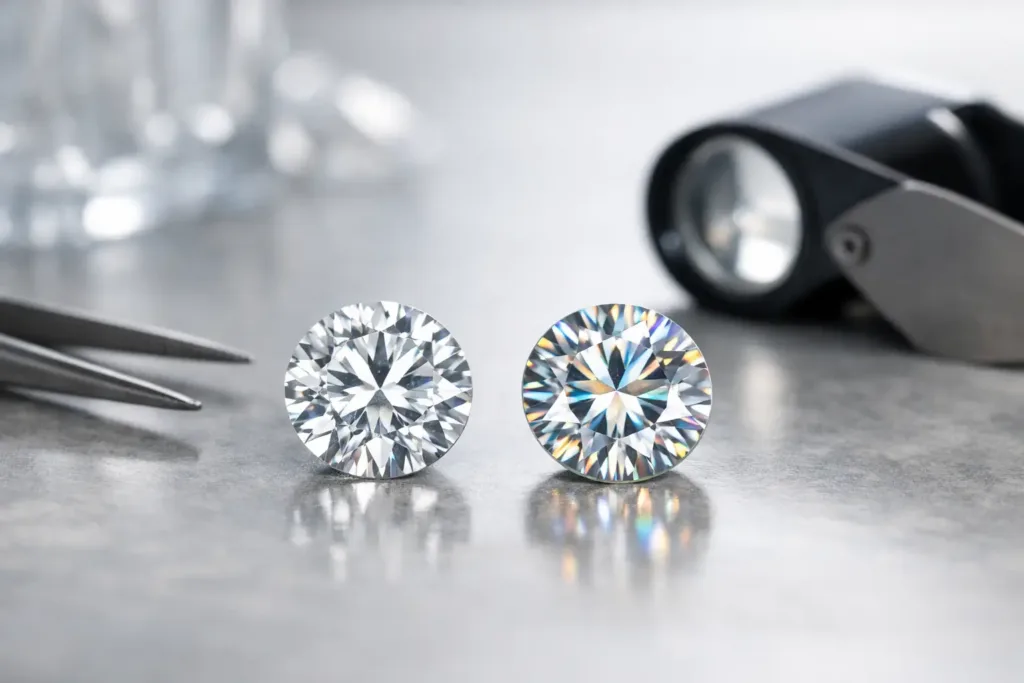
This is where opinions become personal quite quickly. Lab diamonds tend to deliver the classic diamond appearance most people expect – crisp white sparkle, balanced brilliance and a familiar look under both natural daylight and indoor lighting. If you want a stone that looks traditional in a solitaire engagement ring, this is usually the safer option.
Moissanite often appears more fiery. It can show stronger rainbow flashes, especially in direct light. Some buyers love that extra brilliance because it feels lively and eye-catching. Others find it slightly less refined than a diamond, particularly in larger stone sizes or simpler settings where the centre stone does all the talking.
Shape also matters. In round cuts, moissanite can perform beautifully, but the visual differences may still be noticeable to an experienced eye. In elongated shapes such as oval or pear, some buyers become more aware of the contrast in sparkle pattern. If you prefer understated elegance, lab diamonds usually align better with that brief.
For engagement rings and daily-wear jewellery, durability should never be an afterthought. Lab diamonds score 10 on the Mohs hardness scale, exactly the same as natural diamonds. That makes them exceptionally resistant to scratching and well suited to pieces worn every day.
Moissanite is also a durable gemstone, scoring 9.25 on the Mohs scale. In practical terms, that is still very hard and suitable for regular wear. It is not a fragile stone. For many buyers, moissanite will hold up well over time, especially when set properly in a quality ring.
The difference is less about whether moissanite is durable enough and more about whether you want the highest possible hardness in a stone intended for lifelong wear. For bridal jewellery, many customers feel reassured by choosing a diamond, even when it is lab-grown, because it matches traditional expectations for permanence and performance.
Budget is often the reason this comparison starts in the first place. Lab-grown diamonds are typically more affordable than mined diamonds, which has made them increasingly popular with buyers who want certified diamond jewellery without the premium attached to natural origin. You can often move up in size or quality while staying within a sensible budget.
Moissanite is usually more affordable again. If your priority is getting a larger-looking centre stone for the least outlay, moissanite can be very attractive. That may be particularly useful for fashion jewellery, travel rings or buyers who want a bold look without committing to a higher spend.
That said, price should be read alongside product category. A centre stone in an engagement ring carries different expectations from a pair of dress earrings. If the ring marks a major life event, many buyers prefer the value of a certified lab diamond over the lower entry price of moissanite. The spend is higher, but so is the sense of owning a true diamond.
This is where the decision becomes less technical and more emotional. Lab-grown diamonds benefit from one major advantage – they are diamonds. That matters for identity, for gifting and for the way a piece is described and understood over time. If your partner wants a diamond, moissanite is not a substitute in the strict sense, however attractive it may be.
Perception also matters in luxury retail. A certified lab-grown diamond usually carries stronger appeal for buyers who care about stone grading, authenticity and premium presentation. It offers a closer connection to the established world of fine diamond jewellery, while still giving a more modern route on price and sourcing.
Moissanite can absolutely satisfy the right buyer, particularly someone who values appearance over category. But if there is any doubt about whether you may later wish you had chosen a diamond, it is often wiser to address that now rather than after the purchase.
When spending serious money on jewellery, trust matters. Lab-grown diamonds can be independently certified, allowing you to assess cut, colour, clarity and carat with clear documentation. That makes comparison easier and gives buyers confidence that they understand exactly what they are paying for.
Moissanite is not usually judged in quite the same way as diamonds, and that changes the buying experience. You may still receive product information and quality standards, but the framework is less familiar for many customers. For those who value transparency, grading and recognised jewellery norms, lab-grown diamonds often feel more reassuring.
This is especially relevant online, where trust signals matter. Certified stones, clear specifications, UK hallmarking on precious metal jewellery, and strong aftercare support all contribute to a better buying decision. On a significant purchase, that reassurance is worth a great deal.
A lab-grown diamond is usually the better fit if you want a genuine diamond, plan to buy an engagement ring, prefer a classic white sparkle, or place high importance on certification and long-term confidence. It suits buyers who want premium jewellery with a more accessible price than mined diamonds, without stepping outside the diamond category.
It is also often the stronger option for bespoke designs. If you are creating a ring around a meaningful centre stone, a lab diamond gives you the visual language and status of traditional diamond jewellery while allowing more flexibility on budget.
Moissanite deserves serious consideration if your budget is tighter, your priority is size for spend, or you actively prefer a brighter, more fiery look. It can be an excellent option for fashion-led jewellery, travel pieces, secondary rings or buyers who are not attached to owning a diamond specifically.
It may also suit clients who want an attractive stone quickly and practically, without placing much weight on resale perception, diamond grading or traditional bridal expectations. For the right brief, it is a smart and attractive choice rather than a compromise.
If you are buying for a proposal, a wedding, a milestone anniversary or a piece you want to treasure for decades, a lab-grown diamond is often the stronger long-term decision. It delivers the look, identity and reassurance most buyers expect from fine diamond jewellery, while remaining more attainable than a mined equivalent.
If your main goal is to maximise visual impact at the lowest possible cost, moissanite has a clear place. It is durable, beautiful and budget-friendly. The key is to choose it because it suits your priorities, not because it has been mistaken for being the same as a diamond.
At Hispek Diamonds, this is exactly where expert guidance matters. The right stone is not simply the one with the lowest price or the biggest sparkle. It is the one that matches the moment, the setting and the expectations you will still feel happy with years from now.
The best purchase is the one that still feels right when the box has been opened, the ring is on the hand, and the decision becomes part of your story.
Ring size measurement made simple: learn how to measure at home, avoid common fit mistakes and choose a comfortable ring with confidence before buying.
When comparing high-polish vs textured 22K gold rings, a high-polish surface will usually make fine scratches and scuffs easier to notice because those marks interrupt…

Use this gold portfolio allocation example to compare 5%, 10% and 15% holdings, choose suitable bullion and weigh risks before you buy with confidence.
You can physically wear a 22K gold ring while showering, swimming or exercising, but removing it first is generally the safer care routine. Higher karat…

Gold investment explained for UK buyers: compare 24K bars, coins and jewellery, understand VAT, premiums, storage and the checks that protect your purchase.
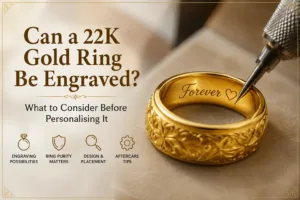
A 22K gold ring can be considered for personalisation through engraving, but the decision should be made for the specific ring rather than assuming every…