


Gold Portfolio Allocation Example for UK Investors
Use this gold portfolio allocation example to compare 5%, 10% and 15% holdings, choose suitable bullion and weigh risks before you buy with confidence.
We Buy Gold . Top Prices Paid .
7 Day Price Promise .
30 Day Returns
Free World Wide Shipping
Life Time Warranty
We Buy Gold . Top Prices Paid .
7 Day Price Promise .
30 Day Returns
Free World Wide Shipping
Life Time Warranty

+44 203 965 6669
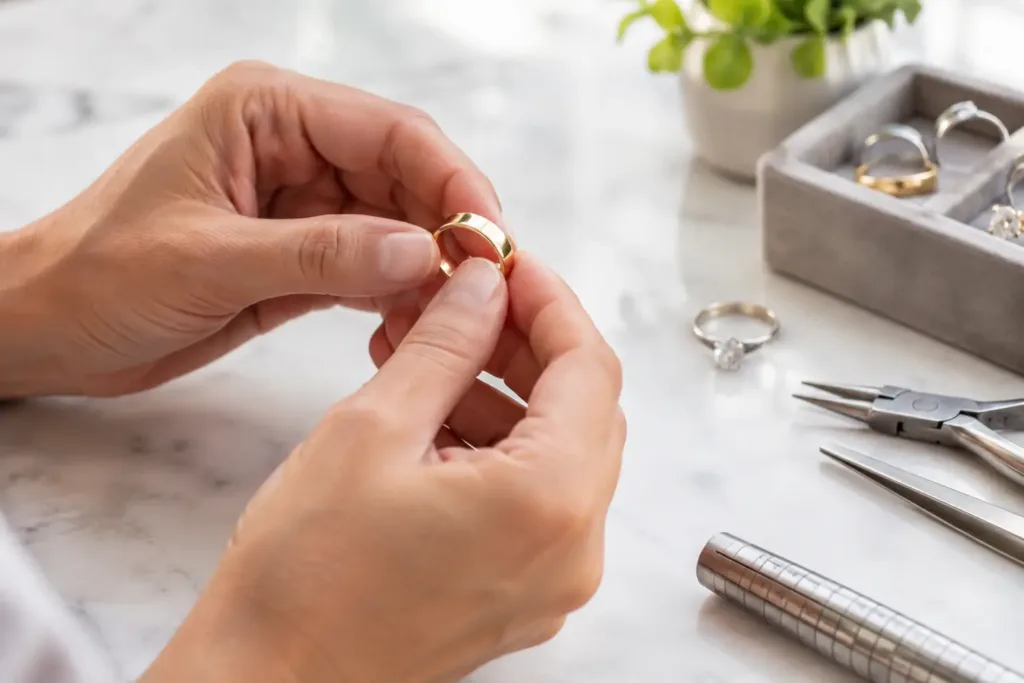
A ring that spins around your finger, leaves a deep mark after a long day, or no longer fits after an engagement should not be ignored. Can rings be resized? In many cases, yes. A skilled jeweller can make a precious metal ring larger or smaller while protecting its structure, setting and finish. The right answer, however, depends on the ring itself.
For a diamond engagement ring, wedding band or treasured gold gift, sizing is a precise jewellery repair rather than a quick alteration. Metal type, gemstone setting, band design and the number of sizes required all affect whether resizing is suitable. Understanding those details before work begins helps protect both the beauty and long-term value of your piece.
Most plain gold, platinum and sterling silver rings can be resized successfully when the work is carried out by an experienced jeweller. A ring made from 9K, 14K, 18K or 22K gold can usually be adjusted, as can many platinum designs. The jeweller first assesses the shank, which is the lower section of the band, before recommending the safest approach.
To make a ring smaller, a small section of metal is removed from the base of the band. The two ends are carefully joined, shaped into a perfect circle and polished so the alteration blends into the original finish. When completed properly, the join should be discreet and the ring should sit comfortably on the finger.
To make a ring larger, the jeweller may gently stretch the band for a very minor adjustment. For a more substantial increase, a matching piece of metal is added to the shank. This must match the ring’s metal purity and colour closely. A yellow gold ring, for example, requires a compatible yellow gold alloy, while platinum needs platinum work undertaken with specialist equipment.
The best resizing work is not merely about reaching a new size. The ring should retain its symmetry, strength and original character. Any diamonds or gemstones should be checked before and after the alteration to ensure their settings remain secure.
A change of one or two sizes is often straightforward for a simple band. Larger alterations may still be possible, but they demand greater care and are not appropriate for every design. Expanding a delicate ring too far can affect its proportions, while reducing a ring significantly can distort the placement of stones, engravings or decorative details.
There is no single rule that applies to every ring. A wide men’s gold band may need a slightly different fit from a slender engagement ring, and a comfort-fit interior feels different from a flat-profile band at the same measured size. This is why an accurate professional ring measurement is more valuable than relying on an old ring size or an online chart alone.
Some rings are more challenging than others, and an honest assessment is part of expert jewellery care. Rings with a simple polished shank offer the most flexibility. Designs with diamonds, gemstones or intricate metalwork around the entire band have less room for adjustment.
An eternity ring set with stones all the way around is a familiar example. Removing or adding metal could interrupt the setting pattern and compromise the alignment of the stones. A full eternity ring may sometimes be altered by a specialist, but remodelling or commissioning a new version in the correct size can be the more secure choice.
Channel-set, pavé and tension-set rings also require close inspection. Heat and pressure used during resizing can affect nearby settings, particularly if stones extend down the shoulders. A jeweller should inspect every claw, channel and gemstone after the work, rather than assuming the ring is secure because it appears unchanged.
Engraved bands, patterned wedding rings and rings with milgrain edges can be resized, but the decoration may need to be recreated at the altered section. The result depends on the complexity of the original design and the skill of the craftsperson. For antique or heirloom rings, preserving the original metal and design may be more important than making a major size change.
Tungsten, titanium, ceramic and some stainless-steel rings are generally not resizable using conventional jewellery techniques. These materials are exceptionally hard or brittle, making them unsuitable for cutting, soldering and reshaping in the same way as gold or platinum.
Certain contemporary rings are therefore made in fixed sizes. If one no longer fits, replacement may be the practical option. Before purchasing a wedding band or everyday ring in a hard metal, it is worth considering future sizing needs, especially where weight changes, pregnancy, arthritis or lifestyle can affect finger size over time.
A reputable jeweller begins by examining the ring under magnification. They will assess the hallmark, metal type, thickness of the shank, condition of the settings and any existing wear. A thin or heavily worn band may benefit from repair or strengthening before resizing, rather than having further stress placed on it.
The ring is then measured and the desired size confirmed. This stage deserves care. Fingers naturally change throughout the day and can swell in warm weather, after exercise, during travel or when hands are cold. Trying on a sizing set at different times can help establish a comfortable fit: snug enough that the ring is secure, but able to pass over the knuckle without force.
Once resized, the ring is cleaned, refinished and inspected. White gold may need rhodium plating restored to achieve its bright white appearance. Platinum can be polished to a high shine or refinished with a softer satin effect, depending on the original style. Any diamonds and gemstones should be checked for movement, and the ring should be returned ready to wear with confidence.
For valuable diamond jewellery, ask whether the stones and settings will be assessed as part of the service. This is particularly worthwhile for engagement rings with fine claws, delicate halos or older settings that may already show signs of wear.
Ring resizing costs vary because the work is not identical from one piece to another. Making a ring smaller is often less material-intensive, while increasing a size may require additional gold or platinum. The metal’s purity, the width and thickness of the band, the design complexity and the condition of the ring all influence the final price.
Platinum resizing typically requires specialist expertise and may cost more than work on standard gold bands. Detailed engraving, stone setting repairs, rhodium plating and the replacement of worn claws can also add to the work required. A clear quotation after inspection is the most reliable way to understand the price rather than choosing a service based on a headline figure alone.
Turnaround time also depends on the ring. A plain gold band may be completed more quickly than a diamond-set or antique piece that needs careful setting checks and finishing. If the ring is needed for a wedding, proposal or special occasion, allow time for assessment and any follow-up adjustments.
Resizing is often the best choice when the ring has sentimental value, a meaningful diamond or a design you still love. It is also a considered way to continue wearing a quality gold or platinum ring rather than leaving it unworn in a jewellery box.
Replacement or remodelling may be preferable if the ring cannot be altered safely, the shank is too thin, or the new size would change the proportions too dramatically. A bespoke remake can preserve the original diamond or gemstones while creating a stronger setting and a more comfortable fit. This option can be especially appealing for full eternity rings and designs in non-resizable metals.
At Hispek Diamonds, professional guidance can help you decide whether careful resizing, restoration or a bespoke redesign offers the best result for your ring.
A well-fitted ring should feel secure, comfortable and effortless to wear. If yours has become too tight or too loose, have it assessed before a small fit issue becomes a lost ring, damaged setting or missed opportunity to enjoy a piece made to last.
Use this gold portfolio allocation example to compare 5%, 10% and 15% holdings, choose suitable bullion and weigh risks before you buy with confidence.
You can physically wear a 22K gold ring while showering, swimming or exercising, but removing it first is generally the safer care routine. Higher karat…

Gold investment explained for UK buyers: compare 24K bars, coins and jewellery, understand VAT, premiums, storage and the checks that protect your purchase.
A 22K gold ring can be considered for personalisation through engraving, but the decision should be made for the specific ring rather than assuming every…
Are diamond rings hallmarked? Learn when UK hallmarking is required, what stamps mean, and how to check the metal in a diamond ring before buying online.
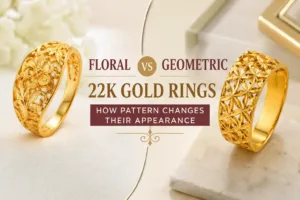
When comparing floral vs geometric 22K gold rings, the difference is not simply whether one ring contains a flower and another contains circles or lines….