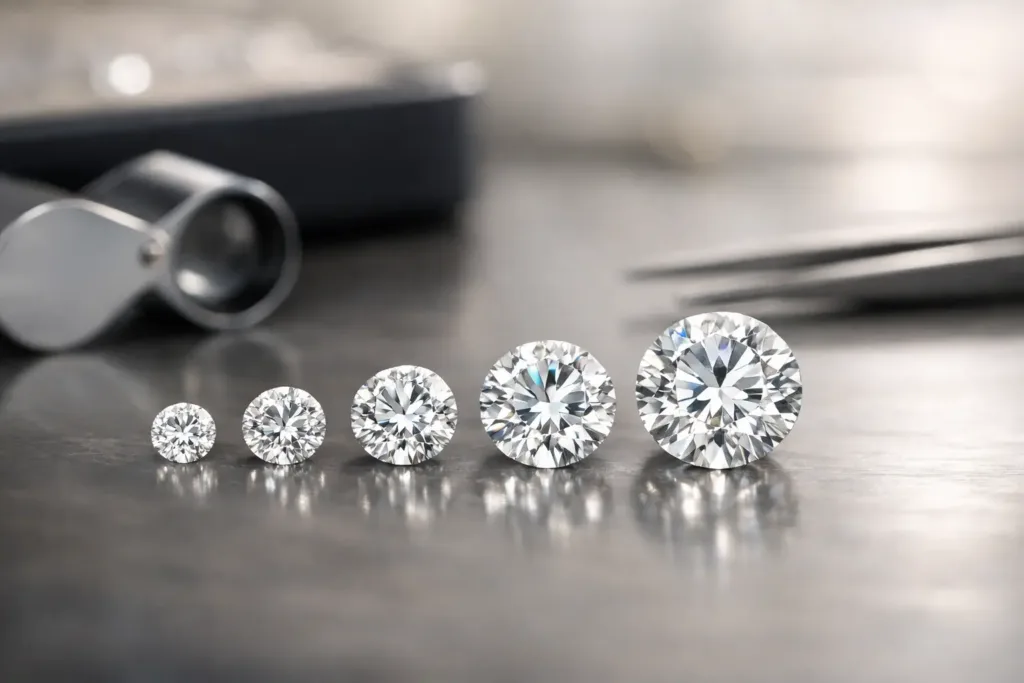
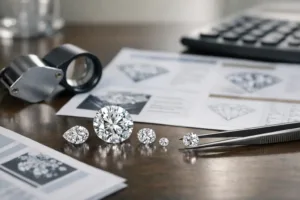
Choosing between a 0.50ct, 0.70ct or 1.00ct diamond can feel simple until you see them side by side. A good diamond carat size guide helps you look beyond the number on the certificate and understand what actually changes on the hand, in the setting and in the price.
Carat is often treated as the headline detail, but it is only one part of a diamond’s appearance and value. Two diamonds with the same carat weight can look different once they are set, and a slightly lower carat weight can sometimes offer better visual impact for the budget. For engagement rings, earrings or milestone gifts, that distinction matters.
What carat actually means
Carat is a measure of weight, not visible size. One carat equals 0.2 grams. That sounds technical, but it matters because shoppers often assume carat tells them exactly how large a diamond will look. In practice, the face-up size depends on cut proportions, shape and setting as much as weight.
A well-cut round diamond that carries its weight efficiently will usually appear brighter and may look more balanced than a poorly cut stone of the same carat. If too much weight sits in the depth of the stone, it can face up smaller than expected. This is one reason certification and expert guidance are so valuable when comparing diamonds.
Diamond carat size guide by popular weights
In a practical diamond carat size guide, it helps to think in terms of common buying points rather than abstract numbers. For round brilliant diamonds, these are the sizes many customers compare first.
A 0.25 carat diamond is delicate and refined. It suits minimalist rings, pendants and earrings, especially where subtle luxury is the goal.
A 0.50 carat diamond is a classic choice for elegant, wearable jewellery. It offers a noticeable presence without moving into higher price brackets too quickly.
A 0.70 carat diamond often appeals to buyers who want a stronger visual impression than half a carat, while keeping better value than jumping straight to one carat.
A 1.00 carat diamond remains the benchmark for many engagement ring buyers. It has strong recognition, balanced proportions in many settings and enduring appeal.
A 1.50 carat diamond delivers more finger coverage and impact. It is often chosen for statement engagement rings or significant occasion pieces.
A 2.00 carat diamond and above enters a more premium category, where rarity, cut precision and certification become even more important.
For round diamonds, approximate diameters are often around 4.1mm for 0.25ct, 5.1mm for 0.50ct, 5.7mm for 0.70ct, 6.4mm for 1.00ct, 7.4mm for 1.50ct and 8.1mm for 2.00ct. These are useful benchmarks, not fixed rules, because proportions vary.
Why some diamonds look bigger than others
This is where many buyers make better decisions. A diamond’s visible spread is affected by shape, cut and mounting style, so a lower carat diamond can occasionally appear larger than expected.
Shape makes a noticeable difference. Oval, pear and marquise diamonds tend to look larger face up than round diamonds of the same carat because of their elongated shape. Cushion and princess cuts can vary, while emerald cuts show a broad surface but reveal clarity more easily.
Cut quality also affects apparent size. A diamond that is cut too deep may hide weight where you cannot see it. A well-proportioned stone usually gives better light performance and a more pleasing face-up appearance. It is not just about looking bigger. It is about looking brighter, sharper and more premium.
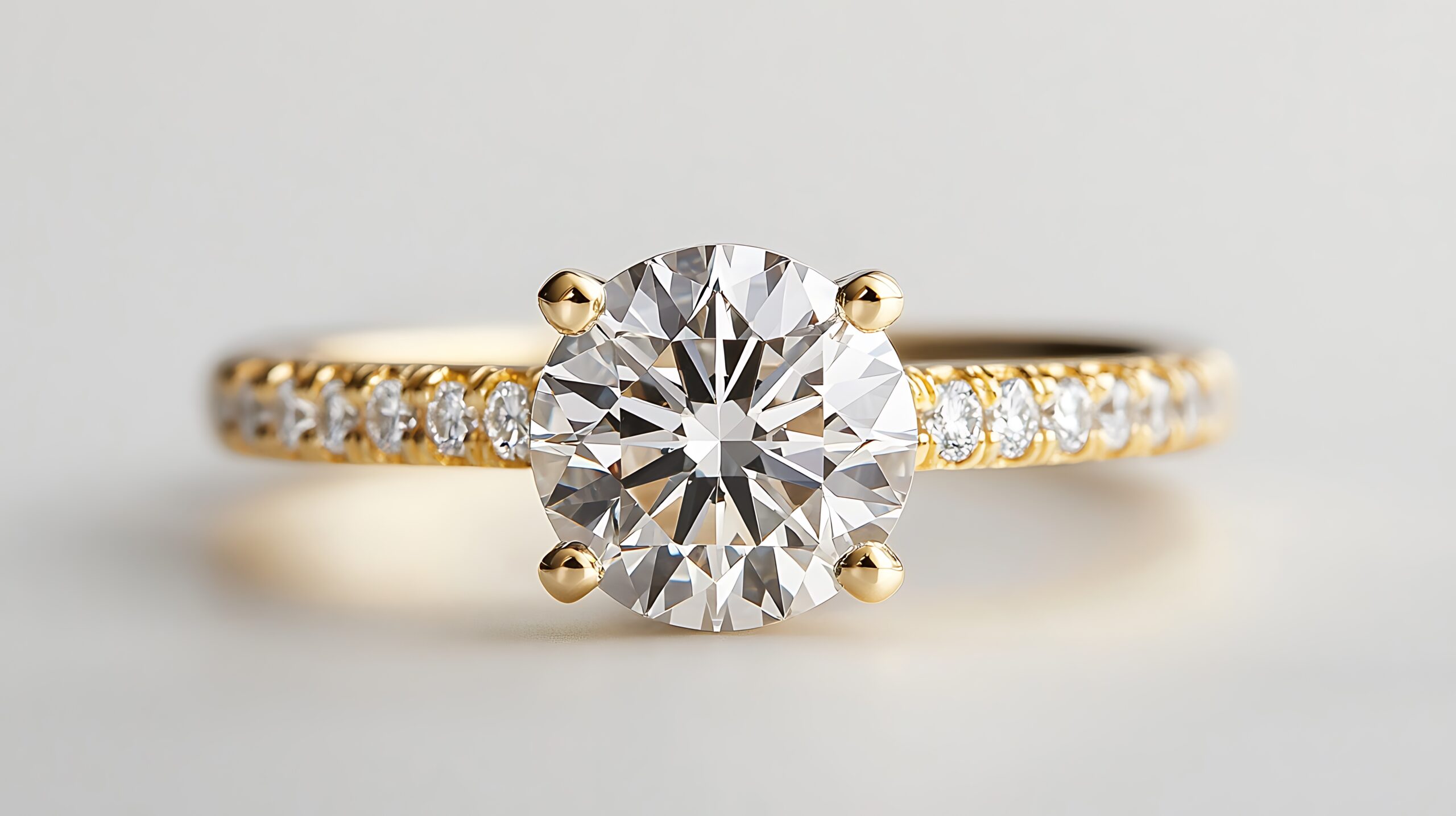
The setting can change the result again. Halo settings create more overall presence, while slim bands can make a centre stone appear larger. Bezel settings offer protection and a sleek finish, but may frame the stone more tightly than claw settings.
Carat size and budget – where value shifts
Diamond pricing does not rise evenly with carat weight. Prices often jump at popular milestone weights such as 0.50ct, 0.75ct, 1.00ct and 1.50ct. That means a 0.90ct diamond can sometimes represent stronger value than a 1.00ct stone, even if the visible difference is small.
This is one of the most useful insights in any diamond carat size guide. If you are buying with a firm budget, it can make sense to target just below a key weight threshold. The savings can then be used to improve cut, colour or clarity, which may have a greater impact on overall beauty.
For example, many buyers comparing a 1.00ct diamond with a 0.90ct alternative find that the slightly lower weight allows room for a better cut grade or a whiter appearance. On the hand, that can be the smarter purchase.
How shape changes your carat expectations
Round brilliant diamonds remain the most requested choice because of their fire, brilliance and timeless appeal. They also tend to cost more per carat than many fancy shapes because of demand and cutting loss from the rough.
If finger coverage matters most, fancy shapes can be worth serious consideration. Oval diamonds are especially popular for engagement rings because they elongate the finger and often look larger than their carat weight suggests. Pear and marquise shapes can create a similar effect, while emerald cuts offer a more understated, architectural look.
The trade-off is that shape also changes what you notice first. In round stones, sparkle often dominates. In step cuts such as emerald and asscher, clarity and clean lines are more visible. That means choosing by carat alone is rarely enough.
Choosing the right carat for an engagement ring
There is no single ideal carat size for an engagement ring. Lifestyle, hand size, style preference and budget all play a part.
For buyers who want a timeless and practical look, the 0.50ct to 1.00ct range is often the sweet spot. It offers versatility, everyday wearability and strong visual appeal across solitaire, halo and three-stone settings.
For someone who prefers a bolder ring, 1.25ct and above can create more impact, particularly with elongated shapes or fine bands. If the ring will be worn daily, comfort and setting security should be weighed alongside size.
If budget is a key consideration, choosing a slightly lower carat weight with excellent cut can produce a more impressive ring than stretching for a heavier stone with weaker proportions. Premium jewellery should feel right in every sense, not just on paper.
Diamond carat size guide for earrings and pendants
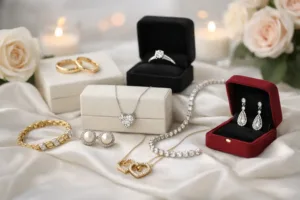
Carat expectations change depending on the jewellery type. Stud earrings are viewed from a distance, so matching, balance and brightness often matter more than hitting a milestone weight. A pair totalling 0.50ct can look elegant and refined, while 1.00ct total weight offers a more noticeable luxury look for daily wear.
For pendants, the setting style and chain length influence perceived size. A round solitaire pendant at 0.30ct to 0.70ct is a versatile choice for gifting, anniversaries and personal jewellery. Larger stones can look striking, but proportion to the neckline and occasion still matters.
Certification matters more as carat increases
As diamond size increases, so does the importance of reliable grading. A small difference in cut, clarity or colour has greater financial impact at higher carat weights, and visual differences become easier to spot.
That is why certified diamonds are essential when comparing stones seriously. A certificate provides independent confirmation of key quality factors and gives buyers greater confidence in what they are purchasing. When paired with transparent pricing and expert advice, it allows you to compare value properly rather than relying on carat alone.
For many customers, this is where a specialist retailer adds real value. At Hispek Diamonds, certified diamonds, clear specifications and bespoke support help buyers choose with confidence rather than guesswork.
How to use this guide when you shop
Start with the look you want, not just the weight you think you should buy. Decide whether you prefer discreet elegance, balanced presence or a more statement finish. Then compare carat alongside shape, cut and setting style.
If you are buying for an engagement ring, think about wearability and proportion on the hand. If you are buying a gift, consider whether the recipient prefers understated jewellery or something more eye-catching. If long-term value is part of the decision, prioritise certification and quality over headline size.
A diamond should feel exceptional when worn, not simply impressive on a product listing. Carat gives you a starting point, but the best choice is the one that balances beauty, budget and confidence in the stone itself.
The right diamond rarely comes down to choosing the biggest number. It comes from understanding how size, cut and craftsmanship work together, then selecting the stone that looks right the moment you see it.