
No products in the cart.
We Buy Gold . Top Prices Paid .
7 Day Price Promise .
30 Day Returns
Free World Wide Shipping
Life Time Warranty
SPRING SALEWe Buy Gold . Top Prices Paid .
7 Day Price Promise .
30 Day Returns
Free World Wide Shipping
Life Time Warranty
SPRING SALE
Products
Services
- Shop Luxury Diamond Jewellery in the UK
- 22K GOLD JEWELLERY
- Buy Traditional 22K Gold Pendants
- 22K Gold Rings for Men & Women Leicester | Hispek Diamonds
- 22K Necklace
- Buy Stunning 22K Gold Chains Online in the UK
- Buy 22K Gold Bracelets for Women in UK
- Buy 22K Gold Earrings for Women Leicester | Hispek Diamonds
- 22K Bangle Sets
- Buy 22K Gold Necklace & Earring Sets
- Buy Traditional Kolkata style 22K Gold Karas
- 18K GOLD JEWELLERY
- SILVER JEWELLERY
- 24K GOLD BULLION
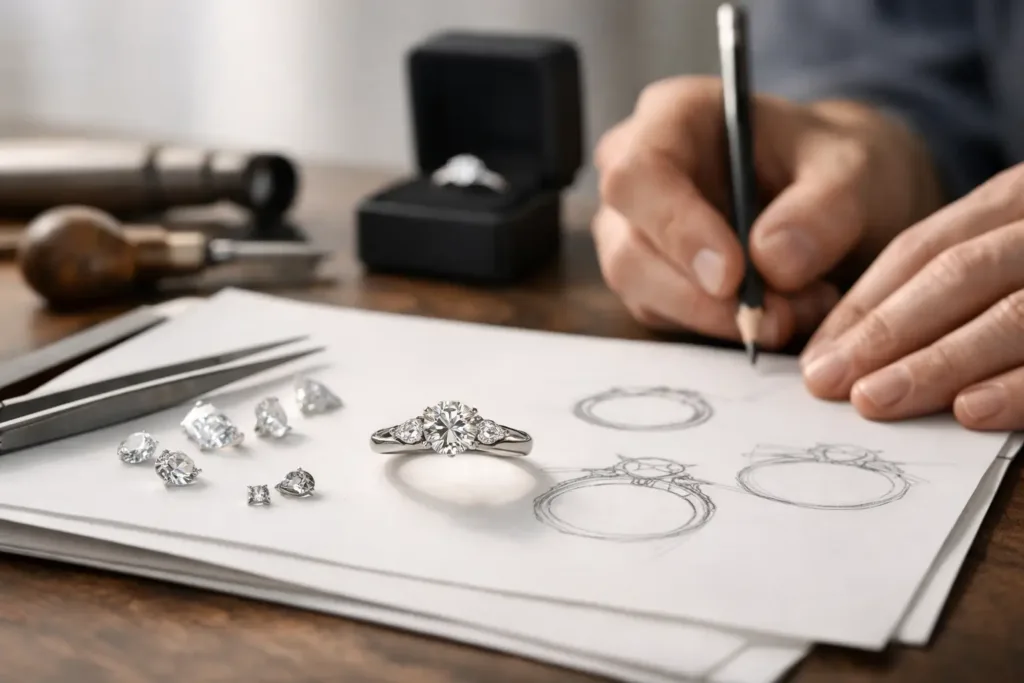
Choosing an engagement ring is rarely just about carat weight or sparkle. For many couples, bespoke engagement ring design is the point where sentiment, style and practicality finally meet – creating a ring that feels personal rather than simply purchased. When the ring will be worn every day, often for decades, details such as proportion, comfort, metal choice and stone certification matter just as much as appearance.
A well-made bespoke ring is not about making something complicated for the sake of it. It is about making deliberate choices. That might mean refining a classic solitaire so it sits lower on the finger, selecting a diamond shape that flatters the hand, or choosing platinum over gold for durability. The best custom work balances beauty with wearability and gives the buyer confidence that every element has been selected for a reason.
What bespoke engagement ring design really means
At its simplest, bespoke engagement ring design means creating a ring around your preferences instead of choosing a finished piece exactly as it appears in a display or online listing. That does not always mean starting from scratch with an elaborate concept. In many cases, the process begins with a familiar design and improves it through tailored decisions on the centre stone, setting, band profile, metal and finishing details.
This distinction matters because buyers often assume bespoke means expensive, highly ornate or difficult to manage. In reality, custom design can be the most sensible route when you already know what you like but cannot find the right version ready-made. A ring may look perfect in photographs yet sit too high, feel too delicate for daily wear or fall outside your preferred budget once stone quality is factored in.
Bespoke work allows those variables to be adjusted with far more control. It also helps avoid paying for features that are not important to you while preserving the ones that are.
Why more buyers choose bespoke engagement ring design
There is a practical reason bespoke rings continue to appeal, particularly for high-value purchases. Buyers want reassurance. They want to know the diamond is certified, the precious metal is properly hallmarked, the ring is made to last and the price reflects the specifications chosen rather than guesswork.
Custom design supports that level of clarity. Instead of trying to compare near-identical stock rings, you can assess the exact combination of diamond, metal and setting style that suits your priorities. For one buyer, that may mean a larger lab-grown diamond with excellent visual impact. For another, it may mean a smaller natural diamond with a higher colour grade and a timeless handcrafted setting.
Neither approach is automatically better. It depends on what matters most – size, origin, rarity, budget or long-term value. A strong bespoke process makes those trade-offs clearer rather than hiding them behind vague product descriptions.
Starting with budget, not just inspiration
The most successful bespoke projects usually begin with a budget discussion before design sketches become too specific. That is not about limiting ambition. It is about building the right ring from the outset.
Diamond shape, carat weight, cut quality and metal choice all affect price significantly. An oval diamond may deliver more finger coverage than a round brilliant at a similar weight, while platinum will usually cost more than 18ct gold. Adding a hidden halo, diamond-set shoulders or a fully set band can also move the price quickly.
Being clear about budget early helps your jeweller recommend options that make sense. In some cases, a subtle change in stone shape or setting style can make a ring appear larger or more refined without forcing an unnecessary increase in spend. This is where expert guidance becomes valuable. A premium result is not only about spending more. It is about spending well.
Natural or lab-grown diamonds
This is one of the most common decisions in bespoke engagement ring design. Natural diamonds appeal to buyers who value rarity, geological origin and traditional prestige. Lab-grown diamonds appeal to those who want more size for budget, modern sourcing preferences or strong visual value.
From a wearability perspective, both can be excellent choices. The right option depends on your priorities, and a reputable retailer should explain the differences clearly, including certification and pricing transparency. A bespoke ring should fit your values as comfortably as it fits your finger.
Designing the ring around the wearer
A ring may be beautiful in isolation and still be wrong for the person wearing it. That is why custom design should consider lifestyle as seriously as style.
Someone with an active job or hands-on routine may benefit from a lower-profile setting that protects the centre stone and catches less. A wearer who prefers understated jewellery might suit a slim band with a clean solitaire design, while someone who enjoys bolder pieces may prefer a wider shank, a halo setting or a fancy shape such as pear or emerald cut.
Finger shape and ring size also influence the final look. Elongated shapes can flatter shorter fingers, while certain band widths can help a centre stone feel more balanced. These are small adjustments, but they often make the difference between a ring that looks good in theory and one that feels exactly right in practice.
Metal choice and everyday wear
Platinum remains a popular choice for engagement rings because of its strength, naturally white appearance and premium feel. It is particularly well suited to buyers who want durability and minimal concern over plating.
Gold offers flexibility in tone and style. Yellow gold has a timeless warmth, white gold gives a bright contemporary finish and rose gold can feel softer and more individual. The right choice often comes down to skin tone, jewellery wardrobe and personal preference, but maintenance should also be part of the conversation. For example, white gold may require periodic re-plating to maintain its finish.
There is no single correct answer here. Bespoke design works best when beauty and upkeep are considered together.
From concept to finished ring
A strong bespoke process should feel exciting, but also structured. It typically begins with a consultation covering inspiration, stone preference, budget and timeline. From there, the design is refined into a more technical proposal so proportions, setting details and overall balance can be reviewed before production begins.
This stage is particularly important because a ring is not simply an image. The setting has to secure the stone properly, sit comfortably on the hand and work with a wedding band if that matters to you. A design that looks delicate on screen may need subtle engineering changes to remain secure in real life.
Once approved, the ring moves into manufacture and final finishing. This is where craftsmanship becomes visible. Clean claws, even stone setting, a well-shaped band and a polished finish all contribute to the result. Certification and hallmarking should also be handled with care, especially for customers making a significant purchase who want clear proof of quality and authenticity.
For buyers seeking confidence as well as luxury, this is where working with an established specialist such as Hispek Diamonds can make the process feel more straightforward. Expertise matters most when the purchase carries emotional and financial weight.
What to ask before you commit
Even the most attractive design should be backed by practical reassurance. Before placing an order, ask how the centre stone is certified, what hallmarking applies, what the production timeline looks like and whether resizing or aftercare support is available.
You should also ask how the ring will sit alongside a wedding band if you plan to wear both together. Some engagement ring settings create a gap, while others are designed to stack more neatly. This is easy to overlook at the design stage and frustrating to correct later.
It is also sensible to discuss returns or approval terms where relevant. Bespoke pieces are naturally more specific than stock items, so expectations should be transparent from the beginning. Good service is not just about selling the ring. It is about helping you feel certain before, during and after purchase.
The real value of going bespoke
The strongest reason to choose bespoke engagement ring design is not novelty. It is precision. You are able to match the ring to the wearer, the budget and the significance of the moment without settling for compromises that were built into a standard design.
That could mean a classic ring made better through finer proportions. It could mean choosing a certified diamond that gives you confidence in what you are buying. Or it could simply mean creating something timeless that feels more personal because every choice was intentional.
When an engagement ring is made properly, it should do more than impress on the day it is presented. It should continue to feel right years later – on the hand, in the light and in the meaning it carries.



Comments are closed