Diamond Grading Report Review Guide
A diamond grading report review helps you verify quality, value and authenticity before buying. Learn what to check and what the grades mean.
We Buy Gold . Top Prices Paid .
7 Day Price Promise .
30 Day Returns
Free World Wide Shipping
Life Time Warranty
We Buy Gold . Top Prices Paid .
7 Day Price Promise .
30 Day Returns
Free World Wide Shipping
Life Time Warranty

+44 203 965 6669
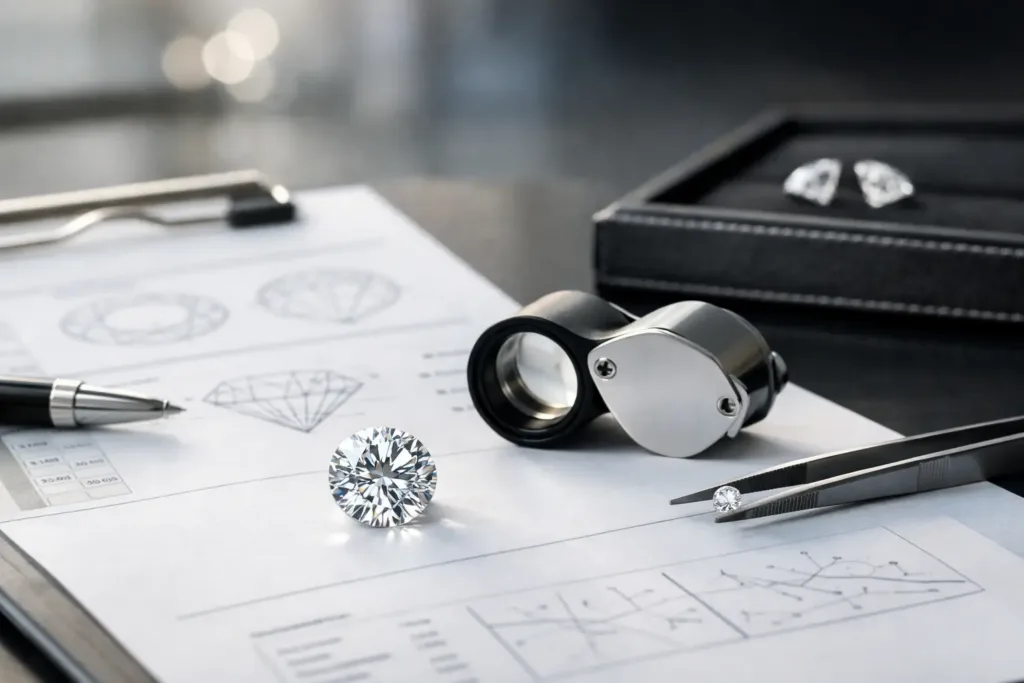
A diamond grading report review can save you from paying premium prices for a stone that does not match your expectations. When you are buying an engagement ring, anniversary gift or investment-grade diamond jewellery, the report is not a technical extra. It is one of the clearest trust signals available, and it gives you an independent view of what you are actually buying.
For many buyers, the problem is not finding a certificate. It is knowing how to read one properly. Two diamonds can look similar in a listing, carry the same carat weight and even seem close in price, yet have meaningful differences in cut, clarity or fluorescence that affect beauty and value. A proper review helps you spot those differences before you commit.
A grading report is an expert assessment of a diamond’s measurable characteristics. In most cases, it will cover the 4Cs – carat, cut, colour and clarity – along with proportions, polish, symmetry and identifying details such as a laser inscription. That sounds straightforward, but the real value lies in how these elements work together.
Carat weight often gets the most attention because it is easy to understand. Bigger usually sounds better. Yet a poorly cut one-carat diamond can appear dull beside a smaller stone with superior light performance. A report review brings the focus back to overall quality, not just size.
It also protects against overpaying. If a diamond is presented as premium, the report should support that claim. If the asking price suggests exceptional quality but the report shows compromises in cut or a lower colour grade than expected, you can make a more informed decision. This matters even more when comparing natural and lab-grown diamonds, where pricing structures differ and buyers need clarity rather than sales pressure.
Not all grading reports are viewed equally by the trade or by informed consumers. The most widely recognised laboratories are valued because their standards are consistent and respected internationally. That consistency matters when you are spending a significant sum.
GIA reports are often regarded as the benchmark for strict grading. IGI is also widely used, particularly in the lab-grown market, and is familiar to many retail buyers. Other laboratories exist, but standards can vary, which means the same diamond may receive a softer or stricter grade depending on who assessed it.
This is where a diamond grading report review becomes especially useful. It is not simply about seeing that a certificate exists. It is about understanding whether the issuing laboratory is one the market trusts, and whether the grades on the page align with the price, presentation and purpose of the piece.
Carat measures weight, not visible size alone. Two diamonds of the same carat can face up differently depending on how they are cut. If a stone carries excess weight in the pavilion, it may look smaller than it should from the top. Buyers who want strong visual presence should review measurements as well as carat.
Cut is often the difference between a diamond that looks bright and lively and one that appears flat. In round brilliant diamonds, cut grade can have a major effect on sparkle. Excellent or Ideal grades are usually preferred, especially for engagement rings where brilliance is central to the overall look.
Fancy shapes such as oval, pear and emerald cut are more nuanced because not every report gives a formal cut grade. In those cases, proportions, symmetry and visual assessment become more important. A report gives useful data, but it does not replace seeing how the stone performs.
Diamond colour is graded on a scale, usually from D onwards for white diamonds. The closer to D, the less colour is present. However, the best choice depends on the setting, shape and budget. A platinum solitaire may encourage a higher colour preference, while a yellow gold setting can make a slightly warmer grade look beautiful and balanced.
There is often a value sweet spot here. Many buyers choose a near-colourless grade because it offers a refined appearance without the premium attached to the top end of the scale.
Clarity refers to internal inclusions and surface blemishes. The key point is not chasing perfection at any cost. It is deciding whether the imperfections are visible in normal viewing conditions and whether they affect durability or beauty.
For many customers, an eye-clean diamond offers the right balance. A report can reveal whether inclusions are small and well placed or more noticeable and central. This is especially useful when comparing stones online, where close-up images can make tiny features appear more dramatic than they are in reality.
These finishing grades affect how precisely the diamond has been crafted. They may not attract as much attention as the main 4Cs, but they support overall appearance. In well-cut stones, Very Good or Excellent polish and symmetry are typically desirable.
Fluorescence can be misunderstood. Some buyers avoid it automatically, while others ignore it entirely. In reality, it depends on strength and effect. Faint fluorescence may have little impact, while stronger fluorescence can sometimes influence appearance or market value. In some diamonds it is harmless, and in others it may be worth avoiding. The report helps you ask the right question rather than making assumptions.
Depth percentage, table percentage and overall dimensions are particularly useful in a diamond grading report review. These figures can indicate whether a stone is likely to have good balance and visual spread. They are not the whole story, but they help identify diamonds that may carry weight in less flattering ways.
The inclusion plot and comments section can reveal details that matter. A comment about clarity characteristics not shown, treatment disclosures or internal graining may influence confidence. These details are easy to skip, but they should be read carefully.
Online diamond shopping offers excellent choice, but it also places more weight on documentation. You cannot rely on showroom lighting or quick impressions. The report becomes part of your decision framework, alongside photography, video, pricing and retailer credibility.
When reviewing a report online, check that the report number is clear and matches the listing. If the diamond is laser inscribed, that can add another layer of reassurance. Make sure the listed specifications mirror the report exactly. Even small discrepancies deserve clarification before purchase.
It is also wise to consider the retailer’s wider trust signals. Independent certification is important, but so are transparent pricing, returns, aftercare and support. A premium purchase should come with premium clarity at every stage. This is where a specialist retailer such as Hispek Diamonds adds value – not simply by offering certified stones, but by helping buyers understand what those certifications mean in practical terms.
A report is powerful, but it is not the whole picture. It does not tell you whether you personally love the look of the diamond. It does not explain whether an oval has a noticeable bow-tie effect or whether an emerald cut has the hall-of-mirrors appearance you prefer. It also does not account for the design quality of the finished ring or necklace.
That is why the best buying decisions combine certification with expert guidance. The report provides structure and objectivity. Human advice adds context. If you are choosing between two similar stones, the right support can help you decide whether it is worth paying more for a higher grade or whether the visible difference is too slight to justify the premium.
One common mistake is focusing on a single grade in isolation. Buyers may chase D colour or Flawless clarity without considering how little visual benefit that delivers in the finished piece. Another is treating all certificates as equal, when laboratory standards can differ.
A third mistake is assuming the report confirms beauty on its own. It confirms measurable quality, which is not always the same thing as visual appeal. Finally, many buyers forget to match the report to the setting. A diamond that is perfect for a simple platinum engagement ring may not be the most sensible choice for a halo design or yellow gold mount.
If a diamond seems unusually cheap for its grades, ask why. If the certificate comes from a less familiar laboratory, ask how the pricing reflects that. If the report is older, ask whether the stone has been rechecked. If fluorescence, proportions or comments raise uncertainty, ask for a plain-English explanation.
A reputable jeweller should welcome those questions. High-value purchases deserve transparent answers, not vague reassurance.
The best approach is simple: use the grading report as a decision tool, not a decorative document. When you understand what it says, you buy with more confidence, compare options more fairly and choose a diamond for its real merit rather than marketing alone. That extra care is often what turns a major purchase into one you feel happy wearing for years.
A diamond grading report review helps you verify quality, value and authenticity before buying. Learn what to check and what the grades mean.
Are lab diamonds certified? Learn how grading works, which labs matter, what reports include, and how to buy a certified stone with confidence.

Are lab grown diamonds worth buying? Learn how they compare on price, beauty, ethics and resale so you can choose with complete confidence.

Is 24k gold VAT free in the UK? Learn when investment gold qualifies for VAT exemption and when jewellery and other gold items still incur VAT.

Learn how to buy LBMA gold bars safely with expert tips on purity, pricing, storage and choosing a trusted UK bullion retailer.

Learn how to buy investment gold safely with expert tips on bars, dealers, pricing, storage and paperwork to protect your purchase.