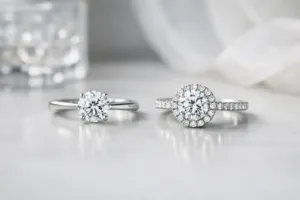
Diamond Solitaire or Halo – Which Suits You?
Diamond solitaire or halo – compare sparkle, size, price and style to choose the right engagement ring with confidence and lasting value.
We Buy Gold . Top Prices Paid .
7 Day Price Promise .
30 Day Returns
Free World Wide Shipping
Life Time Warranty
We Buy Gold . Top Prices Paid .
7 Day Price Promise .
30 Day Returns
Free World Wide Shipping
Life Time Warranty

+44 203 965 6669
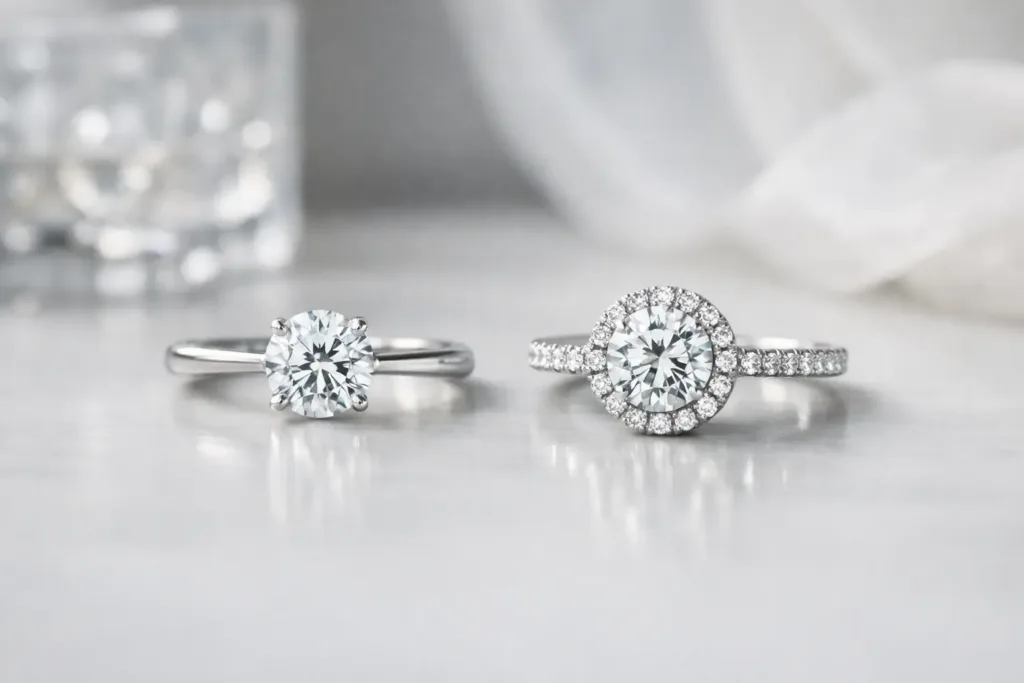
A ring can look perfect in a photograph and feel completely different on your hand. That is usually where the real choice begins with diamond solitaire or halo designs. Both are timeless, both can be beautiful, and both suit engagement rings exceptionally well, but they create a very different look, wear differently day to day, and can change how your centre diamond is perceived.
For some buyers, the answer is immediate. They want the clean confidence of a single stone. Others want extra brilliance and a more decorative finish. Most people, though, sit somewhere in the middle. They want elegance, value, durability and a style that still feels right years from now. That is why comparing these two settings properly matters.
A solitaire ring places all attention on one centre diamond. The setting is usually minimal, with claws or a bezel designed to hold the stone securely while letting in as much light as possible. The overall effect is refined, classic and easy to pair with almost any wedding band.
A halo ring features a centre diamond surrounded by a border of smaller diamonds. That outer frame adds surface sparkle and makes the centre appear larger. Depending on the design, a halo can feel delicate and vintage-inspired, modern and bright, or highly glamorous.
Neither style is automatically better. The better option depends on what matters most to you – visual impact, simplicity, finger coverage, maintenance, budget, or how prominently you want the centre stone to stand on its own.
There is a reason solitaire engagement rings have never fallen out of favour. They are straightforward in the best possible sense. A well-cut diamond in a quality solitaire setting does not need extra detailing to look impressive.
The main advantage is clarity of design. Your eye goes directly to the centre stone, which means the diamond itself carries the ring. If you have chosen a beautifully cut natural or lab-grown diamond with strong certification and excellent light performance, a solitaire gives it room to speak for itself.
There is also practical appeal. Solitaires are often easier to clean than more intricate designs, and they tend to work well with a wide range of wedding bands. If you are planning a bridal set and want fewer complications later, this can make a real difference.
From a style point of view, solitaires are versatile. They suit traditional tastes, modern tastes and bespoke designs equally well. A round brilliant solitaire feels timeless. An oval, pear or emerald cut solitaire can feel more contemporary or fashion-led while still keeping the overall look elegant.
Halo settings appeal for an obvious reason the moment you see them. They deliver sparkle. The smaller surrounding diamonds create a bright frame, often making the centre stone appear larger and more pronounced on the hand.
That visual lift can be especially appealing if you want maximum presence without moving immediately into a significantly higher carat weight for the centre diamond. In many cases, a halo setting gives a bigger overall look for the budget.
Halos can also soften or enhance the shape of a centre stone. A cushion cut halo often feels romantic and luxurious. An oval halo can elongate the finger. A round halo can create a fuller, more dramatic appearance. If your priority is impact from the first glance, halo designs are hard to ignore.
They also offer more opportunities for detail. Hidden halos, double halos and shaped halos all create different effects. For buyers who want something more decorative than a plain setting, halo rings can feel more personal and distinctive.
If you are deciding based on appearance alone, ask one simple question: do you want the diamond to look pure and centred, or do you want the whole ring to sparkle from edge to edge?
A solitaire usually looks cleaner and more understated. It can still be striking, especially with a strong cut grade, but the impact comes from restraint. This suits buyers who want sophistication over embellishment.
A halo looks more expressive. It fills more space on the finger and creates a livelier surface. This can be ideal if you prefer jewellery with more presence or if you want your engagement ring to feel unmistakably luxurious.
Finger shape matters too. On longer fingers, both styles generally work well. On shorter fingers, elongated centre stones such as oval or pear shapes can be flattering in either a solitaire or halo design. A larger halo can create excellent coverage, but if the proportions are too wide for the hand, it may feel slightly overpowering. This is where expert guidance and trying on comparable styles can be genuinely useful.
For many buyers, the solitaire versus halo decision comes down to how they want to allocate budget.
With a solitaire, more of the spend often goes into the centre diamond. Since there are fewer surrounding stones, the quality of that main diamond becomes even more important. Cut, colour, clarity and certification all sit front and centre.
With a halo, the budget can be distributed across the design more broadly. A slightly smaller centre diamond may still deliver a larger overall look because the halo adds diameter and sparkle. This can be a smart route if finger coverage and brilliance matter more than having a larger single stone.
That said, it is not always true that halo rings are cheaper. More intricate craftsmanship, additional diamonds and more setting work can increase the price. The right comparison is not solitaire versus halo in the abstract, but rather the specific rings, diamond qualities and metal choices in front of you.
This is where transparency matters. A trusted jeweller should explain exactly what you are paying for, whether that is a higher-spec centre diamond, more detailed setting work, or a custom design built around your priorities.
Engagement rings are worn daily, so beauty should be weighed against practicality.
A solitaire is often simpler to maintain. Fewer stones usually means fewer points to check over time, and cleaning around one centre diamond is typically more straightforward. If you want a ring that feels low-fuss and easy to live with, a solitaire has a clear advantage.
Halo rings are still suitable for everyday wear, but they have more detail to maintain. Because there are multiple smaller stones, regular inspections are sensible to ensure everything remains secure. Dirt and hand cream can also build up more easily around the halo, affecting sparkle if the ring is not cleaned properly.
This does not mean halo settings are high risk. It simply means craftsmanship and aftercare matter more. Choosing a premium ring with proper setting quality, certification and support services such as resizing, inspection and repairs offers useful peace of mind.
Both are established classics, but they age differently in style terms.
A solitaire is the safest choice if your definition of timeless means minimal, elegant and unlikely to date. It has endured through every era because it depends on proportion and diamond quality rather than trend-led detail.
A halo is also a long-standing design, particularly in vintage-inspired jewellery, but some halo styles feel more fashion-sensitive than others. A fine, delicate halo can remain very elegant over time. A larger double halo or highly ornate design may feel more specific to a certain look.
If you love halos, this should not put you off. The point is simply to choose a version that reflects your long-term taste rather than the ring style you happen to be seeing most often right now.
Choose a solitaire if you want the centre diamond to take full focus, prefer a cleaner aesthetic, value easy pairing with wedding bands, or are investing heavily in the quality of one standout stone.
Choose a halo if you want extra sparkle, stronger finger coverage, a more decorative finish, or a larger visual effect without relying only on centre diamond carat weight.
Many buyers also land somewhere between the two. A hidden halo, for example, keeps the top view relatively classic while adding additional brilliance from the side. That can be an excellent compromise if you want subtle detail rather than a full halo look.
For bespoke engagement rings, this balance is often where the best results happen. At Hispek Diamonds, custom guidance can help refine not only the setting style but also the proportions, metal and diamond shape so the final ring feels personal rather than generic.
A diamond ring should do more than impress on the day it is given. It should still feel like you every time you look down at your hand. If you are drawn to clean elegance, trust that instinct. If you love brilliance and want a stronger statement, trust that too.
The smartest purchase is not the one that follows a rule. It is the one that balances beauty, comfort, quality and long-term confidence – and that is always worth taking the time to get right.
Diamond solitaire or halo – compare sparkle, size, price and style to choose the right engagement ring with confidence and lasting value.

Gold bars vs gold coins – compare cost, liquidity, storage and tax treatment to choose the right 24K gold investment for your goals today.
Can you resize platinum rings? Learn when platinum rings can be made bigger or smaller, what affects cost, and when resizing is not advised.
Our guide to buying engagement diamonds covers cut, clarity, carat, certification, budgets and settings so you can choose with confidence.
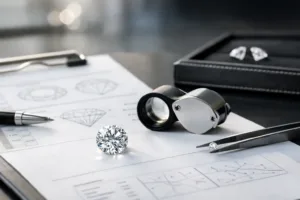
A diamond grading report review helps you verify quality, value and authenticity before buying. Learn what to check and what the grades mean.
Are lab diamonds certified? Learn how grading works, which labs matter, what reports include, and how to buy a certified stone with confidence.