

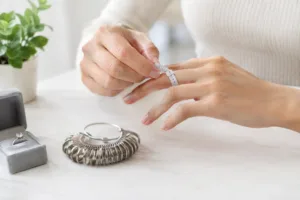
Ring Size Measurement for a Comfortable Fit
Ring size measurement made simple: learn how to measure at home, avoid common fit mistakes and choose a comfortable ring with confidence before buying.
We Buy Gold . Top Prices Paid .
7 Day Price Promise .
30 Day Returns
Free World Wide Shipping
Life Time Warranty
We Buy Gold . Top Prices Paid .
7 Day Price Promise .
30 Day Returns
Free World Wide Shipping
Life Time Warranty

+44 203 965 6669
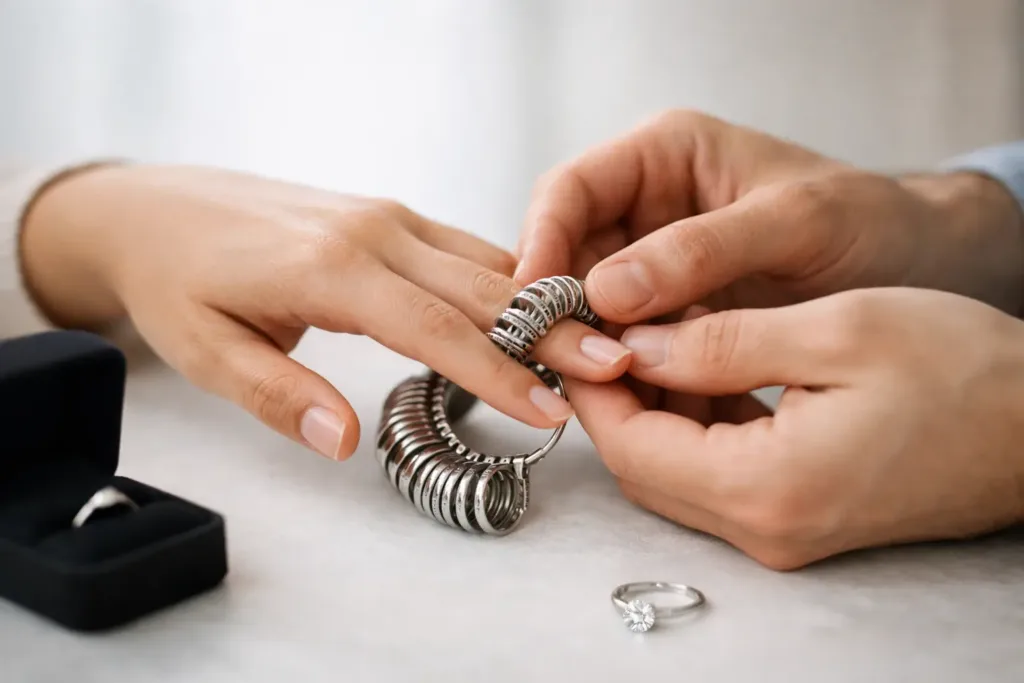
A proposal is a moment you plan carefully, but ring sizing before proposal can feel like the one detail that is difficult to arrange without giving away the surprise. The reassuring news is that an engagement ring does not need to be perfectly sized on the first day to be meaningful. With a thoughtful estimate, a sensible ring design and access to professional resizing advice, you can give a beautiful ring with confidence.
A ring that is too loose can turn an unforgettable day into an anxious one, particularly during cold weather when fingers are often slimmer. A ring that is too tight may be uncomfortable, difficult to remove and less enjoyable to wear straight away. The ideal fit should slide over the knuckle with gentle resistance, then sit securely at the base of the finger without pinching.
However, fingers naturally change size throughout the day. Temperature, exercise, salt intake, travel, pregnancy and even the time of year can all make a noticeable difference. This is why professional sizing is based on more than a quick guess, and why a slightly imperfect fit at the proposal is not a failure.
For a surprise proposal, the priority is usually choosing a ring that can be worn safely for photographs and celebrations, then refined afterwards if required. A premium engagement ring is a long-term piece, so it is worth allowing time to achieve the right fit once the surprise has happened.
The most reliable discreet approach is to borrow a ring they already wear on the intended ring finger. Take it to a jeweller promptly, or place it over a ring-sizing guide only if you can do so accurately. Measure the inside diameter, not the outer edge, and make sure the ring is circular rather than stretched or bent.
Be careful with the hand they wear it on. Many people have a slightly larger dominant hand, so a ring worn on the right ring finger may not precisely match the left ring finger. It still provides a valuable starting point, but a professional may recommend adjusting the estimate by a small amount.
A close friend, sibling or parent can be a helpful ally if they can ask naturally during a shopping trip or borrow a ring without arousing suspicion. This works best when the person helping understands that discretion matters more than obtaining an exact result. Asking too many questions can quickly make a surprise feel less surprising.
Trying on your own ring beside one of theirs can offer a rough indication, but it should not be treated as an exact measurement. Finger shape, knuckle size and ring width all influence how a ring feels. Photographs of their hands can also help a jeweller make an informed visual estimate, particularly when paired with their approximate height and build, but they cannot replace a measurement.
If the exact size remains unknown, it is often safer to choose slightly larger rather than smaller. A ring that is a little loose can be worn temporarily with a ring adjuster or carefully kept secure until it is resized. A ring that will not pass over the knuckle may mean it cannot be worn at the proposal at all.
That said, do not size up too far. An excessively loose ring can slip off unnoticed, especially outdoors, on holiday or during an emotional celebration where attention is elsewhere. Your jeweller can advise on the most sensible midpoint based on the evidence you have gathered and the design you have selected.
In the UK, ring sizes are generally shown with letters, sometimes including half sizes. It is useful to know that there is no universally reliable conversion from clothing size to ring size. Two people with similar hands may wear very different sizes because their fingers and knuckles are shaped differently.
Not every engagement ring resizes in the same way. A classic solitaire with a plain precious-metal band is generally among the most straightforward designs to alter. Small adjustments can often be made while preserving the ring’s original balance and finish.
Rings with diamonds or gemstones set around the full band are more complex. An eternity-style setting may have no plain section available for a jeweller to work with, and resizing can affect the alignment, setting security or pattern. Some designs can be altered only within a limited range, while others may require a more specialist solution.
Band width matters too. A wider ring usually feels tighter than a narrow band in the same measured size. If you are choosing a substantial yellow gold, platinum or 22K gold design, mention this during the consultation. A professional can account for the width and profile so the finished ring remains comfortable for everyday wear.
The metal can also affect the resizing process. Gold is commonly adaptable, although the karat and design influence the approach. Platinum requires specialist handling because of its density and durability. Vintage-inspired rings, ornate settings and bespoke designs should always be assessed individually rather than treated as standard resize jobs.
The most accurate time to size a finger is when it is at a normal temperature and has not been affected by strenuous exercise, alcohol or a very salty meal. Avoid measuring immediately after a flight, a gym session or a hot bath. If possible, measure at different times of day, as this gives a more realistic picture of the natural variation.
After the proposal, allow a little time before making a permanent alteration. Excitement, warm venues, tears and celebratory drinks can all affect finger size temporarily. Once the initial celebrations have settled, a professional fitting can establish whether the ring genuinely needs changing and by how much.
If the ring is only marginally loose, a jeweller may suggest a temporary sizing solution rather than immediate alteration. This can be particularly useful if the wearer’s finger size fluctuates seasonally or if a wedding band will later sit alongside the engagement ring. The combined fit can feel different from the engagement ring worn alone.
Until the ring has been professionally checked, it is sensible to remove it for swimming, gym sessions, gardening, cleaning and any activity where it could catch or slip away. Keep it in a secure ring box when it is not being worn. Avoid home methods such as tape, glue, silicone or cutting the shank yourself. These can damage precious metal, trap moisture and compromise the finish of a fine jewellery piece.
A reputable jeweller should inspect the setting as part of any resizing work, especially on a diamond engagement ring. Prongs and claws need to remain secure, and the stone should sit correctly after the band has been adjusted. Ask what work is recommended, whether it affects any warranty terms and how the ring will be checked before it is returned.
At Hispek Diamonds, expert guidance can help you choose a certified diamond ring and a practical size estimate before the proposal, with aftercare support available when the final fit needs attention. That combination of planning and professional service is often far less stressful than trying to make a perfect guess alone.
There is a temptation to postpone a proposal while searching for one more clue about their ring size. Usually, that is unnecessary. The diamond, setting and sentiment will be remembered far longer than whether the ring needed a minor adjustment after the celebrations.
Choose a design with resizing in mind, make the most informed estimate available and keep the receipt and sizing details safe. Then focus on the moment you are creating. A beautifully chosen engagement ring should feel like a promise from the start, and a professional final fitting simply ensures it remains a pleasure to wear for every day that follows.
Ring size measurement made simple: learn how to measure at home, avoid common fit mistakes and choose a comfortable ring with confidence before buying.
When comparing high-polish vs textured 22K gold rings, a high-polish surface will usually make fine scratches and scuffs easier to notice because those marks interrupt…

Use this gold portfolio allocation example to compare 5%, 10% and 15% holdings, choose suitable bullion and weigh risks before you buy with confidence.
You can physically wear a 22K gold ring while showering, swimming or exercising, but removing it first is generally the safer care routine. Higher karat…

Gold investment explained for UK buyers: compare 24K bars, coins and jewellery, understand VAT, premiums, storage and the checks that protect your purchase.
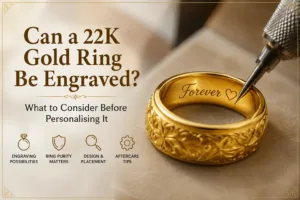
A 22K gold ring can be considered for personalisation through engraving, but the decision should be made for the specific ring rather than assuming every…