A lab-grown diamond is still a diamond – with the same carbon structure, brilliance and durability as a mined diamond. Yet when comparing CVD vs HPHT diamonds, the growing method can influence a stone’s appearance, availability and price. For an engagement ring or meaningful gift, the right choice is not simply about which method sounds more advanced. It is about selecting a certified diamond that looks exceptional to your eye and suits your budget with confidence.
What do CVD and HPHT mean?
CVD and HPHT are two established methods used to grow diamonds in a controlled laboratory setting. Both create genuine diamonds rather than diamond simulants. They score 10 on the Mohs scale of hardness, can be graded by leading independent laboratories and offer the same day-to-day durability expected from a natural diamond.
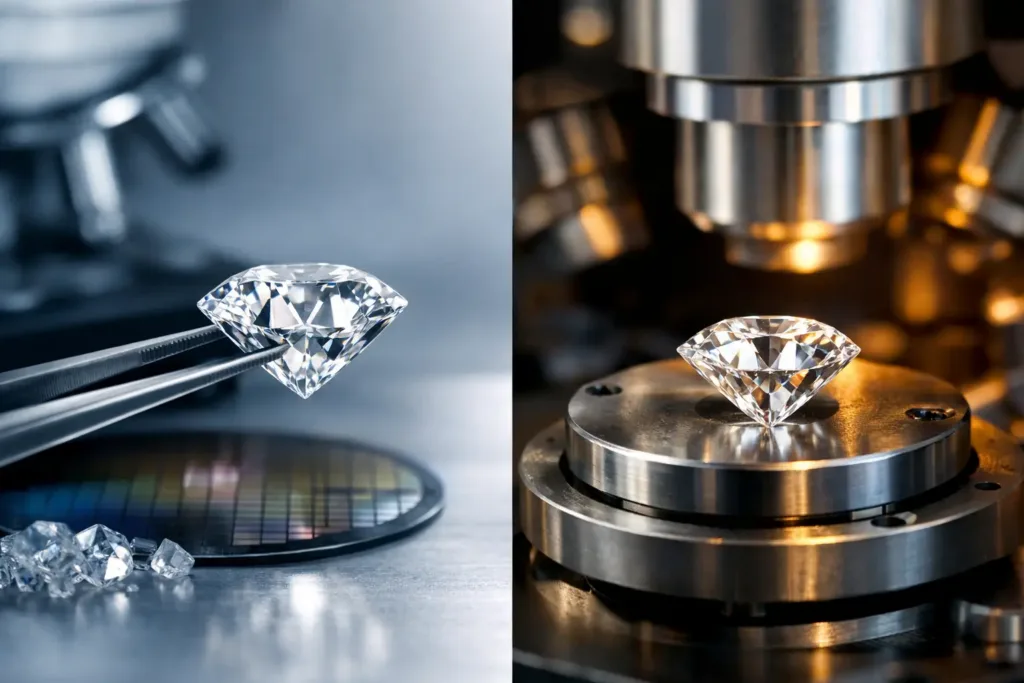
HPHT stands for High Pressure High Temperature. This process recreates the intense conditions found deep within the earth, where natural diamonds form. A small diamond seed is placed inside a press with carbon material, then exposed to very high pressure and heat. Carbon crystallises around the seed to form a larger diamond rough.
CVD stands for Chemical Vapour Deposition. In this method, a diamond seed sits inside a low-pressure chamber containing carbon-rich gases. Those gases are activated so carbon atoms gradually settle onto the seed in layers, growing the diamond crystal over time.
Neither method makes a diamond “fake”. The distinction is about growth history, not authenticity. A reputable grading report will identify the stone as laboratory-grown and usually state its growth method.
CVD vs HPHT diamonds: the visible differences
For most buyers, a well-cut CVD diamond and a well-cut HPHT diamond can look equally beautiful once set in jewellery. The cut, proportions, polish and symmetry have a far greater effect on sparkle than the growth method alone.
That said, each process has tendencies that experienced jewellers and gem laboratories may identify. CVD diamonds can sometimes show subtle brown or grey undertones before post-growth treatment. They may also display internal graining, which can appear as faint lines or haziness under magnification. Modern production has improved significantly, and high-quality CVD diamonds with crisp transparency and attractive colour are widely available.
HPHT diamonds are often associated with strong colour potential, particularly in the colourless to near-colourless range. Some stones may show metallic inclusions from the growth environment, although these are not always visible without magnification and should be reflected in the clarity grade. HPHT is also used as a treatment process for some diamonds, including certain CVD stones, to improve colour. This is accepted within the trade when fully disclosed on the grading report.
The practical point is simple: do not select a diamond based only on the letters CVD or HPHT. Review the individual stone’s certificate, imagery or video where available, and its overall beauty in the chosen setting.
Cut should lead the decision
A diamond with excellent light performance can look brighter and larger than a heavier stone with poor proportions. For round brilliant diamonds, excellent or ideal cut grades are particularly desirable. For fancy shapes such as oval, emerald, pear and cushion, grading terminology varies, so visual assessment becomes even more valuable.
Look for balanced brightness, fire and scintillation rather than chasing one specification in isolation. A colourless, high-clarity diamond with a weak cut may not deliver the lively appearance expected from a premium engagement ring.
Is one type better quality?
There is no universal winner. Both CVD and HPHT diamonds can achieve excellent colour, clarity and cut, while both can also be produced in more commercial qualities. Quality depends on the specific diamond, its finishing and whether it has been independently graded.
A CVD diamond may offer outstanding value, especially in popular larger carat weights. An HPHT diamond may appeal to buyers seeking a particular colour grade or who prefer its growth process. However, neither description guarantees superior sparkle, durability or rarity.
For engagement rings, many customers find that a certified F to H colour diamond with a very good to excellent cut and eye-clean clarity offers a refined balance of beauty and value. “Eye-clean” means inclusions are not readily visible without magnification at a normal viewing distance. It is often a more useful buying consideration than paying substantially more for an internally flawless grade.
Fancy-colour lab-grown diamonds require separate consideration. Both methods can produce striking pink, blue, yellow and other colours, but the origin and any treatment should always be clearly recorded on the certificate. A vivid colour should be chosen for personal preference, not on the assumption that it will perform like a rare natural fancy-colour diamond financially.
Price and long-term value
Lab-grown diamonds usually cost less than comparable natural diamonds, making them an attractive option for buyers who want a larger centre stone, a higher colour or clarity grade, or more budget for a bespoke platinum or gold setting. CVD diamonds are often competitively priced because the process can be efficient at scale, though market pricing changes and individual quality remains the deciding factor.
HPHT diamonds can occasionally command a premium in certain sizes, colours or specifications. This does not automatically mean they are a better purchase. Compare like for like: carat weight, shape, cut quality, colour, clarity, certification and the quality of the finished ring.
It is also sensible to separate jewellery value from investment value. Lab-grown diamonds are chosen primarily for their beauty, wearability and accessible luxury. Their resale market is less established and prices can move as manufacturing technology develops. Buyers looking specifically for a precious-metal investment may prefer investment-grade 24K gold bullion, while those choosing a diamond engagement ring should focus on craftsmanship, certification and the meaning of the piece.
Why certification matters more than the growth method
A laboratory report provides an independent record of a diamond’s key characteristics. For a significant purchase, it should confirm that the diamond is laboratory-grown and identify details such as carat weight, colour, clarity, cut where applicable, measurements and any disclosed treatments.
Trusted certification gives you a clear basis for comparison and helps support future insurance valuations. The report number may also be laser-inscribed on the diamond’s girdle, allowing it to be matched to its documentation.
When reviewing a certificate, check the grading laboratory, the exact measurements and the date of issue. Two diamonds with the same headline grades can still look different because of cut proportions, fluorescence, transparency and inclusions. For this reason, expert guidance is particularly helpful when choosing between closely matched stones.
Choosing the right diamond for your ring
Start with the shape and style you genuinely love. A round brilliant suits those who want maximum sparkle, while an oval can create an elegant elongated look. Emerald cuts offer clean, architectural lines but reveal clarity more readily, so the diamond should be carefully selected. Halo, solitaire and trilogy settings each change how large and bright the centre stone appears.
Next, set a realistic budget for the complete piece, including the setting, metal and any bespoke design work. A lab-grown diamond can allow you to prioritise a substantial centre stone without compromising on a timeless platinum or gold setting. For many couples, this is where the value of CVD or HPHT becomes most meaningful.
Finally, assess the actual diamond rather than buying from a specification list alone. Consider whether it appears colourless in its intended metal, whether inclusions are visible, and whether the cut delivers lively light return. A warm-toned yellow gold setting, for example, can make a near-colourless stone look beautifully bright, while platinum may suit those seeking a cooler, contemporary finish.
A confident choice begins with the individual stone
The best CVD or HPHT diamond is the one that combines trusted certification, attractive light performance and a specification that feels right for your design and budget. At Hispek Diamonds, expert guidance can help you compare certified options clearly and create a ring with lasting personal significance. Choose the diamond that makes you pause when you see it – that response matters far more than the letters on its report.