
How to Book a Ring Consultation With Confidence
Learn how to book ring consultation appointments with confidence, what to prepare, and how expert advice makes choosing a diamond or bespoke ring easier.
We Buy Gold . Top Prices Paid .
7 Day Price Promise .
30 Day Returns
Free World Wide Shipping
Life Time Warranty
We Buy Gold . Top Prices Paid .
7 Day Price Promise .
30 Day Returns
Free World Wide Shipping
Life Time Warranty

+44 203 965 6669
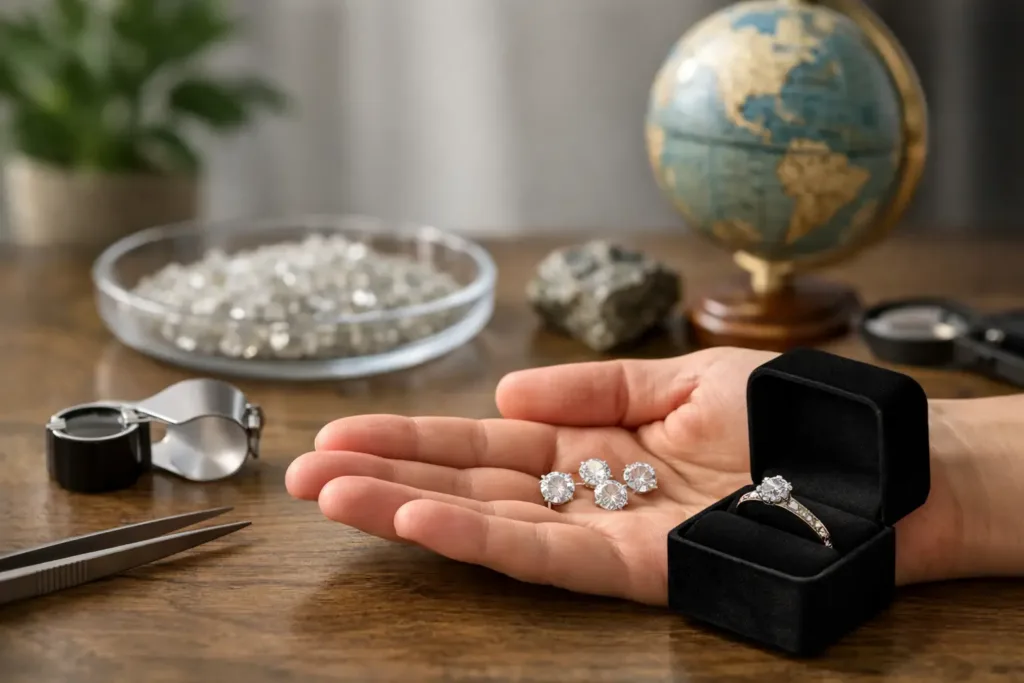
A diamond ring can mark an engagement, an anniversary, a personal milestone or a family gift that will be worn for decades. That is exactly why ethical sourcing diamond jewellery matters. When you are spending on a piece with emotional and financial value, you want more than sparkle – you want confidence in where it came from, how it was made and whether the seller can support the claims behind it.
For many buyers, the challenge is not a lack of choice. It is the opposite. Terms such as responsibly sourced, conflict-free, recycled gold and lab-grown can appear on countless product pages, yet they do not always mean the same thing. If you are shopping for fine jewellery in the UK, the most sensible approach is to understand which standards genuinely matter and which details deserve a second question.
At its simplest, ethical sourcing diamond jewellery refers to jewellery made with diamonds and precious metals obtained through more responsible supply chains. That usually includes efforts to reduce the risk of conflict financing, improve labour conditions, increase traceability and support more transparent trading practices.
However, ethical sourcing is not one single universal badge. It is a combination of sourcing standards, supplier policies, documentation and manufacturing practices. One retailer may focus on certified natural diamonds from vetted suppliers. Another may emphasise lab-grown diamonds and recycled metals. Both can sit within an ethical framework, but they are not identical options.
That distinction matters because buyers often assume ethical means perfect. In reality, it is more accurate to think in terms of lower-risk, better-documented and more transparent sourcing. A trustworthy retailer should be comfortable explaining those differences in plain terms.
If you are buying an engagement ring, diamond pendant or pair of earrings, ask how the diamond was sourced, whether it comes with recognised certification and what the retailer can confirm about the wider supply chain. Clear answers are a good sign. Vague marketing language is not.
For natural diamonds, certification is one of the strongest trust markers. Independent grading from established gem laboratories helps verify what you are buying and gives you greater assurance on quality. It does not answer every ethical question on its own, but it does support transparency and resale confidence.
For the metal itself, UK shoppers should also look for proper hallmarking. A hallmarked gold or platinum piece gives reassurance on metal purity and legal compliance. That is especially important when you are purchasing fine jewellery as a long-term item rather than a fashion accessory.
Traceability is one of the most useful indicators of a serious ethical sourcing policy. The more clearly a retailer can identify where a diamond originated and how it moved through cutting, polishing and manufacture, the stronger the foundation for ethical claims.
That said, traceability in the diamond trade can vary. Some stones have a more complete documented journey than others. Smaller diamonds in multi-stone jewellery can be harder to trace in the same way as a larger centre stone. This does not automatically make a piece unethical, but it does mean buyers should expect an honest explanation rather than an overconfident promise.
A certified diamond gives you an independent record of key quality characteristics, such as cut, colour, clarity and carat weight. For high-value purchases, that protects you from paying premium prices for unclear specifications.
It also supports more informed comparison. If two rings appear similar online but only one has a properly certified centre diamond, that difference is significant. Ethical buying is not only about origin. It is also about transparent value.
One of the biggest decisions for modern buyers is whether to choose a natural diamond or a lab-grown diamond. There is no universal right answer. It depends on your priorities, your budget and what you want the piece to represent.
Natural diamonds appeal to buyers who value rarity, geological origin and traditional bridal symbolism. When sourced through reputable channels and paired with recognised certification, they can still meet strong ethical expectations. The key is to buy from a retailer that takes supplier vetting and transparency seriously.
Lab-grown diamonds appeal to buyers who want a lower entry price for larger carat weights, or who prefer a modern alternative to mined stones. They offer the same visual brilliance and can be an excellent option for engagement rings, dress rings and earrings. For some customers, this route aligns more closely with their ethical preferences. For others, the emotional value of a natural diamond remains more compelling.
There is also a practical trade-off. Lab-grown diamonds can offer exceptional size and appearance for the money, but buyers should understand they may perform differently from natural diamonds in terms of long-term market perception. If your purchase is primarily sentimental, that may not matter. If future resale value is a major concern, it is worth discussing with an expert before you buy.
The quality of the retailer is often just as important as the quality of the jewellery. A premium piece should come with premium reassurance. That means transparent pricing, clear product specifications, proper certification where applicable, UK hallmarking and visible aftercare support.
Look for businesses that explain their sourcing standards without relying on vague claims. Strong trust signals include membership of recognised trade bodies, lifetime warranty policies, returns information, repair services and access to knowledgeable guidance before purchase. These practical details matter because they show the business is set up for accountability, not just marketing.
A retailer offering bespoke services can also be a strong option if your ethical priorities are specific. Custom design allows you to choose the type of diamond, the metal purity and the overall setting with more control. If you want a certified natural diamond in platinum, or a lab-grown stone in hallmarked 18ct gold, a bespoke approach can make the process more precise and transparent.
Diamonds usually get the most attention, but the metal deserves scrutiny too. Ethical sourcing in jewellery should include consideration of gold, platinum and silver supply chains, not just the centre stone.
For buyers choosing gold jewellery, it is worth asking whether the retailer works with recycled metals or responsibly sourced new metals. Recycled gold can reduce reliance on fresh mining, which is attractive to many customers. At the same time, newly mined gold from responsible suppliers can still be part of a credible ethical standard. Again, the right choice depends on the sourcing policy and the proof behind it.
Metal purity should also match your intended use. For daily-wear engagement rings and wedding jewellery, durability matters alongside ethics. A beautifully sourced piece still needs to suit real life. 18ct gold and platinum remain popular because they balance premium finish with strength for regular wear.
The smartest purchase is rarely the cheapest or the most expensive. It is the one backed by the clearest information. Before buying, review the diamond specification, ask about certification, check hallmarking, understand the returns policy and confirm what aftercare is available if the ring needs resizing or maintenance.
This is particularly important for online buyers. Detailed imagery, transparent descriptions and responsive support can tell you a great deal about the standard of the retailer. If a seller cannot clearly explain a diamond’s credentials before the sale, it is reasonable to question how much support you will receive after it.
For major purchases such as engagement rings, many customers benefit from speaking to a specialist rather than relying only on product filters. A short consultation can help you balance ethics, design, budget and long-term value in a way that feels practical rather than overwhelming. That is often where a premium jeweller adds real value.
Hispek Diamonds reflects this approach by combining certified diamond jewellery, bespoke design options and trust-led support for customers who want quality with reassurance. That blend of expertise and transparency is what makes ethical buying feel straightforward.
Ethical jewellery is not about chasing perfect wording on a product page. It is about choosing a piece whose beauty is matched by credible standards, honest guidance and lasting confidence every time you wear it.
Learn how to book ring consultation appointments with confidence, what to prepare, and how expert advice makes choosing a diamond or bespoke ring easier.

Compare the best gold bar sizes for UK investors, from 1g to 1kg, and choose investment gold that suits your budget, premiums and storage plans.

Jewellery valuation for insurance protects the pieces you treasure. Learn what a professional report includes, when to update it and how to insure well.
Our Asian bridal jewellery guide explains 22K gold, bridal sets, diamonds, fit and care, so you can buy meaningful wedding jewellery with confidence.
Choosing gold bullion or jewellery? Compare purity, VAT, resale value and purpose to buy with confidence for investment, gifting or personal style alike.
Our gold purity stamps guide explains UK hallmarks, carats and fineness so you can choose jewellery or investment gold with complete confidence with care.