
A Guide to Gold Purity Levels for UK Buyers
Our guide to gold purity levels explains carats, hallmarks and value, helping you choose jewellery or investment gold with complete confidence in the UK.
We Buy Gold . Top Prices Paid .
7 Day Price Promise .
30 Day Returns
Free World Wide Shipping
Life Time Warranty
We Buy Gold . Top Prices Paid .
7 Day Price Promise .
30 Day Returns
Free World Wide Shipping
Life Time Warranty

+44 203 965 6669
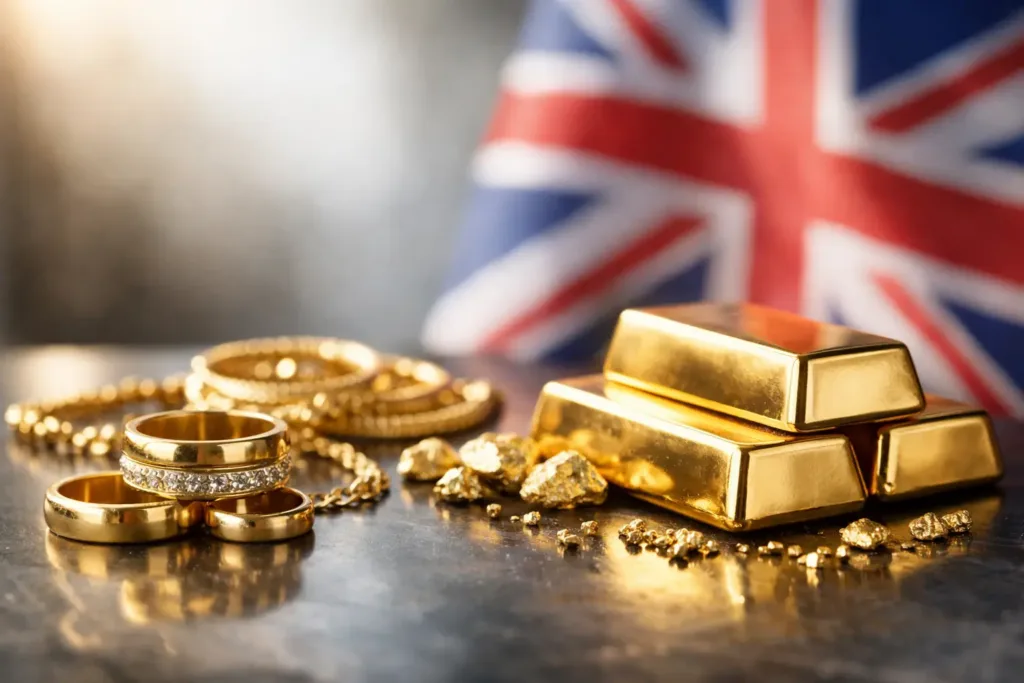
A fine gold chain can look strikingly similar whether it is 9-carat or 22-carat, yet the difference affects its colour, strength, price and long-term value. This guide to gold purity levels gives you the practical knowledge to buy with confidence, whether you are choosing an engagement ring, a meaningful gift, a statement bangle or investment-grade gold.
Gold purity describes how much pure gold is contained in an item. Pure gold is 24 carat, often written as 24K, and is typically too soft for most everyday jewellery when used alone. To make gold more durable and suitable for different designs, it is alloyed with other metals such as silver, copper, zinc or palladium.
Those additional metals are not a sign of lower quality in themselves. They are what allow a delicate ring setting, a hard-wearing wedding band or a detailed pendant to retain its shape in daily wear. The right purity depends on how the piece will be worn, the look you prefer and whether your priority is durability, gold content or investment value.
For gold jewellery, carat measures purity, not gemstone weight. A diamond is measured in carats too, but that refers to its weight. The shared word can cause confusion, particularly when buying a diamond ring in gold.
Gold jewellery is commonly sold in 9K, 14K, 18K and 22K purities. The number tells you how many parts out of 24 are pure gold. It is also shown as a fineness mark, which states the number of parts of gold per thousand.
9-carat gold contains 37.5% pure gold and carries the 375 hallmark. It is an excellent choice for affordable luxury and regular wear, particularly for rings, earrings, chains and gifts where strength and value matter equally.
Because it contains a greater proportion of alloy metals, 9-carat gold is generally more resistant to scratching and bending than higher-purity gold. Its gold colour can be more subtle, especially in yellow gold, and its resale value is usually lower than that of 18-carat or 22-carat pieces of the same weight. For someone seeking a beautiful, practical piece at an accessible price point, that trade-off can make complete sense.
14-carat gold contains 58.5% pure gold and is marked 585. It offers a balanced middle ground: a richer gold appearance than 9-carat, with very good durability for daily jewellery.
Although 14-carat gold is popular internationally, it is less dominant in traditional UK jewellery ranges than 9-carat and 18-carat gold. It can be a smart option for buyers who want a substantial gold content without moving to the higher price and softer composition of 18-carat gold.
18-carat gold contains 75% pure gold and bears the 750 mark. It is a premium choice for engagement rings, wedding bands and fine jewellery, valued for its deep colour, luxurious weight and enduring appeal.
This purity provides enough strength for everyday pieces while allowing the warmth and richness of gold to take centre stage. Yellow 18-carat gold has a noticeably fuller tone than 9-carat gold, while 18-carat white gold offers a refined setting for diamonds. It costs more because there is significantly more gold in every gram, but it is often the preferred balance for jewellery intended to mark a major life moment.
22-carat gold contains 91.6% pure gold and is stamped 916. Its intense yellow colour and high gold content make it especially sought after for traditional Asian jewellery, including bangles, chains, earrings and wedding pieces.
It is softer than 18-carat and 9-carat gold, so it is better suited to jewellery designs that are not exposed to heavy impact or fine, vulnerable settings. A 22-carat bangle can be an exceptional expression of craftsmanship and value, but a slim 22-carat ring may show wear more quickly than an 18-carat alternative. Design matters just as much as the number on the hallmark.
24-carat gold is close to pure gold. Jewellery may be marked 999, while investment bars are commonly refined to 999.9 fineness. This is the purity most closely associated with bullion, where the focus is gold content, recognised weight and investment eligibility rather than day-to-day wear.
Pure gold is naturally soft. For this reason, 24-carat gold is not usually the first choice for intricate rings or jewellery worn constantly. It is, however, the standard many investors seek in bars and coins. Qualifying investment gold is generally VAT exempt in the UK, whereas jewellery is not, making the distinction important when comparing a gold bar with a high-carat necklace.
A hallmark is one of the clearest trust signals when buying gold in the UK. It provides independent confirmation that an item has been tested and found to meet its stated precious-metal standard. Most qualifying gold articles weighing more than one gram must be hallmarked before they are sold as gold in the UK, subject to limited legal exemptions.
A modern hallmark normally includes three useful details: the sponsor’s mark identifying the business responsible for submitting the item, the fineness mark such as 375 or 750, and the assay office mark. Some pieces may also carry a date letter or traditional symbol, depending on when and where they were hallmarked.
Do not confuse a hallmark with a valuation or a guarantee that a piece will rise in value. It verifies metal fineness. The price of jewellery also reflects craftsmanship, design, weight, gemstones, brand service and retail costs. A well-made 18-carat diamond ring and an 18-carat plain band may share the same fineness mark while having very different prices.
Start with how the item will live with you. A ring worn every day needs a considered balance of beauty and resilience. A pendant or occasional-wear earring can accommodate a higher purity more comfortably, while a substantial 22-carat bangle may be chosen for its traditional appearance and gold-rich character.
For engagement and wedding rings, 18-carat gold is often the premium all-round choice. It has the visual presence expected of fine jewellery while remaining suitable for carefully designed daily wear. 9-carat gold remains a strong option for buyers prioritising budget, especially where a more substantial design is preferred at the same overall spend.
Colour also changes with purity and alloy. Higher-carat yellow gold has a richer yellow tone. Rose gold gains its blush from copper, while white gold is created with paler alloys and may be rhodium plated for a bright white finish. Two pieces labelled white gold can therefore look slightly different, even at the same carat.
If skin sensitivity is a concern, ask about the specific alloy and any plating. Gold itself is unlikely to be the issue, but alloy metals can affect individual wearers differently. Clear product information and expert advice are valuable, especially for a piece intended to be worn every day.
High-purity jewellery can hold meaningful intrinsic gold value, but it should not automatically be treated as bullion. Jewellery is bought as a finished object: you are paying for design, making, hallmarked quality and, where applicable, diamonds or gemstones. When selling, the value may depend on condition, demand and the buyer’s assessment of the piece beyond its scrap-metal content.
Investment gold is different. Buyers typically look for recognised 24-carat bars or qualifying coins, clear weight, refinery credentials and a transparent premium over the gold price. LBMA-approved bars are widely recognised in the bullion market and are designed for straightforward verification and resale.
The best choice is not always the highest purity. A beautiful 18-carat ring bought for a proposal has a different purpose from a 999.9 fine gold bar bought to diversify savings. Both can be valuable purchases when their role is clear from the start.
Before committing to a gold purchase, confirm the carat or fineness, the total weight where relevant, and whether the item is UK hallmarked. For diamond jewellery, ask for the stone’s certification and understand whether the quoted weight refers to the gold, the diamonds or both. If you are purchasing bullion, check the bar’s purity, weight, manufacturer and eligibility as investment gold.
It is also worth considering aftercare. Rings may need occasional checking, resizing or refinishing over time, and white gold may require rhodium replating to maintain its bright appearance. A premium retailer should be clear about delivery, returns, warranty and the support available after your purchase.
Gold purity is not simply a technical specification. It shapes how your jewellery looks, feels and wears, and it determines how closely a bullion purchase follows the value of the underlying metal. Choose the level that suits your purpose, then let certified quality, a proper hallmark and a design you genuinely love give you confidence in the piece you take home.
Our guide to gold purity levels explains carats, hallmarks and value, helping you choose jewellery or investment gold with complete confidence in the UK.
Choose diamond rings with confidence. Compare natural and lab-grown diamonds, cuts, settings, certification and metals for a ring made to last for years.

Choose silver chains for men with confidence: compare sterling silver styles, lengths, widths and care for polished everyday or occasion wear with ease.

Modern Asian bridal jewellery trends unite heritage goldwork, diamonds and personal styling. Learn how to choose certified pieces with lasting value today.

Understand natural diamond investment value, from rarity and certification to resale realities, so you can buy a timeless stone with greater confidence.
Find the best Asian gold bangles for everyday wear, weddings and gifts. Compare 22K purity, designs, fit, hallmarking and lasting value with confidence.