

How to Buy a Wedding Ring With Confidence
Learn how to buy a wedding ring with confidence, from choosing metal and fit to setting a budget, checking hallmarks and finding a timeless style.
We Buy Gold . Top Prices Paid .
7 Day Price Promise .
30 Day Returns
Free World Wide Shipping
Life Time Warranty
We Buy Gold . Top Prices Paid .
7 Day Price Promise .
30 Day Returns
Free World Wide Shipping
Life Time Warranty

+44 203 965 6669
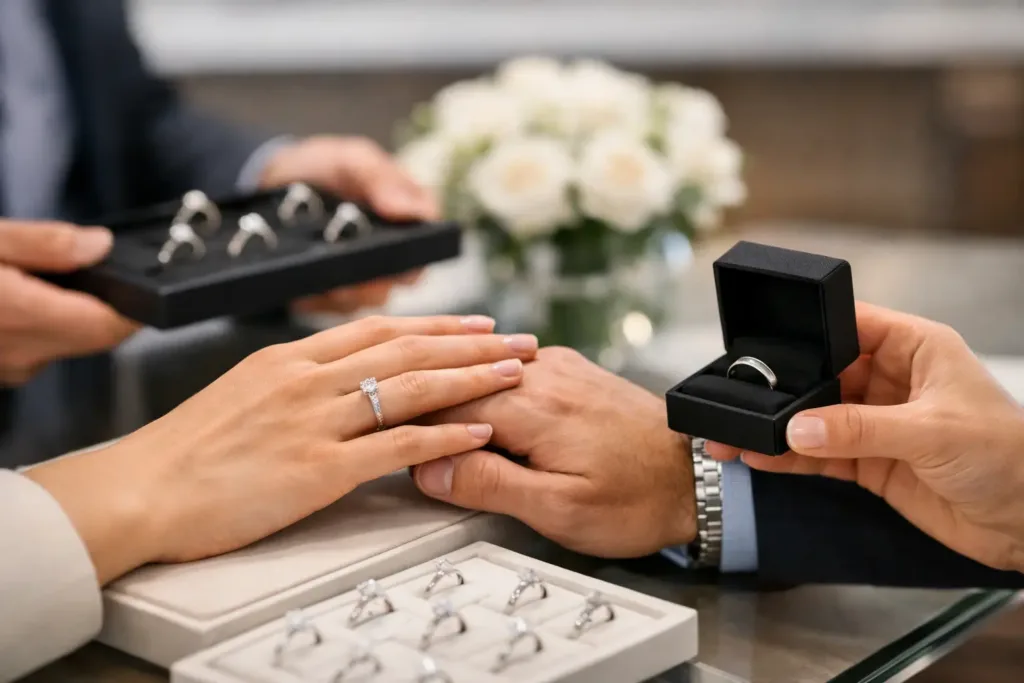
A wedding ring is one of the few pieces of jewellery you will wear every day, through work, weekends, holidays and the ordinary moments that become part of your life together. Knowing how to buy a wedding ring means looking beyond the first design that catches your eye. The right choice should feel personal, sit comfortably beside your engagement ring if you wear one, and be made to last.
For many couples, the best place to begin is not with a trend but with the realities of daily wear: the metal, profile, width, fit and the way the ring will age over time. Once these foundations are clear, choosing a beautiful design becomes far more straightforward.
Wedding rings are available at a wide range of price points, from simple precious-metal bands to diamond-set, engraved and fully bespoke designs. Establish a comfortable budget before shopping, then decide where you would most value investing. A heavier gold band, a platinum setting, a row of diamonds or a custom-shaped fit can each affect the final price.
There is no fixed rule that a wedding ring should cost a particular percentage of an engagement ring or wedding budget. What matters is selecting a piece with the quality, style and durability you want without creating pressure around the purchase.
When comparing prices, check the details rather than judging two rings by photographs alone. The metal purity, gram weight, width, depth, diamond quality, craftsmanship and finishing all contribute to value. A very light band may be more affordable initially, but a slightly more substantial profile can feel more reassuring for lifelong daily wear.
Metal is the starting point for both appearance and practicality. It determines the ring’s colour, weight, maintenance needs and how it may look alongside other jewellery.
Yellow gold remains a classic choice, valued for its rich warmth and timeless character. In the UK, 9K, 14K, 18K and 22K gold are common options. Higher-carat gold contains a greater proportion of pure gold and has a richer colour, while lower-carat gold is generally harder and can suit an active lifestyle well. For a wedding band worn every day, 9K and 18K are particularly popular choices, depending on your preferred balance of colour, purity and budget.
White gold gives a bright, contemporary appearance and pairs naturally with many white-metal engagement rings. It is usually rhodium plated to enhance its clean white finish. Over the years, this plating may need refreshing, which is normal maintenance rather than a fault.
Platinum is naturally white, dense and highly durable. It develops a soft patina with wear, which some people love for its lived-in character, while others prefer occasional polishing to restore a brighter finish. Platinum is often an excellent option for those who want a premium metal with reassuring weight.
Rose gold offers a softer, romantic tone and can be especially striking on its own or in a mixed-metal stack. It is less traditional as a wedding-ring choice, but that is precisely its appeal for couples looking for something distinctive.
If you wear an engagement ring, matching the metal is not essential. A yellow-gold wedding band beside a platinum engagement ring can look intentional and modern. The practical consideration is that metals with different hardness levels may rub against one another over many years, so ask a jewellery specialist about the best pairing for your particular rings.
A wedding ring should be secure without feeling restrictive. It needs to pass over the knuckle with slight resistance, then rest comfortably at the base of the finger. Fingers naturally change size during the day and throughout the year due to warmth, exercise, travel and even salty food, so professional sizing is worth arranging.
Try rings on when your hands are at a normal temperature and avoid sizing immediately after exercise or on an unusually hot day. If you are choosing a wider band, bear in mind that it may feel tighter than a narrow ring in the same size. A jeweller can advise whether a small adjustment is sensible.
The inner shape also matters. A traditional court profile is gently rounded on the outside and inside, while a flat court has a flatter exterior with a rounded interior. A comfort-fit band has a more pronounced curved interior and can be particularly pleasant for wider designs. The best profile is the one you barely notice after a few minutes of wear.
If your engagement ring has a straight band and a raised setting, a standard straight wedding band may sit neatly alongside it. However, lower settings, prominent centre stones and decorative shoulders can leave a gap between the two rings. Some people like this separation; others want a flush, closely fitted look.
Shaped wedding rings are designed to follow the contours of an engagement ring. They may be gently curved, wishbone-shaped, notched or entirely bespoke. They are a practical solution, but they should be made around the engagement ring rather than chosen by eye alone. Bring the engagement ring to your appointment, or provide accurate measurements if it cannot be present.
A bespoke design can be especially worthwhile where the engagement ring has an unusual silhouette. Hispek Diamonds can help create a fitted wedding ring that complements the setting without competing with it, giving you a considered pair rather than two rings that merely happen to sit together.
A plain polished band is a classic for good reason. It is versatile, easy to pair with other jewellery and can be refinished when needed. But classic does not have to mean plain. Brushed or satin finishes offer understated texture, while milgrain edging adds vintage-inspired detail. Engraving can make a simple band quietly personal.
Diamond wedding rings bring additional sparkle and work beautifully beside a diamond engagement ring, but consider the setting carefully. Channel-set diamonds are enclosed by metal at each side for a sleek, protected finish. Pavé designs use small claws to create a brighter, more delicate look. Bezel settings frame each stone in metal and offer a clean, contemporary feel.
A full eternity style has diamonds around the entire circumference, creating uninterrupted brilliance but making resizing difficult or sometimes impossible. A half-eternity or part-set ring leaves a plain section at the back, often allowing more flexibility later. This is an important trade-off if you expect your ring size could change.
For couples who do not want matching bands, there is no reason to force it. One partner may prefer a slim diamond-set design while the other chooses a broad, brushed yellow-gold band. Shared details such as an engraving, matching metal colour or a similar finish can create a connection without making the rings identical.
For precious-metal jewellery sold in the UK, a hallmark is a key mark of assurance. It identifies the metal’s fineness and confirms that the item has been independently tested and marked in line with UK requirements. On a wedding ring, the hallmark is usually discreetly placed inside the band.
If you are buying a diamond wedding ring, ask for clear information about the diamonds used. Natural and lab-grown diamonds are both real diamonds, but they differ in origin and price. Lab-grown diamonds can offer impressive size and brilliance for the budget, while natural diamonds appeal to those who value their geological rarity. Neither is automatically the right answer – the right choice depends on your priorities.
For significant diamond purchases, certification provides useful independent detail about a stone’s quality. With small diamonds in pavé or channel-set bands, individual certificates are not always provided, but the retailer should still explain the diamond specification, setting style and total carat weight clearly.
Also ask about the practical support behind the ring: resizing options, cleaning, servicing, repair policies, warranty and returns. A premium purchase should come with straightforward aftercare and transparent guidance before you commit.
Give yourselves enough time. Ideally, start looking two to three months before the wedding, especially if you want engraving, a shaped band, resizing or a bespoke design. This allows time to compare profiles, try different widths and make a decision without compromising because of a deadline.
Take photographs of your engagement ring, save designs you keep returning to and try styles that are outside your first instinct. A ring can look very different once it is on your hand. The most successful choice is rarely the loudest one in a display – it is the ring that feels right every time you look down at it.
Choose a wedding ring with the same care you would give any lasting promise: with room for personal taste, practical questions and expert advice. When the metal, fit and design all feel considered, you are not simply buying jewellery. You are choosing a piece of everyday luxury made for the life ahead.
Learn how to buy a wedding ring with confidence, from choosing metal and fit to setting a budget, checking hallmarks and finding a timeless style.

Our gold price outlook explains the forces moving bullion, what UK buyers should watch and how to buy 24K gold with greater confidence before buying.
Our lab grown diamond review guide explains certification, quality, value and settings, so you can choose a beautiful diamond with complete confidence.
Learn when jewellery repair and restoration can protect a treasured ring, chain or heirloom, and how expert care preserves its value and daily wearability.
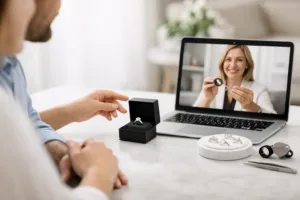
Learn how to book ring consultation appointments with confidence, what to prepare, and how expert advice makes choosing a diamond or bespoke ring easier.

Compare the best gold bar sizes for UK investors, from 1g to 1kg, and choose investment gold that suits your budget, premiums and storage plans.