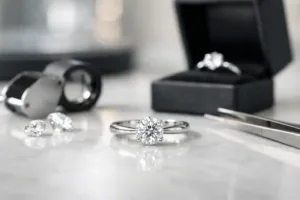
Certified Diamond Engagement Rings Explained
Learn what certified diamond engagement rings mean, how grading works, and what to check before you buy for confidence, value and lasting peace.
We Buy Gold . Top Prices Paid .
7 Day Price Promise .
30 Day Returns
Free World Wide Shipping
Life Time Warranty
We Buy Gold . Top Prices Paid .
7 Day Price Promise .
30 Day Returns
Free World Wide Shipping
Life Time Warranty

+44 203 965 6669
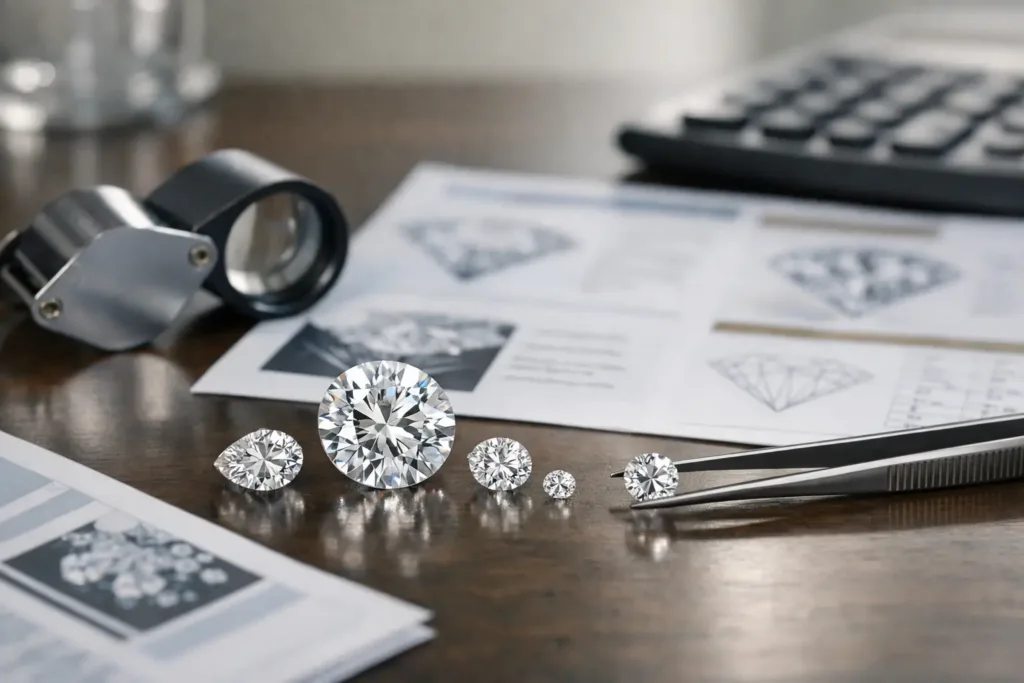
A diamond can look exceptional in a product image and still be the weaker choice once you read the paperwork. That is why knowing how to compare diamond certificates matters. If you are choosing an engagement ring, a gift, or an investment-worthy piece of diamond jewellery, the certificate helps you judge quality on evidence rather than sales language.
A certificate is not there to make a diamond look impressive. Its real job is to record the stone’s measurable characteristics, usually the 4Cs alongside proportions, fluorescence, polish, symmetry and identifying details. When you compare certificates properly, you are not just checking whether one diamond has a better grade than another. You are judging whether the grading is consistent, whether the quality justifies the price, and whether two stones that seem similar are actually very different in value.
The first thing to check is who issued the certificate. This matters more than many buyers realise. Not all grading laboratories apply the same standards, and a diamond graded by one lab may receive slightly different results from another. In the market, GIA is widely regarded as one of the strictest and most consistent. IGI is also well known, particularly in lab-grown diamonds, and is commonly seen in retail. HRD appears regularly too, especially in some international markets.
If you are comparing two diamonds with certificates from different labs, do not assume the same grade means the same quality. A D colour from one lab and a D colour from another may not carry equal market confidence. The stricter the lab, the more dependable the grading tends to be when you are assessing price and long-term confidence.
That does not mean every non-GIA stone should be dismissed. It means the certificate must be read in context. A beautifully priced diamond with an IGI report may still represent excellent value, especially in lab-grown categories. What matters is consistency, transparency and whether the seller is pricing the stone fairly against its grading source.
Before looking at colour or clarity, check that you are comparing like for like. A round brilliant diamond should be compared with another round brilliant, not with an oval or cushion. Shape affects both appearance and pricing.
Then review the measurements, not just the carat weight. Two diamonds can both weigh 1.00ct but face up differently. One may appear larger because it is cut well and carries its weight across the top, while another may hide weight in depth. Measurements tell you how much visual size you are actually getting.
For round diamonds, diameter and depth are especially useful. If one 1.00ct round measures noticeably smaller than another, that can be a sign of a less efficient cut. With fancy shapes, length-to-width ratio becomes important because it affects the outline and overall look. Some buyers prefer a longer oval, while others want a more balanced shape. The certificate helps make that choice objective.
Carat often gets the attention, but cut has the strongest effect on brilliance. A slightly smaller diamond with an excellent cut can look far more lively than a heavier stone with weaker proportions.
When reviewing round diamonds, look at the cut grade first. If one certificate shows Excellent and another shows Good, the difference may be visible in sparkle, light return and face-up beauty. Then go deeper into polish and symmetry. These finishing grades can refine the result further. Ideally, they should also be high.
Proportions matter as well. Table percentage, depth percentage, crown angle and pavilion angle all influence how light moves through the stone. Buyers do not need to become gemmologists overnight, but they should understand that two diamonds with the same broad cut grade can still perform differently. This is where an experienced jeweller adds value by interpreting the report, not simply quoting it.
Colour and clarity are where many shoppers focus first, yet they should rarely be considered in isolation. A higher grade is not always the smarter purchase if the visual difference is minimal and the price jump is steep.
With colour, compare the letter grade and think about the setting. In white gold or platinum, buyers often prefer the crisp look of higher colour grades. In yellow or 22K gold, a slightly lower colour can still look beautiful and may offer stronger value. The certificate gives the technical grade, but the best choice depends on the finished piece and your priorities.
Clarity should also be read practically. There is a meaningful pricing difference between Flawless, VVS, VS and SI categories, but not every jump produces a visible improvement to the naked eye. If two diamonds are both eye-clean, paying much more for the higher clarity grade may not be necessary unless rarity matters to you.
This is where plotting diagrams and clarity characteristics become useful. The certificate will show whether inclusions are central, near the edge, dark, feather-like or more discreet. A VS2 with a small crystal off to the side may be preferable to an SI1 with a more obvious inclusion under the table, even if both seem close on paper.
Fluorescence is often overlooked when people compare certificates, but it can affect both appearance and price. In many cases, faint or medium fluorescence has little practical impact. In some diamonds, strong fluorescence can make the stone appear slightly hazy, while in others it may have no negative effect at all.
This is an area where there is no one-size-fits-all rule. A diamond with fluorescence may be discounted compared with a similar non-fluorescent stone, which can create value for the right buyer. The certificate flags it, but the stone should still be judged in person or through reliable visual assessment.
Certificates are not decorative extras. They are formal grading records. Make sure the report number is present and that it matches the diamond if the stone is laser inscribed. This adds reassurance that the report belongs to the diamond being offered.
The report date is worth checking too. An older report is not automatically a problem, but a current certificate may provide more confidence, particularly for buyers making a high-value purchase remotely. A reputable retailer should also be happy to confirm the report details and explain anything that is unclear.
One of the biggest mistakes buyers make is comparing prices on diamonds that are not genuinely equivalent. If one stone is cheaper, there is usually a reason. It may be graded by a softer lab, have weaker cut proportions, show stronger fluorescence, or carry inclusions that are less appealing in real life.
A proper comparison means matching as many variables as possible – same shape, similar carat weight, same or similar lab, close colour and clarity grades, comparable cut quality, and similar fluorescence. Only then can you judge whether one option is overpriced or whether another is genuinely good value.
This is especially important when shopping online. Product pages can make many stones look similar. The certificate is often where the real distinction appears.
If you are weighing natural against lab-grown diamonds, certificates remain essential, but pricing logic changes. A lab-grown diamond may offer higher specification for the same budget, while a natural diamond may carry rarity and market tradition that some buyers strongly prefer.
The key is not to compare them as if they were identical assets. Compare natural with natural and lab-grown with lab-grown first. Then decide which category better suits your priorities, whether that is size, rarity, sentiment, sustainability messaging or overall spend.
For buyers who want both premium presentation and clear certification, working with a trusted jeweller can make the process far easier. At Hispek Diamonds, for example, the focus is on certified stones, transparent guidance and helping customers choose with confidence rather than guesswork.
By the time you finish comparing two reports, you should be able to answer a few simple questions. Are these stones graded by equally reliable labs? Do they match closely enough to justify a price comparison? Is one diamond carrying hidden compromises in cut, spread or clarity placement? And most importantly, are you paying for quality you will actually see, or just for a higher line on the certificate?
A diamond certificate is powerful because it turns a sentimental purchase into an informed one. It gives structure to a decision that can otherwise feel emotional and rushed. When you know how to read beyond the headline grades, you can spot true value, avoid weak comparisons and choose a diamond that feels every bit as good on paper as it does in the box.
Take your time with the certificate. A beautiful diamond deserves more than a quick glance.
Learn what certified diamond engagement rings mean, how grading works, and what to check before you buy for confidence, value and lasting peace.
Learn how to buy ethical sourcing diamond jewellery with confidence, from certification and traceability to lab-grown and natural diamond choices.
Understand uk hallmarking on gold jewellery, what each stamp means, legal standards, and how hallmarks help you buy genuine gold with confidence.
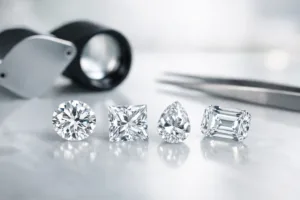
Learn what are the 4Cs of diamonds – cut, colour, clarity and carat – and how to balance them for brilliance, beauty and value.
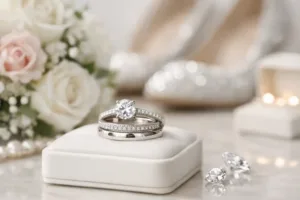
Our bridal set rings guide explains matching styles, metals, diamond choices, fit and value, so you can buy with clarity and confidence.
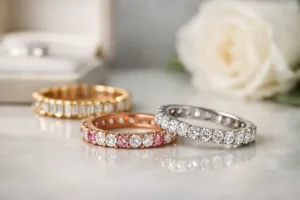
Understand eternity ring meaning and styles, from full and half-set designs to diamond choices, metals, fit, and when to give one.