A bridal set is not simply an accessory for the wedding day. Across Asian traditions, jewellery can signify family heritage, prosperity, protection and the start of a new chapter. This Asian bridal jewellery guide is designed to help you choose pieces that honour those meanings while feeling beautiful, comfortable and worthwhile long after the celebrations.
The best place to start is not with a single trend or a fixed checklist. It is with your ceremony, outfit, personal style and the metal you genuinely want to wear again. A heavily traditional look can be extraordinary, but so can a considered edit of timeless 22K gold and diamond pieces.
Asian bridal jewellery guide: begin with your traditions
Asian bridal jewellery encompasses many distinct cultures, religions and regional customs. Indian, Pakistani, Bengali, Sikh, Sri Lankan and Bangladeshi wedding jewellery may share a love of rich gold tones and detailed craftsmanship, yet the significance of each item can differ greatly between families.
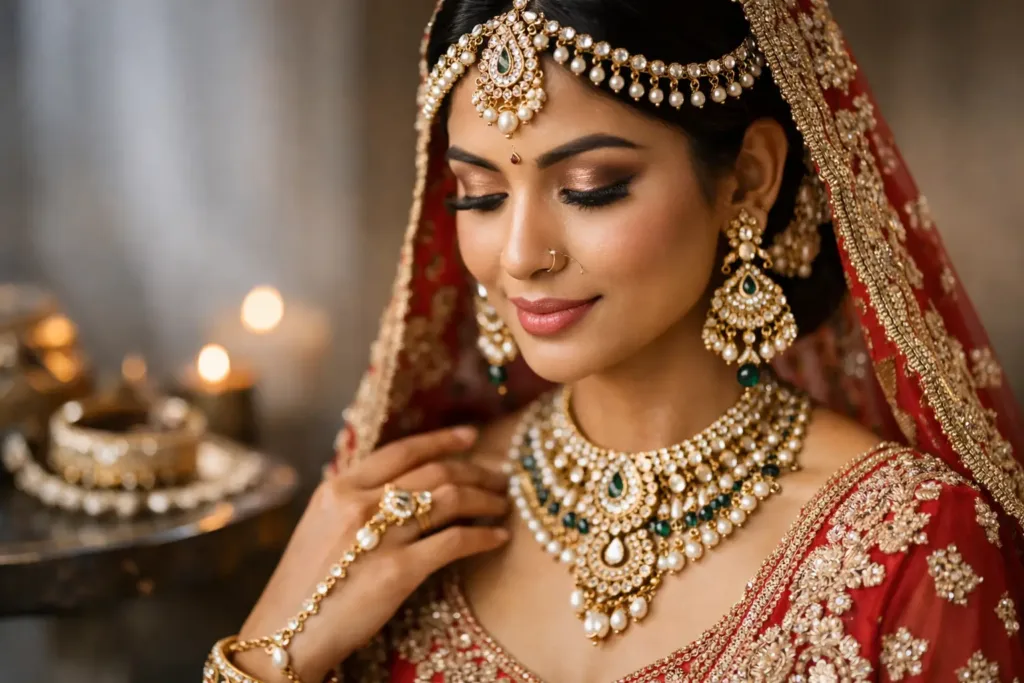
For some brides, a complete set may include a necklace, earrings, tikka or passa, bangles, rings, a nose ring and a waist belt. For others, the focus may be on a mangalsutra, chura, gold bangles, a pendant or jewellery passed down through generations. Before buying, speak with close family members or your officiant if custom matters to you. This prevents a last-minute purchase that looks right but misses an important tradition.
There is also room for personal choice. Many modern brides combine heirloom pieces with a new bridal necklace, or choose a simpler ceremony set and invest in versatile gold jewellery they will enjoy for anniversaries, dinners and future occasions.
Choose the right gold purity
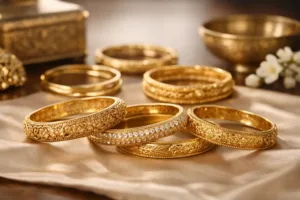
For traditional Asian bridal jewellery, 22K gold is often the preferred choice. Its deep, warm colour has strong cultural appeal and its high gold content gives it an intrinsic value that many families appreciate. It is particularly suited to ornate necklaces, jhumkas, bangles and statement sets.
That said, purity affects durability. Pure 24K gold is generally too soft for intricate jewellery intended for frequent wear. At 22K, gold remains rich in colour but has enough alloy content to support detailed designs. Fine settings and delicate clasps still need careful handling, especially on heavier pieces.
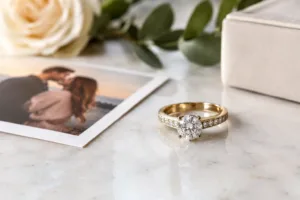
18K gold is a practical option for diamond-led bridal jewellery. It is more durable than 22K and available in yellow, white and rose gold, making it ideal for engagement rings, wedding bands and pieces where diamond security is a priority. Platinum offers a naturally white finish and excellent strength, though it creates a different visual effect from the traditional yellow-gold bridal look.
A mixed-metal bridal wardrobe can work well. You might choose 22K yellow gold for your ceremonial necklace and bangles, then wear a platinum or 18K diamond engagement ring every day. The right choice depends on how you want each piece to function after the wedding.
Build the set around your outfit
Your bridal jewellery should complement the neckline, embroidery and colour of your outfit rather than compete with them. Bring fabric swatches, photographs or, ideally, an image of the blouse neckline to your appointment. Small details can change what works.
A high neckline often suits a shorter necklace or a structured choker, while a lower neckline can carry layered chains or a longer haar. If your outfit is heavily embroidered with gold thread, a finely detailed 22K set may create a cohesive finish. If the fabric already has strong embellishment, cleaner gold forms or diamond accents can give the look breathing room.
Consider the undertone of the outfit too. Classic yellow gold is striking against red, maroon, emerald and deep jewel tones. Antique-finish gold can soften the effect and works beautifully with heritage-inspired styling. White diamonds bring light to ivory, blush and pastel ensembles, while rubies, emeralds and coloured stones can echo embroidery without appearing overly matched.
Avoid choosing solely from a photograph. Bridal jewellery needs to be viewed against your complexion, under natural light and alongside the outfit. The scale that looks elegant in a product image may feel too slight in a large wedding venue or too heavy for a smaller civil ceremony.
Balance statement pieces with comfort
A full bridal set can be visually magnificent, but comfort deserves equal attention. Test the necklace when sitting, turning your head and hugging someone. Check that earrings do not pull on the lobes, bangles move comfortably over the hand and hair jewellery sits securely without causing a headache.
If you are wearing a tikka, passa or other headpiece, arrange a trial with your hairstylist. Its placement should work with the centre or side parting and stay stable through photographs, greetings and dancing. For pierced nose rings connected by a chain, ensure the chain length allows natural movement without catching on your veil or dupatta.
Diamonds, gemstones and meaningful detail
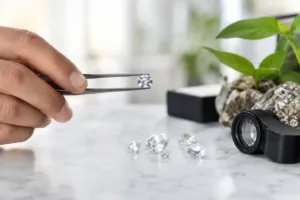
Diamonds introduce brilliance and contrast, particularly in engagement rings and bridal sets designed to be worn beyond the wedding. Whether you choose natural or lab-grown diamonds, ask for clear information about the stone’s grading and certification. The cut is especially important because it determines how lively and bright a diamond appears.
Natural diamonds carry rarity and geological history. Lab-grown diamonds offer the same fundamental material properties, often allowing a larger or higher-specification stone within the same budget. Neither is automatically the right choice for every couple. Your decision may come down to provenance, budget, size preference and long-term emotional value.
Coloured stones can add a more personal layer. Rubies are often associated with love and celebration, while emeralds create a rich contrast against yellow gold. Choose gemstones with appropriate settings and realistic expectations about wear. Softer stones can scratch more readily and may be better reserved for occasion jewellery rather than a ring worn daily.
Engraving a date, initials or a private phrase is another way to make a new piece feel like an heirloom from the beginning. For bespoke bridal jewellery, this small detail can be more meaningful than adding another decorative element.
Quality checks before you buy
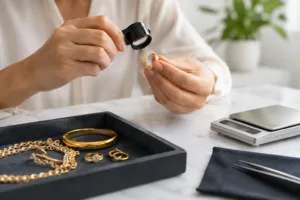
Bridal jewellery is a significant purchase, so trust signals matter. In the UK, precious-metal jewellery should carry the appropriate hallmark where required. This confirms the metal’s fineness and identifies the assay office and sponsor mark. Ask to see the hallmark clearly, especially on 22K gold, where purity is central to the purchase.
For diamond jewellery, request the grading report where applicable and understand exactly what is included. Confirm the diamond type, metal purity, total carat weight, ring size, aftercare options and return terms before completing the order. A transparent retailer will answer these questions directly rather than relying on vague assurances.
Examine craftsmanship closely. Links should move freely but not feel thin, stone settings should be neat and secure, and clasps should close firmly. On bangles and necklaces, check the finishing on the reverse side as well as the front. Quality is felt in the details that are not immediately visible in photographs.
Hispek Diamonds can support brides and families seeking certified diamond jewellery, hallmarked gold and bespoke design guidance, particularly where a traditional aesthetic needs to sit alongside a modern engagement ring or personalised bridal set.
Plan your budget with purpose
It helps to separate ceremonial jewellery from everyday jewellery and from investment purchases. A 22K bridal set may hold strong material value, but it is still crafted jewellery, with workmanship and design forming part of the price. It should not be treated in exactly the same way as a 24K investment gold bar.
Set a total budget, then decide which pieces deserve the greatest share. For many couples, that may be the engagement ring and one substantial necklace. Others may prioritise gold bangles that can be worn repeatedly or a complete coordinated set for the wedding photographs.
Do not feel obliged to buy every element at once. Building your collection over time can be sensible, particularly if family members plan to gift certain pieces. It also leaves room to choose jewellery after you have seen the final outfit and understand what you truly need.
Ordering, alterations and care
Allow enough time for sizing, bespoke work and any alterations. Rings should be sized well before the ceremony, but remember that heat, travel and stress can cause temporary swelling. If your ring is a surprise or you are unsure of the correct size, seek professional advice rather than guessing.
Store each piece separately in a soft-lined box or pouch to reduce scratching. Remove jewellery before swimming, exercising or applying perfume and hairspray. For heavily detailed gold pieces, gentle professional cleaning is often preferable to aggressive home cleaning methods that can loosen stones or dull delicate finishes.
Your wedding jewellery should feel unmistakably yours: respectful of tradition, suited to the occasion and made with standards you can trust. Choose the pieces that bring confidence when you put them on, because the most enduring bridal look is one you will be proud to wear again.