


What Diamond Clarity Should You Choose For An Engagement Ring?
Clarity is the grade that’s easiest to overthink. The scale runs from Flawless down to I3, and it’s tempting to assume you should climb as…
We Buy Gold . Top Prices Paid .
7 Day Price Promise .
30 Day Returns
Free World Wide Shipping
Life Time Warranty
We Buy Gold . Top Prices Paid .
7 Day Price Promise .
30 Day Returns
Free World Wide Shipping
Life Time Warranty

+44 203 965 6669
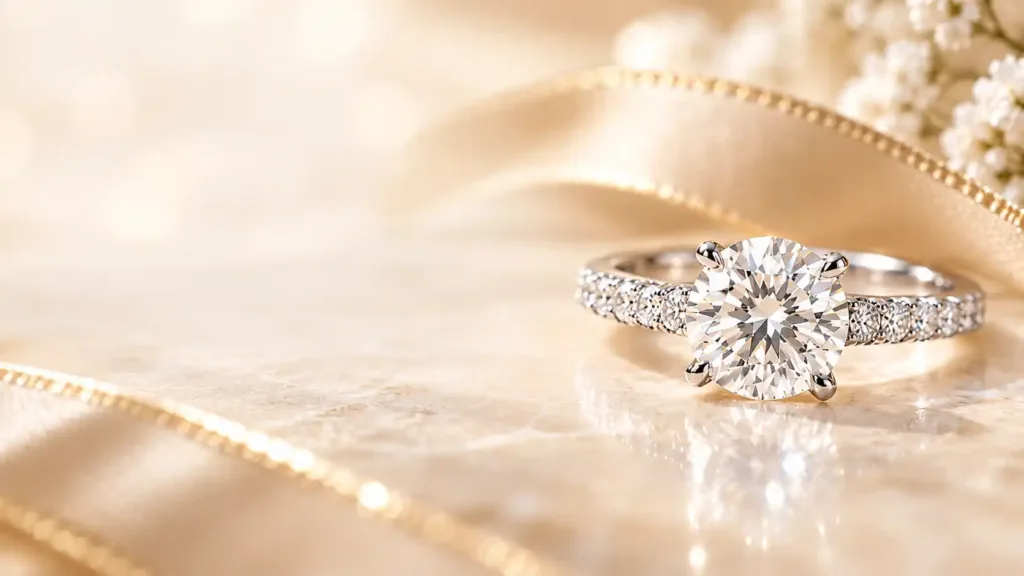
Clarity is the grade that’s easiest to overthink. The scale runs from Flawless down to I3, and it’s tempting to assume you should climb as high as your budget allows. That isn’t always the smartest move. Here’s how we at Hispek Diamonds would approach it, grade by grade, so your money goes where you’ll actually see it.
Clarity grades affect both how a diamond looks and what it’s worth. Knowing where inclusions tend to show up, and how clarity sits alongside cut, colour and carat weight, makes it much easier to compare engagement ring options with confidence.
Clarity comes down to the number and size of naturally occurring imperfections inside a diamond, usually called inclusions. The most common ones are known as feathers, pin points and crystals. A stone’s grade is based on the number and placement of these internal inclusions, along with any surface characteristics called blemishes, as seen under 10x magnification.
Why should you care? Inclusions interfere with how light is dispersed through the stone, so they affect its brilliance. As a general rule, the better the clarity, the more valuable the diamond.
There are eleven universally recognised clarity grades, from Flawless at the top to I3 at the bottom. The useful thing to know is that most impurities can’t be seen with the naked eye and need magnification to spot, particularly in a VS1 diamond or higher. That’s why the middle of the scale deserves a close look before you pay for the top end.
Internally Flawless diamonds are among the rarest and most sought after, sitting just one grade below the ultimate Flawless diamond. If rarity itself matters to you, this is where to look. You can also watch our I colour IF diamond video to see an example of this clarity grade.
With a VVS2 stone, the inclusions can’t be seen with the naked eye and only show up under 10x magnification. These diamonds are incredibly beautiful and a great choice for life’s biggest occasions, which is exactly what an engagement ring is. You can examine a J colour VVS2 diamond in our clarity comparison video.
If you’re looking at a solitaire diamond ring above 1/2 carat, VS2 is where we’d suggest you begin. These stones offer very good value for money, along with the brightness and scintillation you’d expect from a natural diamond. You can see a D colour VS2 stone in our clarity video.
It pairs naturally with a solitaire setting, the design that puts a single well cut centre stone front and centre. Solitaires can be custom made in a variety of shapes, but they’re best suited to a single round, cushion or princess cut diamond. Our featured solitaire uses a minimalist raised six claw mount head and can be made in any colour of 18K gold or pure platinum.
SI2 diamonds usually have slight inclusions and are generally used in jewellery where smaller stones are needed, less than 1/4 of a carat. Most high street jewellers offer diamonds graded SI2 to VS1 because that range gives a good balance of value and quality. For larger solitaire centre stones, VS2 is a useful starting point when comparing clarity grades.
Clarity is one of the 4Cs, and it works alongside the others. Cut is arguably the most important. A diamond can have very good colour and clarity, yet lose its sparkle if it’s cut too thick or deep for light to refract back out through the top. Shape plays a part too. Cushion cut diamonds are known for producing more fire and scintillation than a round cut, depending on the clarity grade and cut grade.
Colour is the other balancing act. G, H and I are the colours most commonly seen in high street stores, offering good value for money. At Hispek, our engagement rings feature diamonds with exceptional colour, clarity, cut, polish and symmetry.
Clarity matters beyond the centre diamond. Depending on the ring design, smaller diamonds also contribute to the overall appearance, and our trilogy, halo and designer rings at Hispek Diamonds show how different arrangements bring several stones together in one setting.
Our featured trilogy ring sets a 1 carat round centre stone flanked by two 1/2 carat round VS quality diamonds, with three smaller stones on either side running in line with the shoulders. It’s available in any combination of 18K metal colour and centre stone of your choice.
Our designer range includes a leaf shaped mount in white and yellow gold holding 19 VS quality round diamonds. And the L01513 Halo Design Ring with split shank surrounds a 1.5 carat centre stone with 80 round diamonds, with a carefully selected centre stone of your choice in any 18K gold metal colour.
An independent diamond grading report helps you verify a stone’s assessed clarity grade and other characteristics before you decide. We only use highly reputable laboratories for the independent certification of our diamonds, such as the Gemological Institute of America (GIA), the International Gemological Institute (IGI) and the European Gemological Institute.
If you’d like to compare grades side by side, Start with a Diamond lets you search thousands of certified natural diamonds from our live stock database. Filters include shape, carat, clarity, cut, polish, symmetry and certificate or lab, so you can narrow straight to the clarity range you’ve settled on.
Yes. Lab grown diamonds are chemically, physically and optically identical to mined diamonds, so the same clarity scale applies. Some SI and VS diamonds can appear free of visible inclusions to the naked eye, although each stone should be assessed individually.
If you’d like help weighing a VS2 against a VVS2 for your budget, or seeing how a particular stone looks in a halo versus a solitaire, we’d love to talk it through. Our Full Customised Engagement Ring Service is the place to start, and each Hispek Diamond ring comes with a lifetime warranty and a price promise. We’re based in London at Matrix Business Centre, 167-169 Station Road, Edgware, HA8 7JU, and in Leicester at The Old School House, 65A London Road, LE2 5DN. We’re proud members of the National Association of Jewellers.
Book An Appointment, call us on +44 203 965 6669, or email contact@hispekdiamonds.com. Ready to browse? Head to Search Diamonds & Prices or Create Your Own to start building your ring.
How many diamond clarity grades are there?
There are eleven universally recognised clarity grades, from Flawless down to I3. Grades are based on the number and placement of internal inclusions and surface blemishes visible under 10x magnification.
Will I be able to see inclusions with the naked eye?
It depends on the grade and the individual diamond. Most impurities need magnification to be seen, particularly in VS1 diamonds and above. SI2 diamonds usually have slight inclusions.
Which laboratories certify your diamonds?
We use highly reputable laboratories for independent certification, such as the GIA, the IGI and the European Gemological Institute.
Can I choose the clarity of my centre stone?
Yes. With Start with a Diamond you can search certified natural diamonds from our live stock database and filter by clarity, cut, polish, symmetry and certificate or lab. Our halo and trilogy designs are also available with a centre stone of your choice.
Clarity is the grade that’s easiest to overthink. The scale runs from Flawless down to I3, and it’s tempting to assume you should climb as…

Are gold bars insured at home, in transit or in a vault? Learn what UK cover may include, the exclusions to check and how to protect bullion properly.

A bespoke jewellery design review explains how custom rings are made, what affects cost, and how to choose diamonds, metals and details with confidence.
Do lab diamonds hold value over time? Learn about resale, pricing, certification and choosing a lab-grown diamond with confidence in the UK before buying.
Learn how to choose diamond studs with confidence, comparing carat, cut, secure settings, certification and natural or lab-grown diamond options.
Find the best bridal jewellery sets for your wedding, from diamond and gold styles to practical advice on quality, comfort, value and matching beautifully.