

Do Lab Diamonds Hold Value? A Clear UK Guide
Do lab diamonds hold value over time? Learn about resale, pricing, certification and choosing a lab-grown diamond with confidence in the UK before buying.
We Buy Gold . Top Prices Paid .
7 Day Price Promise .
30 Day Returns
Free World Wide Shipping
Life Time Warranty
We Buy Gold . Top Prices Paid .
7 Day Price Promise .
30 Day Returns
Free World Wide Shipping
Life Time Warranty

+44 203 965 6669
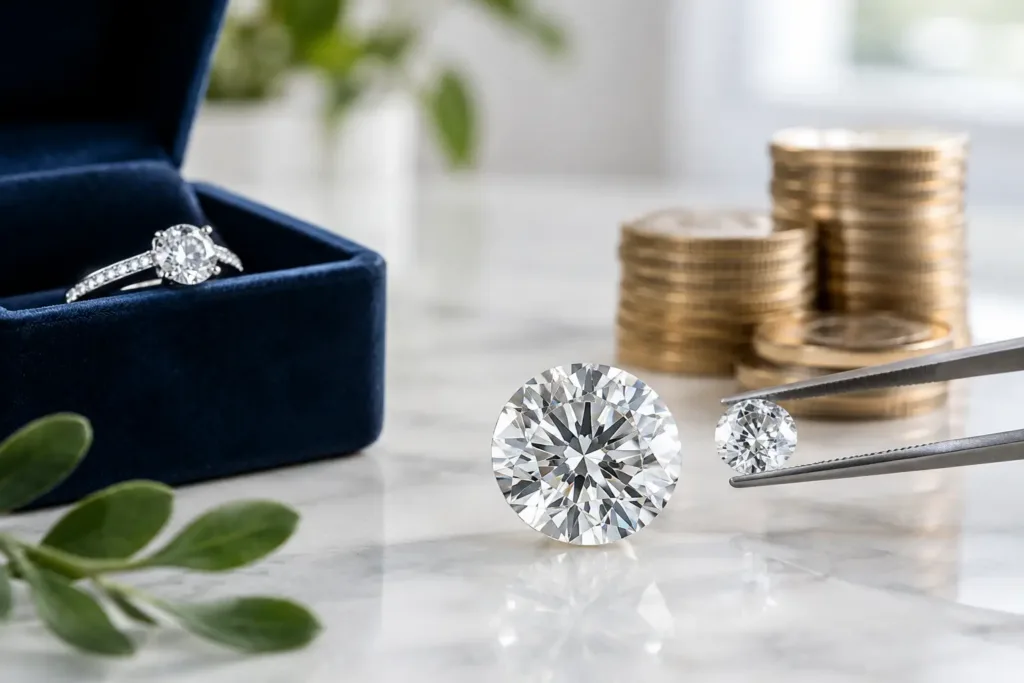
A lab-grown diamond can make a striking engagement ring possible at a size, quality or design that may otherwise sit beyond budget. But do lab diamonds hold value once the ring leaves the box? The honest answer is that they can retain some resale value, but they should not be bought as a financial investment.
For many buyers, that is not a drawback. A lab-grown diamond offers real diamond beauty, exceptional optical performance and a more accessible purchase price. The key is to choose it for the right reason: lasting enjoyment, meaningful design and excellent value at the point of purchase – rather than an expectation of future profit.
Lab-grown diamonds generally do not hold their value as strongly as natural diamonds in the resale market. Their retail prices have reduced over recent years as production has become more efficient and supply has increased. When a newly purchased lab diamond is offered for resale, a buyer can often source a comparable new stone at a competitive price, which limits what the pre-owned stone may achieve.
That does not mean a lab-grown diamond becomes worthless. It remains a genuine diamond, created from carbon with the same essential crystal structure, hardness and visual properties as a mined diamond. It can be enjoyed for decades, reset into new jewellery and professionally cleaned, inspected and maintained. Its resale value, however, is likely to be lower than its original retail price and may vary considerably between buyers.
Natural diamonds can also sell for less than their original retail price, particularly through private resale or trade-in. Jewellery pricing includes craftsmanship, setting metal, design, retail service and taxes where applicable. Even a beautiful natural diamond ring should be viewed first as a treasured piece of jewellery, not as a guaranteed store of wealth.
The main factor is supply. Natural diamonds are finite and have an established history in the global diamond market. Lab-grown diamonds are produced in controlled conditions, and manufacturing capacity can expand. As technology improves, similar diamonds may become less expensive to create, putting pressure on prices for both new and second-hand stones.
A second factor is the difference between retail and resale. The price paid for a finished ring covers much more than the loose diamond: design expertise, precious metal, setting work, certification, quality control, packaging, warranty and retailer support all form part of the purchase. A second-hand buyer or jeweller assesses what they can realistically resell, often at a lower price than a new, fully supported piece.
Quality still matters. A larger, well-cut lab diamond with attractive colour and clarity, supported by an independent grading report, is easier to explain and market than an uncertified or poorly cut stone. Yet quality does not remove the wider supply-and-demand reality. Certification confirms what the diamond is; it does not guarantee a future selling price.
For an engagement ring, value is often about what your budget achieves on the day you buy. A lab-grown diamond may allow you to select a larger centre stone, a higher clarity grade or a more intricate platinum setting without stretching your finances. That can create outstanding value for a ring worn every day and chosen to mark a major life moment.
There is also the value of choice. Some customers prefer a lab-grown diamond because its origin is clear and it aligns with their personal priorities. Others prefer a natural diamond for its rarity, geological history or stronger perception of long-term scarcity. Neither decision is automatically better. The right choice depends on your budget, design preferences and expectations after purchase.
At Hispek Diamonds, this distinction is best approached with clear information rather than sales pressure. A premium ring should feel right on the hand and right for the buyer’s circumstances, whether it features a certified natural or lab-grown diamond.
If future resale matters to you, look at the complete piece rather than focusing only on carat weight. Four areas have the greatest influence:
Keep all paperwork, including the grading report, purchase receipt and any valuation documents. Have the ring checked periodically, especially before resale, to confirm that the setting remains secure and presentable. These steps will not turn jewellery into an investment product, but they can make a future valuation or sale more straightforward.
It helps to separate three different types of purchase. Lab-grown diamonds are primarily a luxury jewellery choice, offering impressive visual impact for the budget. Natural diamonds are also principally jewellery, although rare, exceptional stones can have a more established collector market. Most standard natural diamond jewellery should still be bought for wear and sentiment, not for assured returns.
Investment-grade gold is a different category. High-purity bullion is priced mainly by weight, purity and the prevailing gold market, making it easier to value and trade than a diamond ring. In the UK, qualifying investment gold can also have specific VAT treatment. That does not make gold risk-free – its market price moves – but its purpose is distinct from an engagement ring or occasion jewellery.
For buyers who appreciate both fine jewellery and tangible assets, this distinction can be useful. Choose the diamond ring that gives you the look and meaning you want. Choose bullion only where your objective is exposure to physical gold and you understand the market considerations.
Start with a clear budget and decide which characteristic matters most to you. For some, that is a larger diamond. For others, it is a particular shape, a bright cut, a platinum band or the ability to create a bespoke design. There is no benefit in paying for grades that are difficult to see once the stone is set if that compromises the feature you value most.
Ask to see the certification details and understand the 4Cs: cut, colour, clarity and carat weight. Compare diamonds with similar specifications, but do not rely on a report alone. Two diamonds with matching grades can look different because of proportions, inclusions or light performance. Professional guidance is particularly valuable when comparing stones online or choosing a centre diamond for a custom ring.
Also consider the service around the purchase. Clear returns terms, secure delivery, a warranty, UK hallmarking on precious-metal jewellery and access to resizing or repair support all add practical value. A ring is intended to be worn, and dependable aftercare matters long after the proposal or celebration.
Finally, be wary of anyone presenting a lab-grown diamond as a guaranteed investment. Transparent pricing is more reassuring than inflated promises. A reputable jeweller should be comfortable explaining both the advantages of lab-grown diamonds and the limitations of their resale market.
A lab-grown diamond can be an exceptionally considered purchase when you value beauty, craftsmanship and buying power over speculative returns. Select a certified stone you genuinely love, set it in a design you will be proud to wear, and let its value be measured in the occasions it will be part of.
Do lab diamonds hold value over time? Learn about resale, pricing, certification and choosing a lab-grown diamond with confidence in the UK before buying.
Learn how to choose diamond studs with confidence, comparing carat, cut, secure settings, certification and natural or lab-grown diamond options.

Find the best bridal jewellery sets for your wedding, from diamond and gold styles to practical advice on quality, comfort, value and matching beautifully.
Compare certified versus uncertified diamonds with confidence. Learn what grading reports prove, when they matter, and how to buy with clarity today.

Understand the top reasons to buy gold bullion, from portfolio diversification and VAT efficiency to ownership, liquidity and confidence for UK buyers.

Use this bullion taxation guide to understand UK VAT, Capital Gains Tax and inheritance considerations when buying, selling or gifting investment gold.