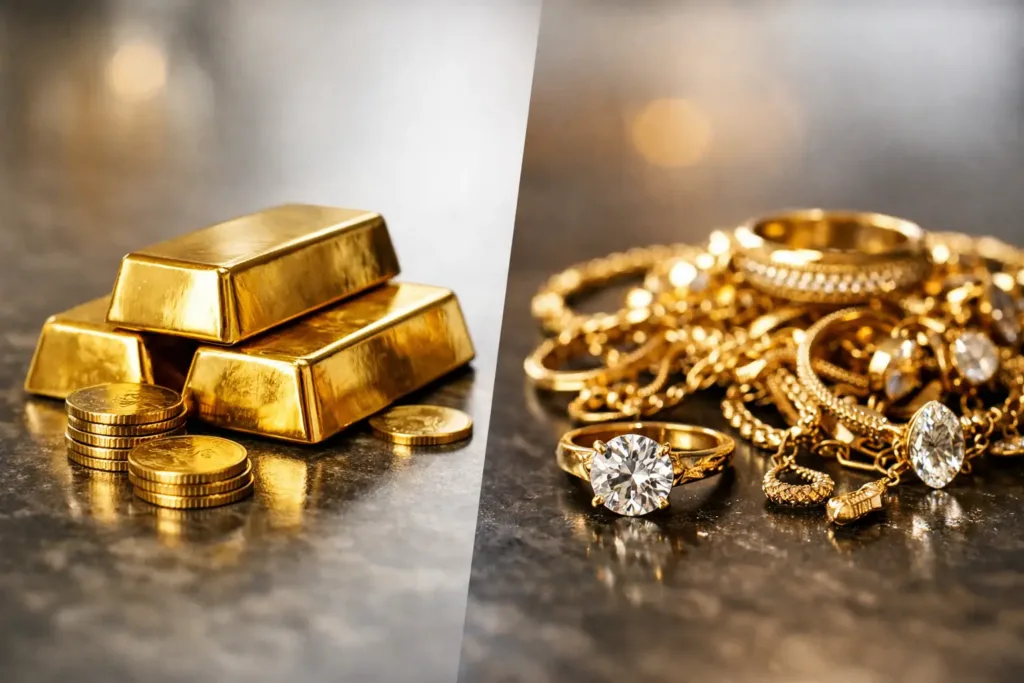
A 22K gold bangle can mark a wedding, a birthday or a family tradition. A 24K gold bar serves a very different purpose: direct exposure to the value of physical gold. When deciding between gold bullion or jewellery, the right choice is less about which is inherently better and more about what you expect your purchase to do for you.
Jewellery can hold personal meaning while retaining intrinsic precious-metal value. Bullion is designed for efficiency, purity and straightforward investment ownership. Understanding the difference helps you buy with confidence, whether you are choosing a gift to be worn for decades or building a physical gold holding.
Gold bullion or jewellery: the key difference
Gold bullion is investment-grade gold sold principally for its metal content. It is typically available as 24K bars or coins, with high purity commonly expressed as 999.9 fine gold. Its value is closely linked to the live gold price, plus a dealer premium that reflects production, handling and market conditions.
Gold jewellery is made to be worn. Its price reflects not only the gold it contains, but also design, craftsmanship, setting work, gemstones, brand value and VAT. A finely made chain, ring or bracelet is a premium object with a practical and emotional role that a bar in secure storage cannot replicate.
This distinction matters at resale. Bullion buyers usually assess weight, purity and prevailing market price. Jewellery buyers may do the same, but the amount paid originally for design and workmanship is not always recovered when a piece is sold simply for scrap value. Exceptional craftsmanship, desirable styles, recognised makers and high-quality diamonds can support value, but this should never be assumed.
When bullion is the stronger choice
Bullion is usually the more suitable option if your primary aim is to own physical gold as an investment. A 24K bar offers maximum gold content in a compact format, making it easier to understand exactly what you own. You are not paying for a setting, fashion detail or manufacturing complexity that may have limited value to a future bullion buyer.
For UK buyers, qualifying investment gold is generally VAT exempt. This can create a significant difference compared with jewellery, where VAT applies to the full retail price. It is one reason serious precious-metal buyers often choose investment-grade bars or eligible coins rather than high-carat adornment.
Liquidity is another advantage, particularly when you buy clearly specified products from established refiners. LBMA-approved gold bars offer recognised quality and purity standards, which can make them easier for professional dealers to assess and trade. Keep all original documentation and packaging where applicable, and store bullion securely from the moment it arrives.
Bullion is not, however, a guaranteed short-term profit. Gold prices move, dealer premiums vary, and the price available when selling will be lower than the headline spot price in many circumstances. Physical gold also needs appropriate storage and insurance. It is best viewed as a long-term allocation within a considered financial plan, not a substitute for cash savings or regulated financial advice.
What to check before buying bullion
Purity and provenance should be clear. Look for the weight, fineness and refiner details, and understand the total price rather than focusing only on the live gold rate. Smaller bars can be more accessible and potentially easier to sell in portions, while larger bars often carry a lower premium per gram. The best size depends on your budget and how much flexibility you want later.
For many buyers, the reassurance of a transparent retailer matters as much as the product itself. Clear specifications, secure delivery, storage guidance and readily available support all reduce uncertainty around a high-value purchase.
When jewellery is worth more than its gold weight
Choose gold jewellery when the pleasure of wearing it is central to the purchase. An engagement ring, wedding band, heirloom pendant or traditional 22K bracelet is not merely a store of metal. It carries memories, personal style and often cultural significance that cannot be measured in grams.
High-carat jewellery can still provide meaningful underlying gold value. In the UK, 9K, 14K, 18K and 22K gold each contain different proportions of pure gold. The higher the carat, the greater the gold content, although the alloy mix also affects colour, strength and suitability for different designs.
For example, 22K gold has a rich yellow tone and substantial gold content, making it popular for classic and Asian-inspired jewellery. It is softer than lower-carat alloys, so design and intended wear deserve careful thought. A 9K or 18K everyday ring may offer greater durability, while 22K can be especially compelling for occasion pieces, bangles and chains where colour and gold presence are part of the appeal.
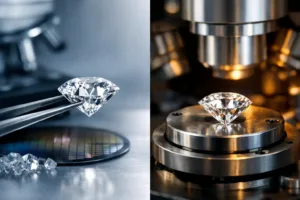
Hallmarking is a vital confidence marker. UK hallmarks independently verify the precious-metal content of qualifying jewellery, helping you understand what you are buying. For diamond jewellery, ask for clear information about the diamond’s characteristics and any accompanying certification. The value of a diamond ring should be assessed as a complete piece, not by its gold weight alone.
The real cost of jewellery versus bullion
It is tempting to compare a jewellery item with a gold bar of the same weight, but this overlooks how each product is made and priced. A bullion bar is deliberately standardised. Its purpose is to deliver refined gold as efficiently as possible.
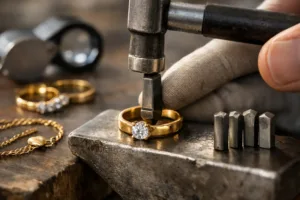
A jewellery piece may involve casting, hand-finishing, polishing, clasps, settings, stones, quality control, packaging and aftercare. Bespoke engagement rings add design consultation and skilled manufacturing to the equation. These are genuine elements of the purchase, but they mean the retail price is not a direct reflection of melt value.
That does not make jewellery poor value. It simply means its value is broader. If you will wear a piece regularly, treasure its design and pass it on, the cost is serving a different purpose than an investment bar. The mistake is buying jewellery while expecting bullion-like resale efficiency, or buying bullion while wishing for the visual impact of a beautifully crafted piece.
A practical way to make the decision
Start with one honest question: will this gold mostly be stored or worn? If it will be stored as a financial asset, bullion is generally the clearer fit. If it will be worn to celebrate a milestone, express your style or become part of a family collection, jewellery is likely the more rewarding choice.
Next, consider your time horizon. Bullion can suit buyers comfortable holding through price fluctuations over several years. Jewellery may be bought for a lifetime of use, with resale value acting as a secondary reassurance rather than the main objective.
Your budget also matters. If every pound is intended to maximise gold exposure, compare bullion premiums and weights. If you are shopping for jewellery, prioritise metal purity, hallmarking, workmanship, fit and the quality of any diamonds or gemstones. A piece that is uncomfortable, poorly finished or unsuitable for everyday life is not good value, regardless of its gold content.
Finally, think about storage and ownership. Bullion needs a secure plan, whether that means insured home storage or a specialist facility. Jewellery needs sensible care too, but it can be enjoyed while you own it. Remove delicate pieces for sports, manual work and cleaning, and arrange periodic checks for settings, clasps and wear.
Can you buy both?
For many households, the most balanced answer is not bullion or jewellery but bullion and jewellery, with separate expectations for each. A 24K investment bar can provide direct exposure to physical gold, while a carefully chosen 18K ring or 22K bangle brings lasting beauty and personal significance.
Hispek Diamonds offers both investment-grade 24K gold and premium jewellery, allowing buyers to choose according to purpose without compromising on clear product information and quality reassurance. Whether you are selecting a gift, planning an engagement or adding physical gold to your holdings, buy the form of gold that you will value for what it is designed to do.
The best purchase is the one that matches your intention from day one: bullion for efficient precious-metal ownership, jewellery for gold you can live in, celebrate with and enjoy for years to come.