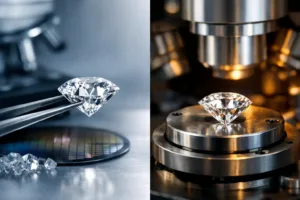
CVD vs HPHT Diamonds: Which Should You Choose?
CVD vs HPHT diamonds explained: compare growth, quality, value and certification to choose a beautiful lab-grown diamond with complete confidence today.
We Buy Gold . Top Prices Paid .
7 Day Price Promise .
30 Day Returns
Free World Wide Shipping
Life Time Warranty
We Buy Gold . Top Prices Paid .
7 Day Price Promise .
30 Day Returns
Free World Wide Shipping
Life Time Warranty

+44 203 965 6669
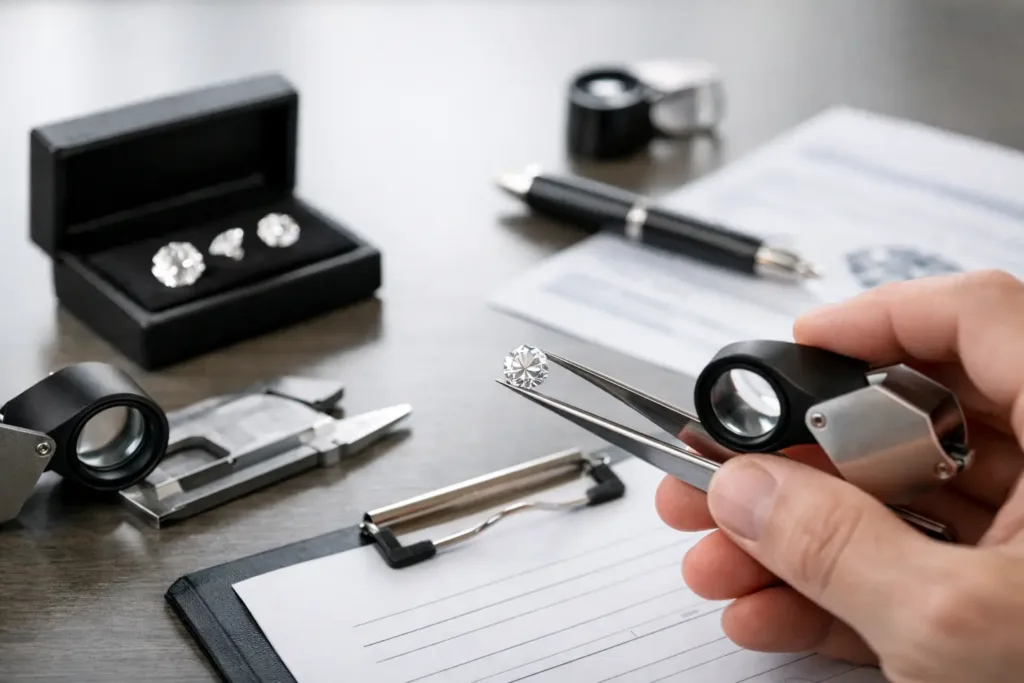
A diamond certificate should make a major purchase feel clearer, not more complicated. Knowing how to verify diamond certification helps you confirm that the stone you are viewing is the stone described on the paperwork – particularly when buying an engagement ring, a high-value gift or a loose diamond for a bespoke design.
A genuine grading report provides an independent assessment of a diamond’s key characteristics. It is not simply a sales document, and it should never be treated as a substitute for seeing the diamond itself. The strongest buying decision combines a respected laboratory report, a matching diamond, clear retailer paperwork and expert guidance.
In the trade, the document often called a diamond certificate is more accurately known as a diamond grading report. It records the laboratory’s assessment of a specific diamond at the time it was examined. Depending on the lab and report type, it may include the diamond’s carat weight, cut or proportions, colour, clarity, shape, measurements, polish, symmetry, fluorescence and identifying inclusions.
For natural diamonds, reports from internationally recognised laboratories such as GIA, IGI and HRD are widely understood by buyers and jewellers. For lab-grown diamonds, IGI reports are particularly common, although other established laboratories also issue reports. The right report is not automatically the one with the highest stated grades. What matters is that it comes from a credible laboratory, accurately corresponds to the diamond, and gives you enough information to assess value with confidence.
A report is also different from an insurance valuation, receipt, warranty or authenticity card. These documents can all be useful, but none independently grades the quality of the diamond. A jewellery valuation estimates replacement value, while a grading report describes the stone’s measured characteristics.
Start by asking for the full grading report before committing to a purchase. A reputable retailer should be clear about which laboratory issued it and should be able to provide the report number. For a loose certified diamond, you should normally receive the original report or the appropriate digital documentation when the stone is supplied.
Most leading grading laboratories provide a report-verification service on their own official records system. Enter the report number exactly as printed and compare the returned details with the certificate in front of you. Do not rely on a search-engine result, a screenshot supplied by a seller or a QR code alone. Those can be copied or redirected.
The information returned by the laboratory should match key report details, including the shape, carat weight, colour grade, clarity grade and measurements. If the online record cannot be found, contains materially different information, or the seller cannot offer a reasonable explanation, pause the transaction until it is resolved.
Be careful with tiny discrepancies. Measurements and proportions should match exactly or extremely closely, but a report format may display information differently across a printed and digital version. A trained jeweller can help distinguish a formatting difference from a genuine inconsistency.
A valid report number is only the first check. You must also establish that the report belongs to the diamond being sold. Many certified diamonds carry a microscopic laser inscription on the girdle – the narrow outer edge of the stone. This often includes the laboratory report number.
Ask to view the inscription under magnification, ideally with a jeweller’s loupe or microscope. The number should correspond precisely with the report. Not every diamond is laser inscribed, particularly older stones, smaller diamonds or some report types, so the absence of an inscription does not automatically mean there is a problem. It simply means the visual and paperwork checks become more important.
If the diamond is already mounted in a ring, seeing the full girdle may be difficult. In that case, ask the retailer how they matched the stone to its report before setting it. For a bespoke engagement ring, it is sensible to review the loose diamond and its report before the setting stage where practical.
The certificate should describe what you can see. A round brilliant should not be presented with a report for an oval. A 1.00-carat diamond should not have measurements that clearly belong to a much smaller or larger stone. The report’s plotted clarity characteristics, where supplied, can also act as a useful fingerprint for diamonds with noticeable inclusions.
This is where proportion details matter. Two diamonds of the same carat weight can look very different in size, brightness and overall appeal. For round diamonds, table percentage, depth percentage, crown and pavilion angles can offer helpful context alongside the cut grade. For fancy shapes such as oval, pear and emerald cut, the report is valuable, but your own assessment of symmetry, sparkle and outline remains essential.
Not all diamond certificates carry equal weight in the market. A report from a recognised independent laboratory offers a more consistent basis for comparison than a document created by a retailer or a lesser-known grading body. This matters because grading standards can vary. A diamond described as a particular colour or clarity grade by one laboratory may receive a different assessment elsewhere.
That does not mean every non-GIA report is unreliable, nor does it mean a GIA report guarantees a diamond will suit your preferences. It means you should compare like with like. When looking at two stones, factor in the issuing lab, the report date, the quality grades, the cut details and the asking price rather than focusing on carat weight alone.
For lab-grown diamonds, ensure the report explicitly identifies the diamond as laboratory-grown. It should also state whether the stone was created by CVD or HPHT if that information is available, and whether post-growth treatment has been detected. A lab-grown diamond is a real diamond with the same core crystal structure as a natural diamond, but it has a different origin and market value. The documentation must be transparent about that distinction.
A perfect-looking report does not remove the need to assess the retailer and the finished jewellery. Request a detailed invoice that states whether the diamond is natural or lab-grown, the report number, carat weight and the precious metal specification. For jewellery sold in the UK, check that the metal carries the appropriate hallmark where required. Hallmarking confirms precious-metal fineness, not diamond quality, but it is an important separate trust marker.
Ask whether the diamond has been treated, whether it is eye-clean from your normal viewing distance, and whether it has any visible bow-tie effect in elongated fancy shapes. Certification can identify many features, but it cannot fully convey light performance, transparency or the character you will notice when the diamond is worn.
It is also wise to understand the retailer’s returns process before ordering. Viewing a diamond in different lighting conditions can change your perception of it. A clear returns policy, secure insured delivery and accessible after-sales support provide reassurance if the piece does not meet expectations.
One concern on its own may have an innocent explanation, but several together should make you cautious. Be particularly careful if a seller will not share the full report number, offers only a cropped image of the certificate, or claims that a certificate is unnecessary for a significant diamond purchase.
Other warning signs include a report number that cannot be verified with the named laboratory, mismatched carat weight or shape, a price that is far below comparable certified diamonds, or vague language such as “certified quality” without naming an independent grading laboratory. A QR code can be convenient, but it should support, not replace, direct verification through the laboratory’s official records.
For antique, inherited or older jewellery, certification may not be available. That does not make the diamond unsuitable. In these cases, seek an independent assessment from a qualified valuer or gemmologist before purchasing, insuring or selling the piece. The right route depends on the diamond’s age, setting and intended use.
Store the original grading report separately from the jewellery in a dry, secure place. Photograph the report, purchase invoice and any laser inscription details for your records, but keep digital copies protected as well. If you insure the ring, your insurer may also request a valuation, which should be arranged separately from the diamond grading report.
At Hispek Diamonds, certified diamonds are selected to give customers a clear foundation for a confident purchase. Whether you choose a natural or lab-grown diamond, the best reassurance comes from documentation that checks out, a diamond that matches it and a retailer prepared to explain every detail before you decide.
CVD vs HPHT diamonds explained: compare growth, quality, value and certification to choose a beautiful lab-grown diamond with complete confidence today.
Learn how to verify diamond certification before you buy, from report numbers and grading labs to security features, retailer records and red flags too.
Find the best lab diamond settings for brilliance, security and daily wear, from solitaire and halo rings to modern bezel and three-stone designs with advice.
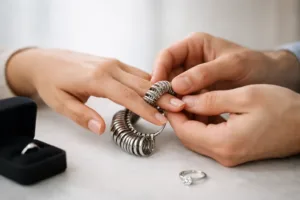
Ring sizing before proposal made simple: practical ways to find the right fit, avoid surprise spoilers and choose a ring that feels perfect for comfort.
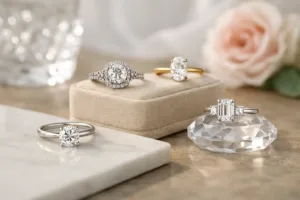
Our guide to engagement ring settings explains security, style and daily wear, helping you choose a certified diamond ring with lasting confidence today.

Find the best mens gold chains for your style, from curb and rope designs to the right gold carat, length and weight for lasting value and wear daily.