
Investment Gold Bars: What Buyers Should Know
Investment gold bars offer a straightforward way to buy physical bullion. Learn how purity, size, pricing and storage affect value and security.
We Buy Gold . Top Prices Paid .
7 Day Price Promise .
30 Day Returns
Free World Wide Shipping
Life Time Warranty
We Buy Gold . Top Prices Paid .
7 Day Price Promise .
30 Day Returns
Free World Wide Shipping
Life Time Warranty

+44 203 965 6669

A few years ago, many shoppers still treated lab-grown diamonds as a niche alternative. That is no longer the case. Lab diamond demand trends now reflect a more confident, mainstream buyer – one who wants certified beauty, stronger value for money and clear information before making a high-ticket purchase.
For engagement rings, anniversary gifts and self-purchase jewellery, lab-grown diamonds have moved from a secondary option to a serious first choice. The reasons are commercial as much as emotional. Buyers are comparing size, quality and price with far more precision, and that has changed how demand behaves across the market.
The most obvious driver is price perception. Many customers can purchase a larger or higher-specification lab-grown diamond for the same budget they may have allocated to a smaller natural stone. In a market where shoppers are researching cut, clarity, colour and certification before they buy, that difference matters.
There is also a strong values-based shift. Some buyers prefer lab-grown stones because they associate them with a more modern and more traceable supply story. That does not mean every customer is choosing solely on ethics, and it would be too simplistic to suggest that. For many, the appeal is a combination of responsible sourcing messaging and practical affordability.
Social influence has played a part as well. Customers now see lab-grown diamond engagement rings, tennis bracelets and stud earrings presented as premium jewellery rather than compromise purchases. Once that framing changed, demand broadened. The category began attracting not only price-sensitive buyers, but also style-led customers who wanted more presence, more sparkle or a bespoke design within a fixed budget.
Engagement ring buyers remain one of the strongest sources of demand. In the UK especially, couples are increasingly open to discussing budget in a direct way. Rather than stretching for a natural diamond that limits size or design, many now choose a lab-grown centre stone and invest more in the setting, the wedding budget or future financial plans.
This is particularly relevant for customers who want premium visual impact without losing quality. A well-cut, certified lab-grown diamond can offer the look they want while keeping the purchase grounded in realistic spending. For a category tied so closely to emotion, confidence in value has become a major sales factor.
Gift buyers show a slightly different pattern. They are often less focused on resale debates and more interested in presentation, certification and immediate impression. For earrings, pendants and dress rings, lab-grown diamonds appeal because they allow buyers to achieve a more luxurious look at a more accessible price point.
Self-purchasing customers are another growing segment. This audience tends to be informed, design-conscious and comfortable comparing materials. They may not see jewellery strictly as an heirloom-first category. Instead, they prioritise style, wearability and smart buying decisions. Lab-grown diamonds suit that mindset well.
Lower prices have not simply lifted demand. They have changed what customers expect from the entire buying journey. When shoppers see a larger lab-grown diamond at a more attractive price, they often become more selective about cut quality, certification and setting design.
That creates an interesting trade-off. Demand rises because the category feels more attainable, but customers also become less forgiving of poor presentation or vague product details. Retailers can no longer rely on the phrase lab-grown alone. Buyers want to know whether the stone is certified, what the proportions are, how it performs visually and how it compares against natural alternatives.
This is especially true at the premium end of the market. A customer spending a significant amount on a bespoke engagement ring still expects confidence, craftsmanship and aftercare. Lower stone costs do not reduce the need for trust. If anything, they make transparency more important, because shoppers are actively comparing options across multiple retailers.
Not every jewellery category moves at the same pace. Lab-grown diamond demand is especially strong in pieces where size and visual impact are central to the purchase. Engagement rings are the clearest example, followed by solitaire pendants, tennis jewellery and classic stud earrings.
That pattern makes sense. When carat weight is visible and emotionally meaningful, buyers notice the value advantage more quickly. A customer may be willing to choose a two-carat lab-grown stone over a smaller natural option if the look better matches their taste and budget.
By contrast, in categories where diamonds play a supporting role, demand may be influenced more by overall design than by stone origin. In halo rings, pavé bands or fashion-led pieces, some customers are perfectly happy with either option as long as the finished item feels premium. This is why merchandising matters. The decision is rarely about the stone in isolation.
As demand grows, so does buyer scrutiny. Customers are asking better questions. They want to understand grading reports, they want clarity on whether stones are independently certified, and they want reassurance that the finished jewellery meets recognised standards.
This is one of the most important lab diamond demand trends for premium retailers. Growth is not just about offering lab-grown stones. It is about presenting them with the same seriousness as natural diamonds. Certification, UK hallmarking, detailed specifications and expert guidance all influence conversion.
For many buyers, the reassurance layer is what turns interest into action. A premium stone without proper documentation will struggle against a well-presented alternative. The category may be more affordable, but customers still see it as a meaningful purchase.
Any honest view of this market has to acknowledge the resale conversation. Some buyers are fully comfortable with lab-grown diamonds as a wear-and-enjoy purchase. Others are more cautious, especially when comparing long-term value against natural diamonds or investment-grade precious metals.
That does not stop demand, but it does shape who buys and why. Customers choosing lab-grown for bridal or gifting often prioritise beauty, budget and ethical preference over future resale. Buyers who place the highest importance on rarity or asset retention may still prefer natural diamonds, or they may separate jewellery purchases from investment purchases altogether.
This is where clear retail guidance matters. Lab-grown diamonds are not a replacement for every buying motive. They are a strong option for customers seeking certified, visually impressive jewellery at an attractive price point. Positioning them honestly builds more trust than overselling them as the perfect answer for everyone.
UK buyers tend to be research-led and value-conscious, particularly in categories such as engagement rings where budgets can rise quickly. Lab-grown diamonds fit that behaviour. They offer a route into premium jewellery without requiring the same spend as a comparable natural stone.
There is also a cultural shift towards practical luxury. Many shoppers still want something timeless and special, but they are less interested in paying a premium simply for convention. They want to understand what they are buying, why it costs what it costs and how it fits their priorities.
For a retailer such as Hispek Diamonds, that creates a clear opportunity. Customers are looking for a trusted place to compare certified natural and lab-grown options, ask sensible questions and choose with confidence rather than pressure.
Demand is likely to keep growing, but the market will become more segmented. Entry-level buyers will continue to be drawn in by affordability. Premium buyers will still spend, though they will expect better curation, stronger design and clearer quality differentiation.
We are also likely to see sharper consumer awareness around grading nuances. As lab-grown diamonds become more common, shoppers will learn that not all stones are equal, even within the same broad category. Cut quality, transparency, certification and craftsmanship will matter more, not less.
At the same time, natural diamonds are unlikely to disappear from demand. Many buyers still value rarity, tradition and long-term emotional significance in a different way. The future is not lab-grown versus natural as a simple winner-loser story. It is a more informed market where customers choose based on purpose, budget and personal priorities.
For anyone shopping now, the smartest approach is not to follow trend alone. It is to buy a diamond that matches how you want to wear it, what you want it to represent and the level of reassurance you expect when making an important purchase.
Investment gold bars offer a straightforward way to buy physical bullion. Learn how purity, size, pricing and storage affect value and security.

Diamond certification explained clearly – learn what a grading report covers, why it matters, and how to buy certified diamonds with confidence.
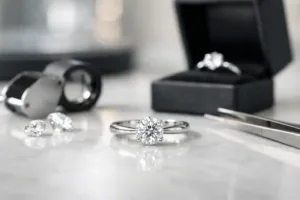
Learn what certified diamond engagement rings mean, how grading works, and what to check before you buy for confidence, value and lasting peace.
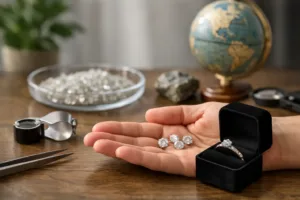
Learn how to buy ethical sourcing diamond jewellery with confidence, from certification and traceability to lab-grown and natural diamond choices.
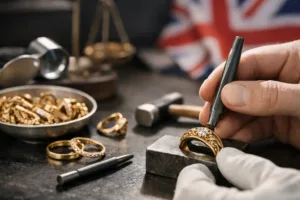
Understand uk hallmarking on gold jewellery, what each stamp means, legal standards, and how hallmarks help you buy genuine gold with confidence.
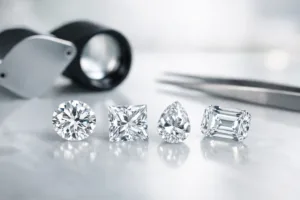
Learn what are the 4Cs of diamonds – cut, colour, clarity and carat – and how to balance them for brilliance, beauty and value.