

Natural Diamonds vs Lab Diamonds: Which to Choose?
Compare natural diamonds vs lab diamonds by beauty, value, origin and price. Choose a certified stone for your engagement ring with confidence today.
We Buy Gold . Top Prices Paid .
7 Day Price Promise .
30 Day Returns
Free World Wide Shipping
Life Time Warranty
We Buy Gold . Top Prices Paid .
7 Day Price Promise .
30 Day Returns
Free World Wide Shipping
Life Time Warranty

+44 203 965 6669
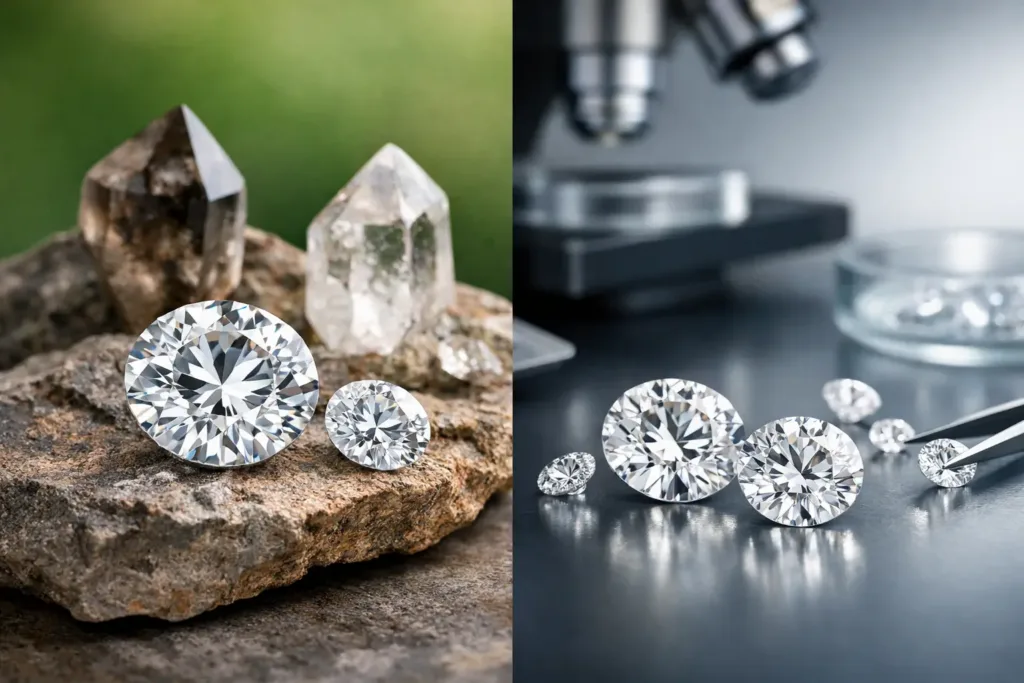
A diamond engagement ring is not simply a purchase. It is a piece you will see every day, a symbol of a promise, and often one of the most considered jewellery decisions you will make. When comparing natural diamonds vs lab diamonds, the right choice comes down to what matters most to you: rarity, budget, size, provenance or long-term expectations.
Both options can be exceptionally beautiful. Both are real diamonds, with the same chemical composition and the same fire, brilliance and durability when cut well. The differences are found in their formation, market position, price and the story you want your ring to carry.
Natural diamonds formed deep within the Earth over billions of years under intense heat and pressure. They are brought closer to the surface through volcanic activity, then recovered, cut and polished for jewellery. Every natural diamond is rare by nature, and its geological journey is part of its enduring appeal.
Lab-grown diamonds are created in controlled conditions using advanced technology. High Pressure High Temperature, known as HPHT, and Chemical Vapour Deposition, known as CVD, replicate the conditions in which diamonds form. The process takes weeks rather than billions of years, but the finished stone is still a diamond – not cubic zirconia, moissanite or a diamond imitation.
To the unaided eye, a high-quality lab diamond and a high-quality natural diamond can look identical. Even trained professionals use specialist equipment to determine a diamond’s origin. What you are choosing is not whether a stone is “real”, but which type of real diamond best fits your priorities.
A diamond’s beauty is driven chiefly by its cut. A superbly cut diamond reflects light in a way that creates bright white sparkle, colourful fire and lively scintillation. A poorly cut stone can look dull regardless of whether it is natural or lab-grown.
This is why it is sensible to consider the 4Cs together: cut, colour, clarity and carat weight. Cut should carry particular weight in your decision. For a round brilliant diamond, an excellent or ideal cut is often the strongest starting point. With fancy shapes such as oval, pear, emerald or cushion cuts, proportions, symmetry and the stone’s overall appearance are especially important.
Lab-grown diamonds often allow buyers to select a larger carat weight, higher colour grade or cleaner clarity at the same budget. A natural diamond may appeal more to someone who prefers the romance and rarity of a stone formed by the Earth. Neither preference is superficial. The most satisfying purchase is one that reflects how you will feel when you wear it.
The most visible difference is usually price. Lab-grown diamonds are generally more affordable than comparable natural diamonds. This can make them a compelling choice for couples who want a larger centre stone, a more elaborate setting or room in their budget for matching wedding bands.
For example, a buyer working to a fixed budget may find that a lab-grown diamond offers a noticeably greater carat weight while retaining strong colour and clarity. This creates a luxury look that might otherwise be beyond reach. It can also be an attractive route for anniversary gifts, tennis bracelets and statement earrings where total carat weight has a significant effect on cost.
Natural diamonds command higher prices because their supply is limited and their formation cannot be repeated on demand. They have a long-established position in the fine jewellery market, particularly for engagement rings intended as heirloom pieces.
Price should be transparent, not mysterious. Compare diamonds with similar specifications, including carat weight, cut quality, colour, clarity, fluorescence where relevant, certification and the precious metal used for the setting. A lower price is only meaningful if the diamonds and craftsmanship are genuinely comparable.
Diamonds should first be bought for their beauty, meaning and wearability. They are not the same as investment-grade 24K gold bullion, which is bought specifically for its precious metal content and global market liquidity.
Natural diamonds have historically held stronger resale demand than lab-grown diamonds due to their rarity, established market and limited supply. That does not mean every natural diamond will increase in value or recover its original retail price. Retail pricing includes design, craftsmanship, certification, overheads and the margin required to provide service and support.
Lab-grown diamond prices have fallen as production capacity and technology have advanced. This makes them excellent value at the point of purchase, but buyers should not assume strong resale value. If retaining potential resale appeal is central to your decision, a natural diamond is usually the more conservative option. If your priority is visual impact and exceptional specifications for your spend, a lab-grown diamond may be the more practical choice.
The setting also matters. A timeless platinum or 18K gold ring, made with careful attention to proportion and finish, has value beyond the centre stone alone. Choosing a design you will still love in ten or twenty years is often more valuable than chasing the largest possible carat weight.
Many buyers want to understand the ethical implications of their diamond. This is a sensible question, but there is no single answer that applies to every stone.
Lab-grown diamonds avoid traditional diamond mining, which is important to many customers. However, laboratory production requires substantial energy, and its environmental impact depends on the energy sources used by the producer. Claims about sustainability should therefore be specific and supported, rather than assumed from the term “lab-grown”.
Natural diamonds have a physical mining footprint, but responsibly sourced stones can support employment, infrastructure and local communities in diamond-producing regions. Reputable suppliers follow recognised sourcing standards and provide clear information about their supply chain.
For either choice, ask for transparent provenance and independent certification. Ethical confidence comes from knowing what you are buying and from working with a retailer prepared to explain the details clearly.
A diamond certificate, also called a grading report, provides an independent assessment of the stone’s characteristics. It should state whether a diamond is natural or laboratory-grown and record key details including carat weight, measurements, colour, clarity and cut grade where applicable.
For natural diamonds, reports from respected laboratories such as GIA are widely recognised. Lab-grown diamonds are also graded by leading laboratories, with their laboratory origin clearly identified. Many certified diamonds also carry a laser inscription on the girdle that matches the report number.
Certification is particularly valuable when buying online or comparing stones. It allows you to assess like for like and gives greater confidence in the quality represented. Still, a report cannot replace seeing how a diamond performs. Videos, high-resolution imagery and expert guidance can help you judge brightness, shape appeal and any visible inclusions.
When selecting a finished ring, check the full specification: the diamond certificate, the metal purity, the setting style, ring size, warranty and returns policy. In the UK, precious metal jewellery should carry the appropriate hallmark where required, providing additional reassurance about the metal itself.
Choose a natural diamond if the romance of an Earth-formed stone, enduring rarity and stronger established resale demand are important to you. It is a classic choice for buyers who value tradition and want a diamond with a remarkable natural history.
Choose a lab-grown diamond if you want to maximise size and quality within your budget, or if avoiding mined diamonds is a key personal preference. It can deliver remarkable brilliance and a premium look at a more accessible price point.
There is also a middle ground. You may choose a natural centre diamond for its rarity and pair it with lab-grown side stones, or select a lab-grown centre stone and invest more in a bespoke platinum setting. Your ring does not need to follow anyone else’s rulebook.
At Hispek Diamonds, the strongest choice is always an informed one: a certified diamond, thoughtfully selected for its beauty and set in a design that feels personal to you. Whether its story began beneath the Earth or in a modern laboratory, the diamond becomes truly meaningful when it marks your own story.
Compare natural diamonds vs lab diamonds by beauty, value, origin and price. Choose a certified stone for your engagement ring with confidence today.
Our lab diamond review explains certification, value, quality and care, helping UK buyers choose an ethical, beautiful ring with confidence every day.
Diamond clarity vs colour priority explained: learn which grade has the greatest visible impact, how cut and setting matter, and buy with confidence well.
Does bespoke jewellery cost more? Learn what shapes the price of a custom ring, from diamonds and metals to design, craftsmanship and long-term value.

Learn how to buy a wedding ring with confidence, from choosing metal and fit to setting a budget, checking hallmarks and finding a timeless style.

Our gold price outlook explains the forces moving bullion, what UK buyers should watch and how to buy 24K gold with greater confidence before buying.