

Diamond Clarity vs Colour Priority Explained
Diamond clarity vs colour priority explained: learn which grade has the greatest visible impact, how cut and setting matter, and buy with confidence well.
We Buy Gold . Top Prices Paid .
7 Day Price Promise .
30 Day Returns
Free World Wide Shipping
Life Time Warranty
We Buy Gold . Top Prices Paid .
7 Day Price Promise .
30 Day Returns
Free World Wide Shipping
Life Time Warranty

+44 203 965 6669
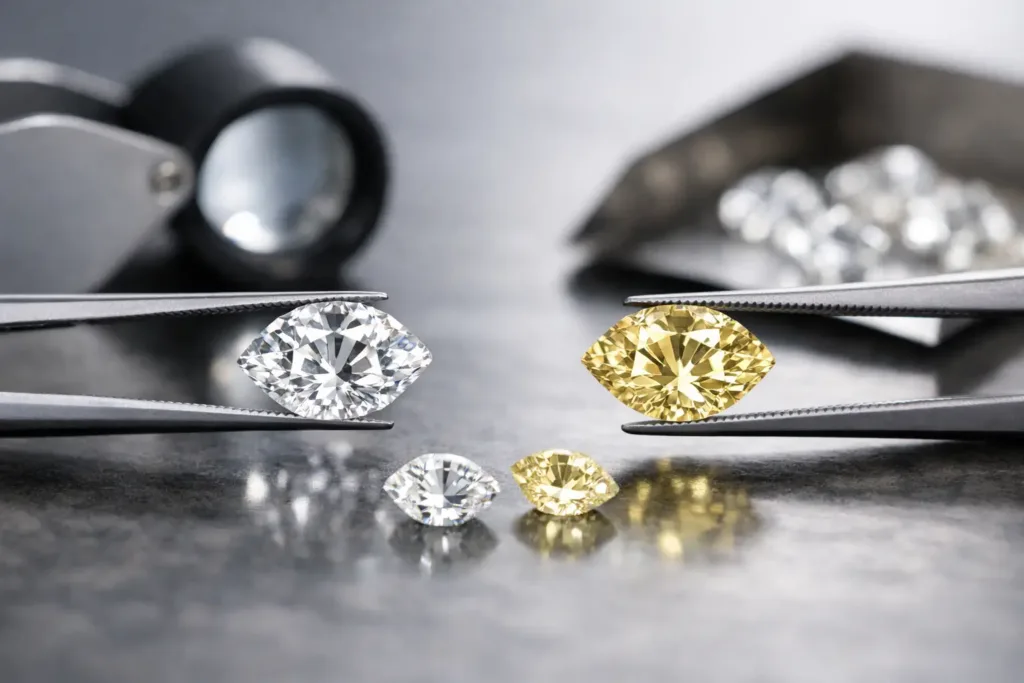
A diamond can be technically high grade on paper yet fail to look as bright, white or impressive as a more carefully chosen stone. That is why diamond clarity vs colour priority is one of the most useful questions to ask before buying an engagement ring, eternity ring or diamond jewellery. The right answer depends on the diamond’s shape, carat weight, setting metal and, above all, what you can actually see.
For most buyers, colour deserves slightly more attention than clarity once a diamond is eye-clean. A diamond with no visible inclusions but a noticeable warm tint will often appear less crisp than a slightly included diamond that faces up beautifully white. However, neither grade should be chosen in isolation. Cut quality remains the foundation of sparkle, and it can transform the appearance of both colour and clarity.
If you are choosing between a higher clarity grade and a higher colour grade at the same budget, prioritise colour after reaching an eye-clean clarity level. In many well-cut diamonds, VS2 or SI1 clarity can offer excellent value, provided inclusions are not visible without magnification and do not affect durability. This can leave more of your budget for a whiter colour, stronger cut or a more substantial carat weight.
There are exceptions. A large emerald-cut diamond, for example, has broad, open facets that make inclusions easier to notice. In this shape, clarity can become more important. A round brilliant diamond, by contrast, has a lively facet pattern that can disguise small inclusions effectively, so colour or cut may offer a more visible improvement.
The aim is not simply to purchase the highest grades. It is to select a certified diamond that looks exceptional in the setting you want, while delivering genuine value for your budget.
For white diamonds, colour is graded from D, completely colourless, through to Z, where yellow or brown tint is more apparent. D to F diamonds are classed as colourless, G to J as near-colourless, and lower grades show progressively more warmth.
A colourless diamond is a premium choice, particularly in platinum or white gold, where a bright white metal can make any warmth more apparent by comparison. Yet a G, H or even I colour diamond can look beautifully white when well cut and correctly matched to its setting. This is where careful selection matters more than chasing a letter grade.
In yellow gold or rose gold, a near-colourless diamond can be an intelligent choice. The warm metal naturally complements a little warmth in the stone, meaning the difference between a top colour and a near-colourless grade may be difficult to detect once the ring is worn. Buyers can often use this flexibility to choose a larger diamond or upgrade the cut.
Colour becomes more noticeable as carat weight increases. A one-carat diamond may show only a subtle difference between adjacent colour grades, while that difference can be clearer in a larger stone. Side stones also matter. If a centre diamond is paired with very white smaller diamonds, a warmer centre stone can stand out.
Choose colour first when you are selecting a diamond for a platinum or white gold solitaire, particularly if the stone is one carat or above. It is also worth prioritising for step-cut shapes such as emerald and Asscher cuts, which tend to reveal colour more readily than brilliant-cut diamonds.
If your preference is an icy, bright-white appearance, focus on D to G colour where budget allows. If you are happy with a near-colourless diamond that offers outstanding value, G to I can be a strong range to consider, subject to the diamond’s cut, shape and certificate.
Clarity refers to a diamond’s internal characteristics, known as inclusions, and external features, known as blemishes. These natural identifying features are assessed under 10x magnification. Grades range from Flawless and Internally Flawless through VVS, VS, SI and Included categories.
The most expensive clarity grade is not always the best purchase. Most inclusions in VVS and many VS diamonds cannot be seen by the unaided eye. In a ring that will be viewed at normal distance, paying a significant premium for characteristics visible only under magnification may not give you a noticeably more beautiful diamond.
This is why the term eye-clean is so valuable. An eye-clean diamond has no inclusions visible in normal viewing conditions. It can provide the clean, luxurious look buyers want without paying for a clarity grade beyond what the eye can appreciate.
That said, not all inclusions are equal. Their position, size, colour and type are more important than the grade alone. A small inclusion near the edge may be hidden by a claw, while a dark inclusion under the table – the large central facet – can be more noticeable. Inclusions near a pointed corner, such as on a pear, marquise or princess cut, should also be assessed carefully because vulnerable areas need sound structure.
Clarity deserves more of your budget in emerald, Asscher, baguette and other step-cut diamonds. Their long, mirror-like facets offer less visual camouflage, so inclusions can be easier to spot. Larger diamonds may also require more careful clarity selection, simply because there is more surface area to inspect.
For a round brilliant, oval, radiant or cushion cut, an eye-clean SI1 or VS2 stone may be an excellent balance. However, each diamond must be judged individually. Two diamonds with the same clarity grade can look very different, which is why independent certification and expert guidance are so reassuring for a major purchase.
A diamond’s cut determines how efficiently it returns light to the eye. A superbly cut diamond can look brighter and more lively than a poorly cut stone with better colour and clarity grades. It can also help disguise slight warmth and minor inclusions through strong sparkle.
For round brilliant diamonds, look for excellent or ideal cut proportions where possible. For fancy shapes, the certificate may not always provide a cut grade, so proportions, symmetry, polish and the diamond’s overall visual performance deserve close attention.
Cut is also the reason a stone should never be purchased on a grading report alone. Certification provides essential, objective information, but it does not fully convey how a diamond handles light. A trusted jeweller should help you balance the certificate with the diamond’s real-world appearance.
A simple solitaire puts the centre diamond fully on display. Here, colour and clarity are easier to inspect, especially in a white metal setting. A halo, trilogy or pavé design introduces additional diamonds and sparkle, which can make modest differences in clarity less noticeable while placing more emphasis on matching colour across the whole design.
The setting can also influence your priorities. Yellow gold claws around a near-colourless diamond can make a slightly warmer grade appear intentional and harmonious. Platinum claws against a high-colour diamond create a crisp, contemporary finish. For bespoke engagement rings, these design details allow you to build a ring around the qualities you value most rather than compromise on a ready-made specification.
Lab-grown diamonds follow the same colour and clarity grading principles as natural diamonds. Because lab-grown stones can offer larger carat weights at a different price point, buyers may decide to select a higher colour or clarity grade. The key remains the same: buy the visual result you love, supported by a recognised diamond certificate.
Start with the shape and ring metal you want, then set a realistic budget. Choose a well-cut, certified diamond first. From there, aim for an eye-clean clarity grade and direct the remaining budget towards colour, carat weight or a premium setting, depending on what will matter most to you every day.
Ask to understand the specific diamond rather than relying only on broad grade ranges. Confirm whether inclusions are visible, where they sit and whether the diamond has any durability concerns. For a high-value diamond, transparent pricing, certification, secure delivery and aftercare should form part of the decision, not an afterthought.
At Hispek Diamonds, expert support can help you compare natural and lab-grown diamond options and create a bespoke ring with confidence. The best diamond is not necessarily the rarest on a certificate. It is the one that looks exceptional in your chosen design, suits your budget and feels timeless from the moment you see it on your hand.
Diamond clarity vs colour priority explained: learn which grade has the greatest visible impact, how cut and setting matter, and buy with confidence well.
Does bespoke jewellery cost more? Learn what shapes the price of a custom ring, from diamonds and metals to design, craftsmanship and long-term value.

Learn how to buy a wedding ring with confidence, from choosing metal and fit to setting a budget, checking hallmarks and finding a timeless style.
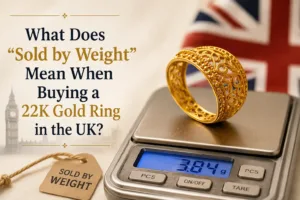
When a 22K gold ring is sold by weight, the gram weight of the ring becomes an important part of understanding what you are buying…

Our gold price outlook explains the forces moving bullion, what UK buyers should watch and how to buy 24K gold with greater confidence before buying.
Our lab grown diamond review guide explains certification, quality, value and settings, so you can choose a beautiful diamond with complete confidence.